










At a time when the Trump administration has intensified scrutiny and restrictions across most visa categories, a notable exception has been carved out for religious workers. According to the press release published by the U.S Department of Homeland Security, and later by the U.S. Citizenship and Immigration Services, the administration has announced a significant policy change to the R-1 non-immigrant visa programme, removing a long-standing requirement that forced priests and other religious workers to remain outside the United States for at least one year before applying for a new visa after their existing status expired.
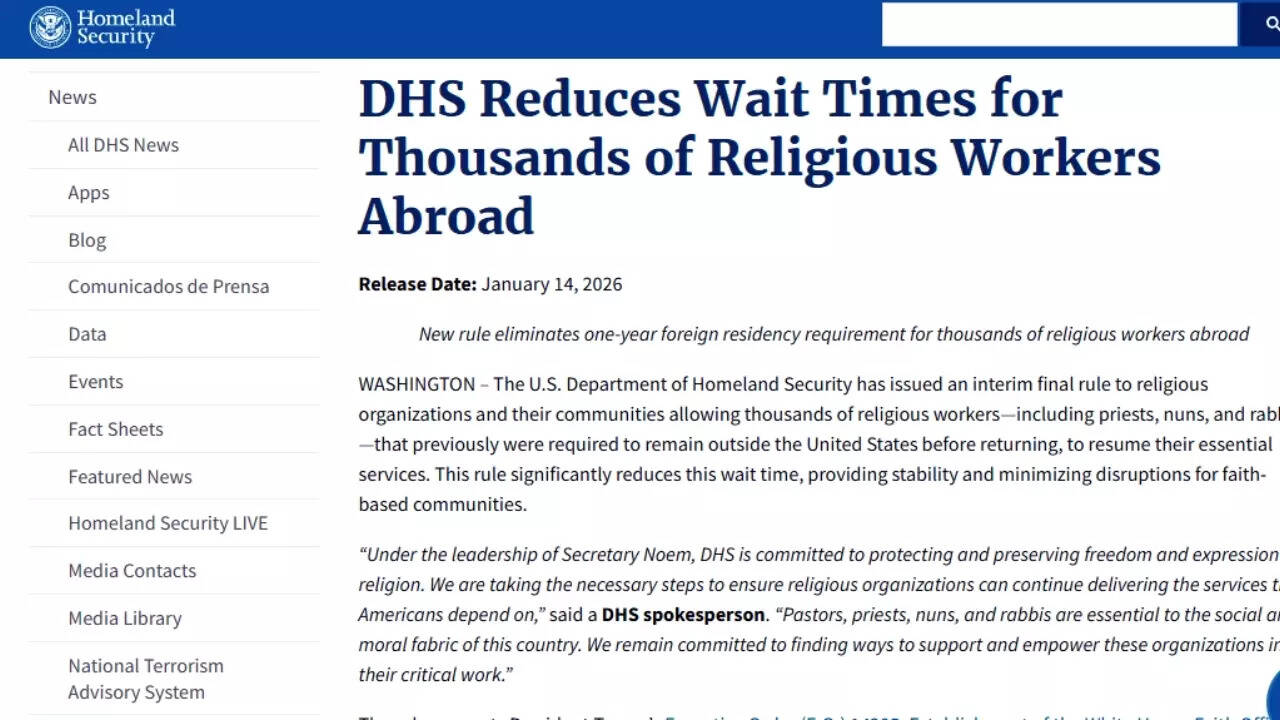
Dept of Homeland Security report
The move, formalised through a new rule issued by the Department of Homeland Security (DHS), marks a rare instance of visa liberalisation during an otherwise restrictive phase of US immigration policy. Officials say the change is aimed at preventing prolonged staffing gaps in religious institutions that rely heavily on foreign-born clergy and religious workers.
What is the R-1 visa?
The R-1 visa is a non-immigrant category designed for religious workers who enter the United States to work for qualifying US-based religious organisations. Eligible applicants include pastors, priests, rabbis, nuns, imams and other religious professionals engaged in ministerial or religious vocations. These workers often serve in churches, temples, mosques, synagogues and religious non-profits across the country.Under the programme, R-1 visa holders are permitted to stay in the US for a maximum cumulative period of five years. This timeframe has long been non-negotiable, regardless of the worker’s role, tenure or institutional need.
The old rule and its impact
Under the earlier regulation, once an R-1 visa holder completed the maximum five-year stay, they were required to leave the United States and remain abroad for at least one full year before becoming eligible to apply again for R-1 status. This mandatory “cooling-off” period applied even to workers whose services were urgently needed by their sponsoring religious organisations.In many religious establishments, particularly small congregations or those that may have been established by immigrant groups, the regulation posed operational difficulties. Well-respected leaders of these establishments, some of whom had led the congregations for years, had to leave their positions for protracted durations when there would be no one to replace them temporarily.The waiting period also significantly affected religious workers in the US, whose livelihoods, living accommodations, and religious affiliations were disrupted.
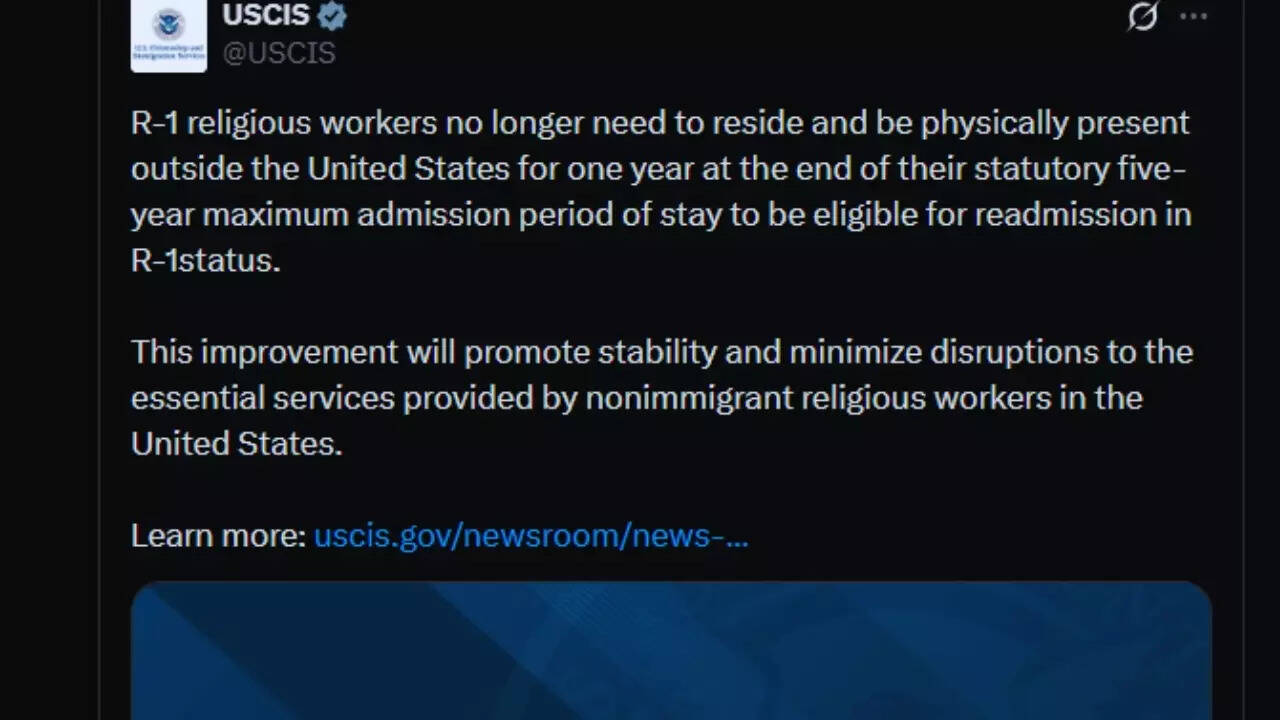
USCIS on X
What the New Rule affects However, under the newly introduced rule, the waiting period outside the USA is waived. R-1 visa applicants are required to leave the USA when their five-year stay is over; however, there is no need to stay outside the country for a minimum period before re-entry.In practical terms, religious workers whose visas expire can now apply to return to the US in R-1 status almost immediately after departing, provided they meet all other eligibility criteria.
Addressing long-standing visa backlogs
According to DHS, demand for visas in the EB-4 category has exceeded supply for a prolonged period. Policy changes introduced by the Department of State in 2023 further extended wait times for applicants from certain countries, adding to the issue.As a result, many religious workers have been unable to transition from temporary R-1 status to permanent residence before exhausting their five-year limit. This has forced them to leave the US even when their long-term immigration applications remain pending.
Relief for religious institutions
By eliminating the mandatory foreign residency requirement, US Citizenship and Immigration Services (USCIS) aims to reduce disruptions faced by religious organisations. The revised policy is expected to allow greater continuity in religious leadership and services, particularly in communities where clergy shortages are already acute. Institutions that depend on specialised religious knowledge, language skills or cultural familiarity stand to benefit the most.The decision stands out against the backdrop of tighter visa controls introduced during the Trump presidency. The administration has taken steps towards more rigorous vetting, fewer admissions, and enhanced enforcement regarding several visa categories such as work visas, study visas, and family visas.Within the context of the above policy trends, the R-1 visa policy shift appears to be seen as an exception within the general policy framework of the current administration with respect to immigration policy.In terms of priests and pastors as well as religious workers, this provides them with greater levels of flexibility and predictability too. Although they would still need to prepare for employees’ periods of departure from the institution, having the option to re-enter without having to leave for an extended period of time provides reduced uncertainty. The rule may also encourage religious organisations to retain experienced staff rather than cycling through new personnel due to visa constraints.The revised R-1 visa rule is expected to come into effect following standard implementation procedures, with USCIS incorporating the change into its adjudication process. Religious organisations and visa applicants are likely to closely monitor how the new policy is applied in practice.