








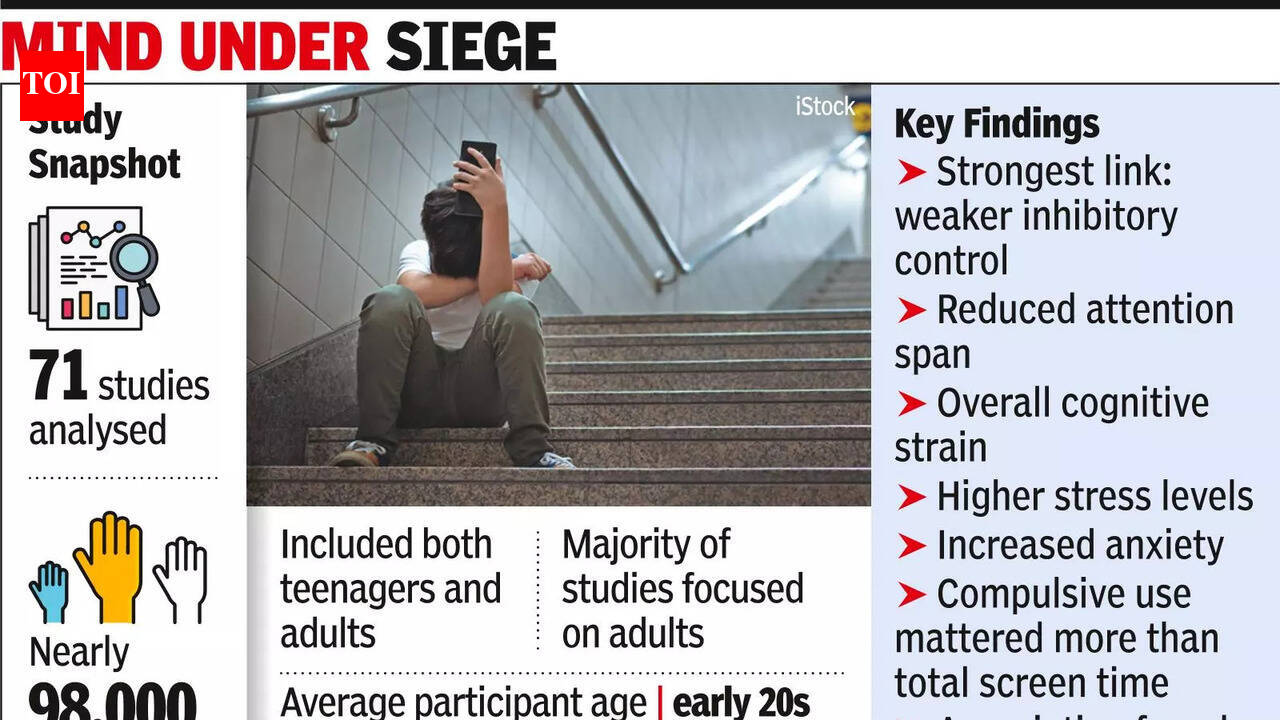
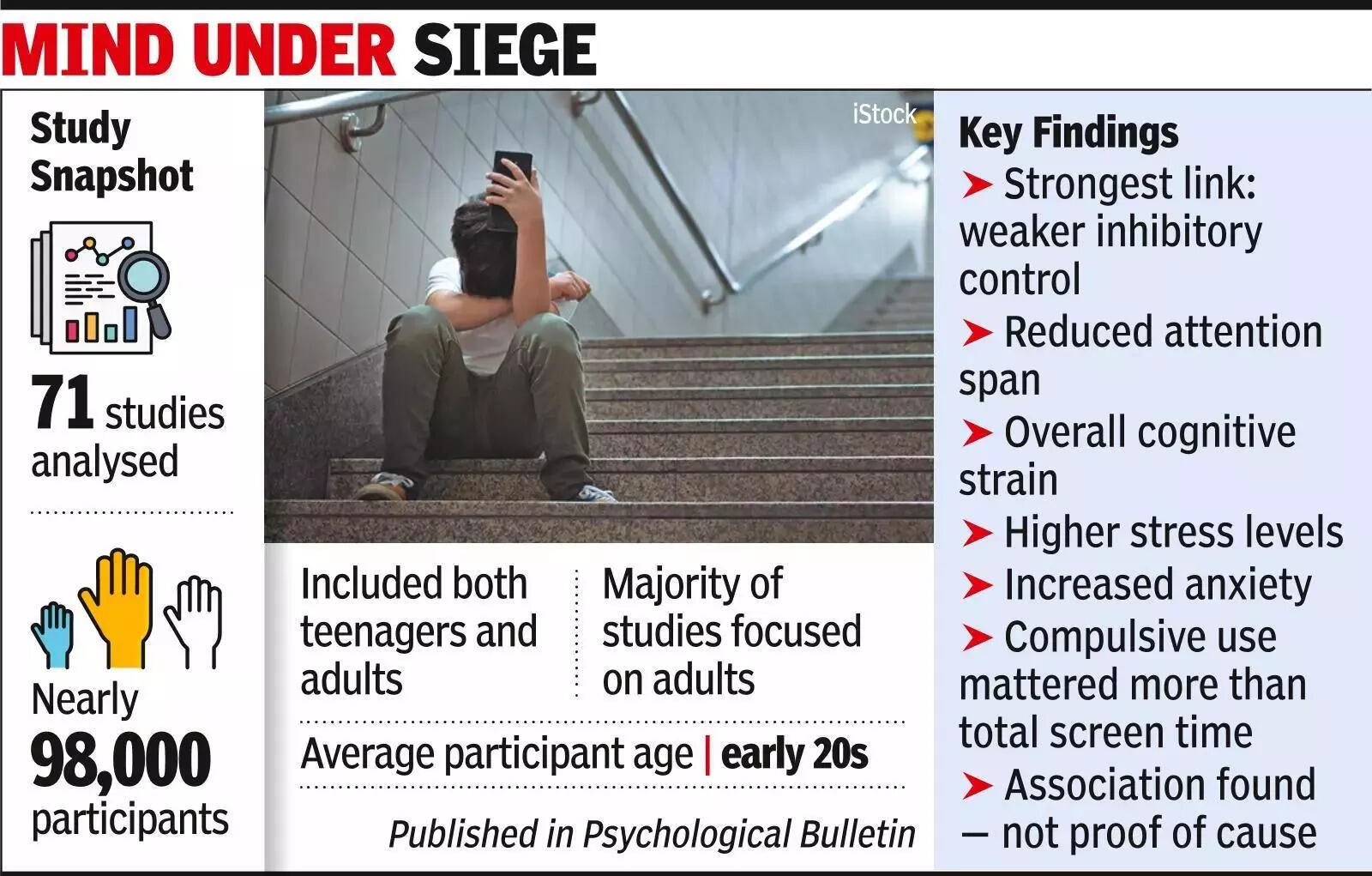
In simple terms, the more compulsive the scrolling, the harder it may be to concentrate on slower tasks – reading, studying or finishing work without checking the phone. Researchers suggest when every swipe delivers something new, the brain begins to expect constant stimulation. When that pace slows, boredom may set in faster.Clinicians say the design of these platforms plays a role. Short bursts of novelty, colour and instant reward repeatedly activate the brain’s reward pathway, reinforcing the urge to keep watching. Most people can step away with conscious effort, but those predisposed to addictive or obsessive traits may find it harder to disengage, says Dr Paramjeet Singh, consultant psychiatrist at PSRI Hospital, who notes that excessive scrolling is increasingly showing up in clinics as fatigue, reduced focus and even strain in relationships.From a psychological standpoint, the concern is not dramatic harm but gradual shifts in how the brain responds to stimulation. Dr Jyoti Mishra, senior consultant – Psychology at Apollo Spectra Hospital, Delhi, says short-form videos are engineered around novelty and instant gratification. Compulsive watching can slowly erode attention span and impulse control. Prolonged exposure to fast, emotionally charged content keeps neural networks in a heightened state of alert, she explains, which may manifest as restlessness, poor concentration and anxiety, particularly in young adults. The good news, she adds, is that practising digital hygiene – limiting screen time, taking breaks and protecting sleep – can reverse many of these effects.The review found that addictive or hard-to-control use had stronger links with these effects than total screen time alone.Importantly, the research shows association, not proof of cause. People already struggling with attention or anxiety may be more drawn to fast-paced content. Still, when dozens of studies point in the same direction, the pattern deserves attention. The scroll is effortless. Sustained attention takes work. And that balance may be worth preserving.