








Some midwives worry that as more women choose home births, issues with transferring patients will become more common. Discouraging home births isn’t a realistic solution, they said.
“We’re not asking the physicians to be in favor of this, but it’s a reality in their community,” said Melissa Denmark, a retired midwife who co-chairs a Washington state program called Smooth Transitions, which works to improve the transfer process.
A rise in home births
A convergence of factors has fueled the rise in home births. Some women have made the choice after negative experiences with hospital systems or because they wanted less medical intervention. The trend jibes with the views of so-called “MAHA moms” — named for their support for Health Secretary Robert F. Kennedy Jr.’s “Make America Healthy Again” movement — who favor home birth because they distrust mainstream medicine. Glowing testimonials about home deliveries have also proliferated on social media. In October, a Twitch streamer livestreamed her labor at home to nearly 30,000 viewers.
Home births became more popular during the pandemic, when hospital deliveries came with a risk of contracting Covid and few visitors were allowed. For other women, giving birth at home may be the only option, as the widespread closures of hospital obstetric units create maternity care deserts in which midwives are the only providers nearby.
“There are people that are forced into it. There are people that are doing it because culturally, that’s what their community does. And then there are people who are doing it because TikTok says this is a cool thing,” said Dr. Wendy Smith, an obstetrician-gynecologist in Portland, Oregon.
Midwives generally recommend hospital births for high-risk patients, such as those carrying twins, those with pre-eclampsia, or when a baby is breech (head up instead of down).
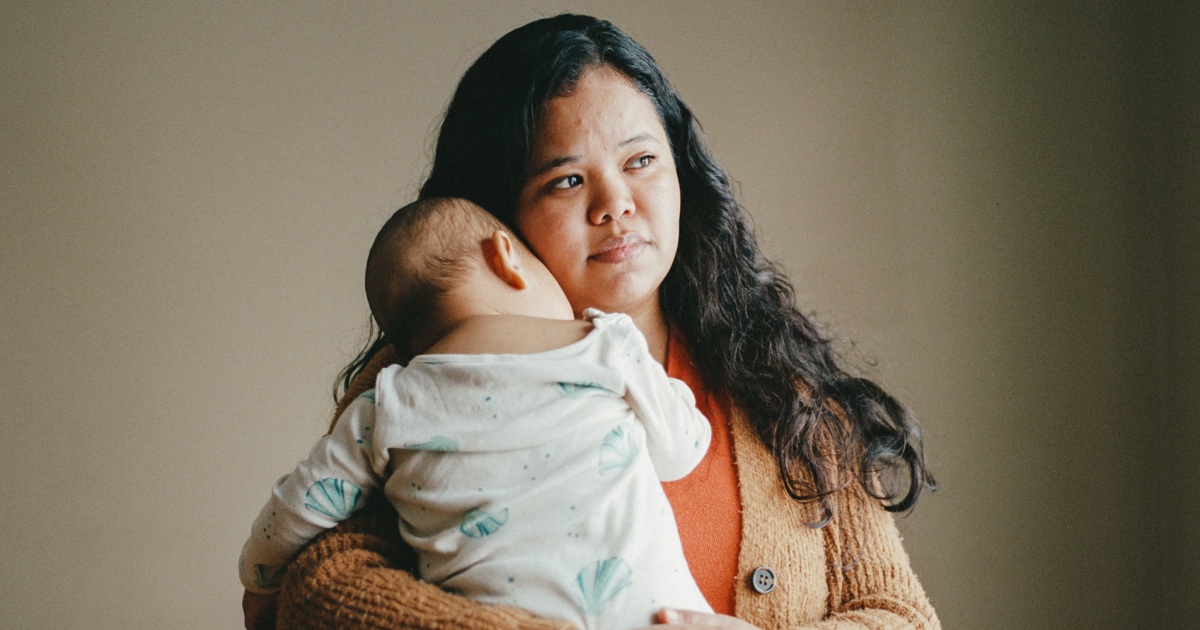
Ibarra, 27, said she was drawn to home birth because she wanted a calm, warm environment where every decision felt completely her own. She had read stories of Black and Hispanic women — who have a higher risk than white women of pregnancy-related complications — being dismissed by hospital staff when they raised concerns during their pregnancies.

“They would talk about the pain that they experienced, like they were ignored or given a cold shoulder,” Ibarra said.
To prepare for labor at home, Ibarra strung up soft yellow lights and laid a mattress on the floor of her living room. She planned to deliver in an inflatable birthing pool. In the end, she never got to use it.
The situation Ibarra encountered, a baby’s slowing heart rate, is considered a “yellow flag,” Nowland said. Although not always an emergency, it can be a sign of restricted blood flow or oxygen to the baby that, if unaddressed, can cause brain damage.
After the nurse at Ibarra’s first-choice hospital, Christ Hospital in Liberty Township, Ohio, said it didn’t take walk-ins, Nowland tried a different hospital. She reached the labor and delivery unit by phone while pulling into the parking lot.
Ibarra was admitted right away and went on to have an emergency cesarean section. Her daughter, Joy, was born healthy.

The experience with Christ Hospital left her even more skeptical of such health systems, she said: “It does make me a little bit more hesitant to approach a hospital.”
The Christ Hospital Health Network declined to answer questions about Ibarra’s case but said in a statement: “In keeping with our policy and deep commitment to the community, we always welcome and accept all patients without exception.”
When transfers go wrong
Nowland had followed a commonly known set of best practices for Ibarra’s transfer. Midwives and their home-birth patients are expected to develop contingency plans about which hospital they want to deliver at, then call ahead if they need to transfer. That way, the patient can get admitted straight into the labor and delivery unit rather than the emergency room, where they can face longer waits. Once they arrive, the midwife should brief the hospital’s care team.
But it doesn’t always happen that way. Nowland said she had a patient years ago who waited an hour in the ER, her face turning green. The woman’s placenta had adhered to her uterus and she required a blood transfusion.
Nowland and other midwives interviewed said that when they call a hospital, it’s not uncommon for staff to question their decision-making or refuse to trust what they say. Their patients are sometimes chastised upon arrival for attempting a home birth, they said.

“A lot of L&D [labor and delivery] staff will of course have to accept patients on transfer, but then treat them like they’ve been abusing their child,” said Cindy Farley, a certified nurse midwife and professor emerita of midwifery and nursing at Georgetown University.
Caitlin Hainley, a midwife in Des Moines, Iowa, said that last spring, one of her patients decided she wanted an epidural after around 22 hours of labor. Hainley called one of the closest hospitals, and after 30 minutes of waiting for the doctor to call back, they decided to start driving over.
Hainley’s phone rang midroute. The doctor questioned whether she knew how to properly assess the baby’s heartbeat, Hainley said, and insisted the patient would be better off at a hospital an hour away in Des Moines, which had more advanced critical care services for infants.
“She’s like, ‘Well, we just don’t even know anything about this patient,’” Hainley said. “And I said, ‘You know, if you don’t want this patient in your facility, I wish that you would just be upfront with me.’”
The group turned around and headed for Des Moines. By the time they got there, roughly two hours had passed since Hainley’s initial call.
“Anything could have happened in those two hours,” she said. “They don’t trust that we are giving them clear, accurate information, but I don’t know why, because it’s all documented. It’s not like I’m just somebody that decided to wear a hat and call myself a midwife.”
Distrust of midwives
Prior to the 20th century, midwife-assisted births were more common in the U.S. than hospital births. That changed after the arrival of pain medications and new surgical techniques. Over time, many in the medical field came to see midwifery as risky. Some of the messaging against midwives was also rooted in racism, targeting Black midwives in the South.
“There was a campaign that home-birth midwives were uneducated, dirty, lacked skill sets and practiced witchcraft,” said Gaylea McDougal, the central representative for the Tennessee Midwives Association.
Today, 38 states don’t allow licenses for certified midwives, who have master’s degrees in midwifery. Thirteen states don’t offer a path to licensure for certified professional midwives, who complete training and an exam but don’t need a degree. All states, however, recognize certified nurse midwives — registered nurses who specialize in midwifery.

The trend makes the U.S. somewhat of an outlier globally. Midwives attend roughly 63% of births across various settings in the United Kingdom, 60% in the Netherlands and 43% in France. But they’re present for less than 13% of births in the U.S.
Many doctors can recount their own harrowing experiences with home-birth transfers.
Smith, the OB-GYN in Oregon, said she will never forget a patient pregnant with twins who came in after delivering the first baby at home. Pregnancies with multiples are high-risk, so the standard of care is for these births to be in a hospital. When the woman showed up, the arm of the second twin was dangling out of the birth canal, Smith said. The baby died during an emergency C-section.
“It’s when you get these emergent transfers that don’t go well that the whole feelings of bias and stigma form in a provider’s head,” Smith said. “It’s the negative transfers you remember.”
Some patients, too, have complained that their midwives discouraged them from going to the hospital, either because they overestimated their ability to treat complications or feared that hospital staff would stigmatize the patient or take invasive measures. Midwives who don’t follow state requirements for transferring patients to a hospital can be fined, sued or have their license suspended or taken away.
Gabrielle Nelson, whose son Isaac is now nearly a year old, said her midwife in Salt Lake City, Utah, encouraged her to hold out at home, even though 48 hours had passed since her water broke. The baby’s head was stuck and Nelson was in excruciating pain, so her husband insisted on a hospital transfer.
“I literally thought I was going to die,” Nelson said. “I’m just thinking, ‘I want to go to the hospital. I want a C-section if I can get it. I just need this to be over.’”
When they eventually made it to the hospital, Nelson’s blood pressure was dangerously high — a problem that her midwife could have detected earlier had she been checking it regularly, as is generally recommended. In the end, Nelson ended up delivering a healthy baby.
“There is a reason you hear so many people who work in labor and delivery who are so anti- home birth,” she said. “I’m sure things like this do have a lot to do with it.”
More than one solution
Had Ibarra lived in a different area, she may have had the option to deliver at a birth center — a facility where a staff of midwives oversees deliveries and administers pre- and postnatal care. These centers are slowly gaining popularity as a middle ground between hospitals and home births. Nationwide, around 22,600 babies were born at birth centers in 2024, a nearly 15% increase since 2016.

Eighteen states, including Ohio, require birth centers to have a formal, written agreement with a hospital that will accept their transfer patients. Although the policy is meant to protect patients in emergencies, it often prevents birth centers from opening in the first place, since many hospitals are reluctant to be party to the agreement.
Nowland has tried for years to find a hospital to enter into a transfer agreement with the birth center she runs in Cincinnati, which she had hoped would give women more options in the area. But no hospital has been willing, so the center can only offer prenatal care. It’s where Ibarra was seen during her pregnancy.
“I absolutely adored it,” Ibarra said. “I felt a level of comfort that equated to me being at home.”
For deliveries, Nowland exclusively attends home births.