







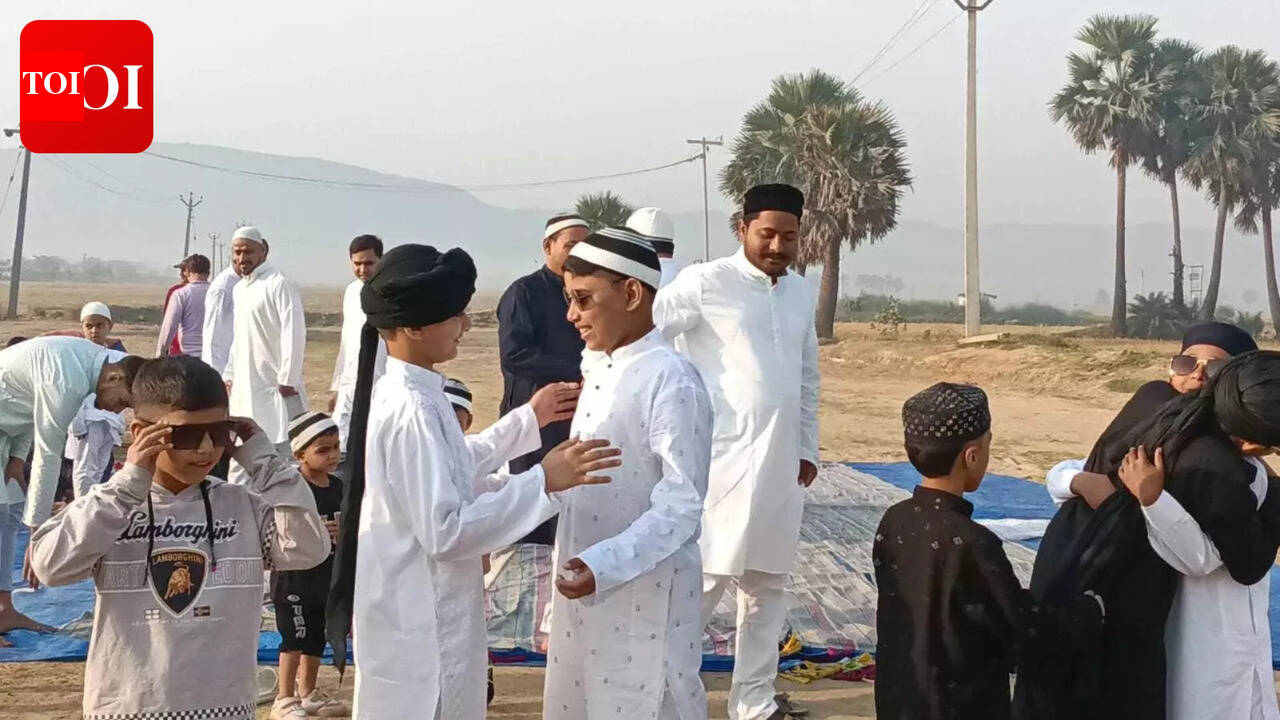
Patna: While the rest of India spent Friday evening scanning the horizon for the crescent moon, Barakar village in Nalanda had a different story to tell. In a tradition that sets this small Bihar hamlet apart from the national calendar, residents of Barakar celebrated Eid-ul-Fitr 24 hours earlier, on Friday, aligning not with the Indian moon sighting but with Saudi Arabia.For villagers here, the “Eid ka chand” is no longer something they wait to see with their own eyes from rooftops. Instead, it arrives virtually on the screens of their smartphones.Barakar, located in Silao block of Nalanda district, has a deep-rooted connection with the Middle East. Almost every household has at least one member working in Saudi Arabia. This migration has not only brought economic prosperity but has also reshaped their religious and cultural timeline.Ali Khan, a resident of Barakar village, said the shift was not accidental but a conscious move towards global unity. “We believe that Eid should be celebrated worldwide on the same day,” he said.He added that the practice began almost 15 years ago in the village when smartphones and technology became an essential part of daily life. With high-speed internet reaching rural corners of Bihar, the geographical distance between Patna and Riyadh has effectively disappeared.“Several of our relatives live in Saudi Arabia, and we believe when one of them has viewed the moon, the rest should believe their word and celebrate Eid on the same day,” Khan added. While neighbouring villages were observing the final fast of Ramzan, Barakar’s Eidgah was filled with men dressed in new kurta-pyjamas offering Eid prayers.“Technology and the internet have played a major role in connecting everyone across the world and making the world a smaller place,” Khan said.While a significant section follows the Saudi calendar, others continue to observe the Indian tradition, often resulting in a two-day celebration within the same village.Khan said their relatives were not directly affected by the conflict in West Asia, and the ongoing war-like situation had not dampened the spirit and festivities of Eid. However, he added that while offering prayers they remembered all those affected by war and prayed for peace and improvement in the situation.