







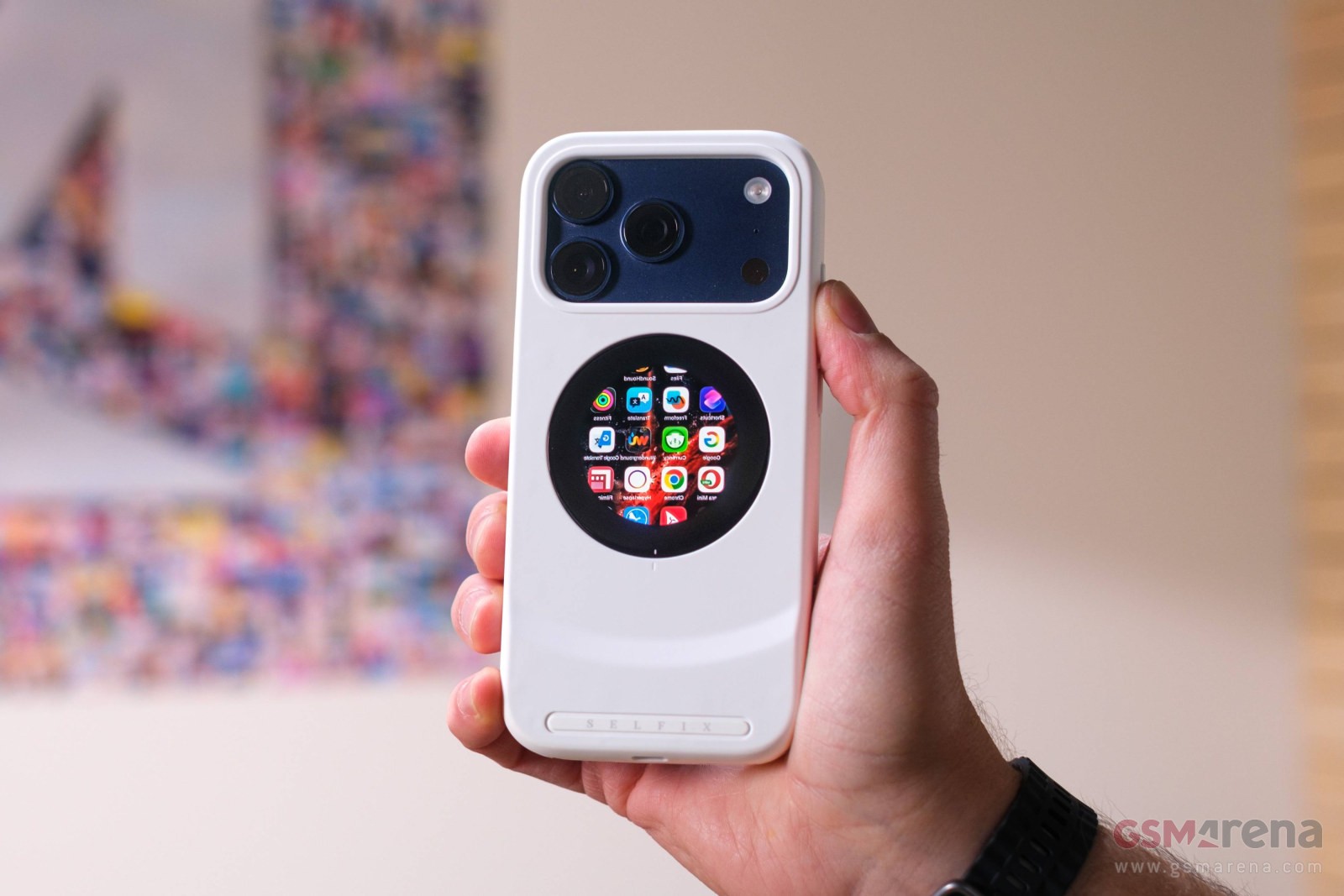
The Selfix case aims to turn your iPhone 17 Pro or iPhone 17 Pro Max into an all-in-one vlogging system. It can also come in handy if you shoot video with an action camera or a drone. The case is currently on Kickstarter.
The key selling point – and the reason behind the name – is the display on the back of the case. It allows you to use the main cameras for selfie photos and videos while getting the framing just right.
It’s a 1.6” OLED display with 480 x 480px resolution. And yes, it’s round. This seems odd at first, but there’s actually a good reason for it – it preserves compatibility with MagSafe accessories. Many MagSafe stands and selfie sticks have an O-shaped magnet, which attaches to the phone without covering the display.
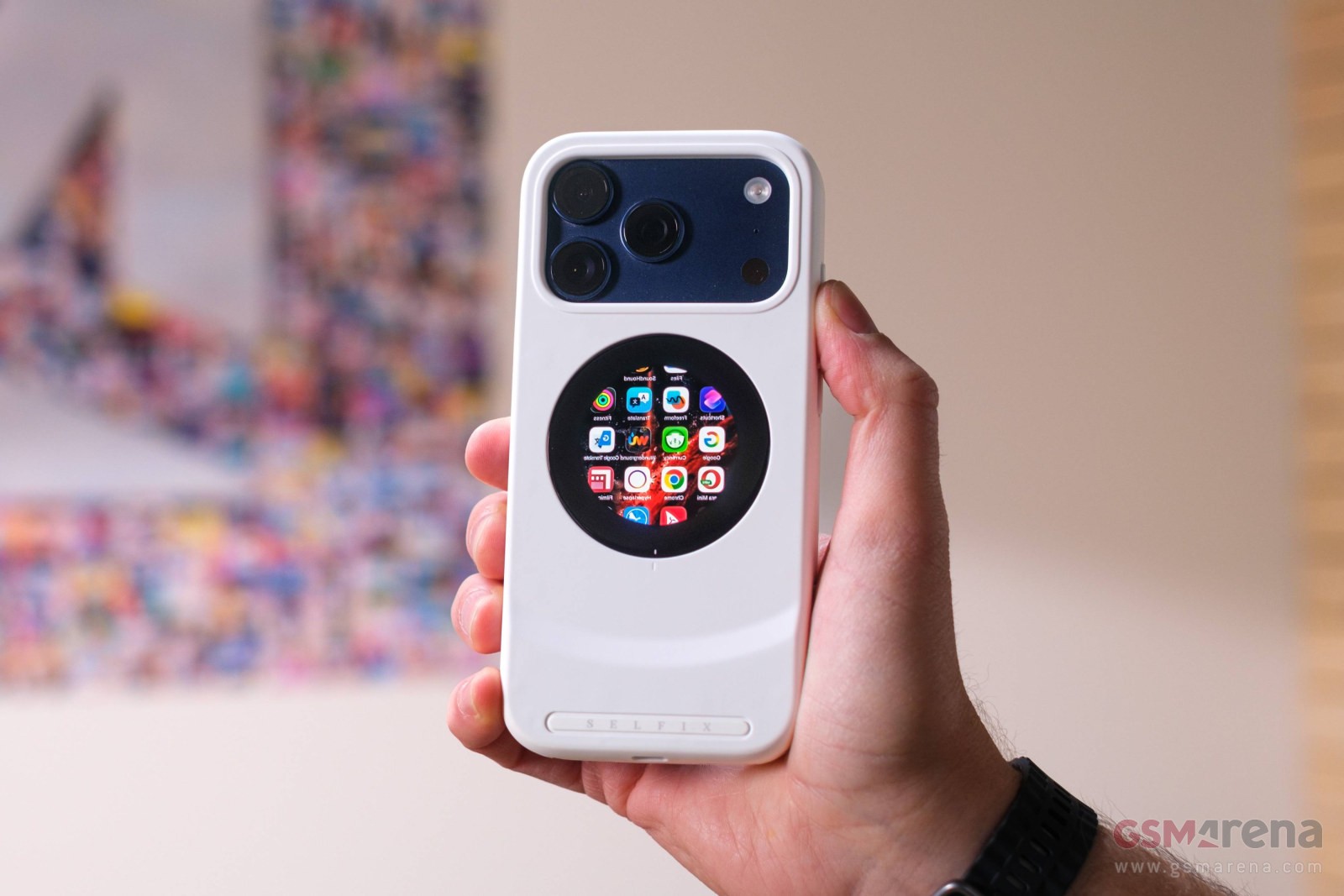
The Selfix case has a circular 1.6” OLED display on the back
The way this case works is interesting – there is no app to install, instead the case just plugs into the phone’s USB-C port and uses its video output to drive the display.
This is a touchscreen, but note that you have to enable AssistiveTouch – this allows the display to send touch input back to the phone. It works well enough for basic control of the camera app, e.g. you can use tap to focus or adjust the zoom level.
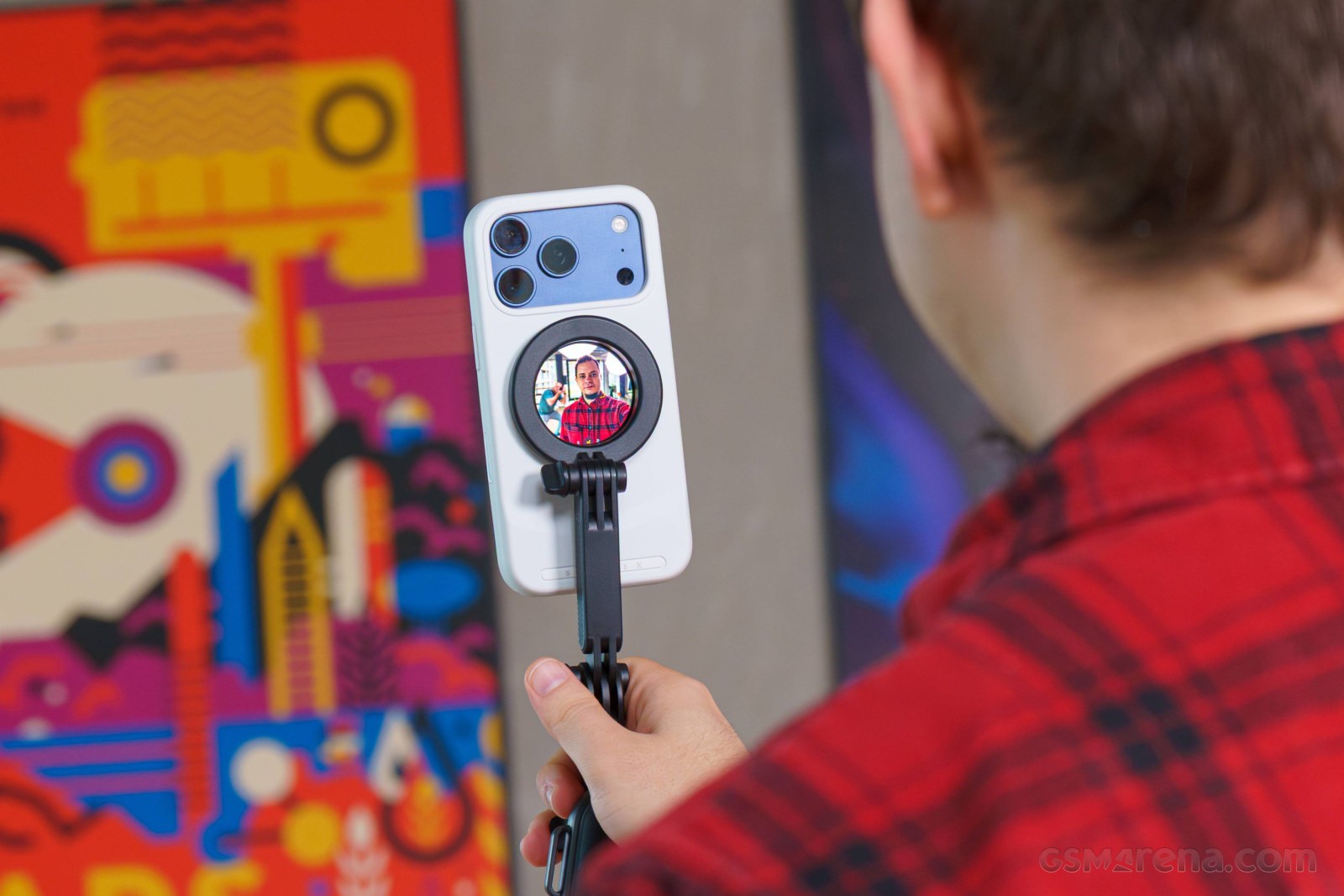
This is a pretty clever design overall – for example, you can attach the phone to a selfie stick, which you hold with one hand, and use your other hand to control the touchscreen. Or if the phone is on a tripod, you can use the touchscreen to set things up without having to go around to the other side.
Also, since this just uses screen mirroring, you can technically navigate the phone’s full UI – the small round display isn’t ideal for it, but it works well enough to launch a third-party app, say, the Blackmagic camera app or a streaming app.
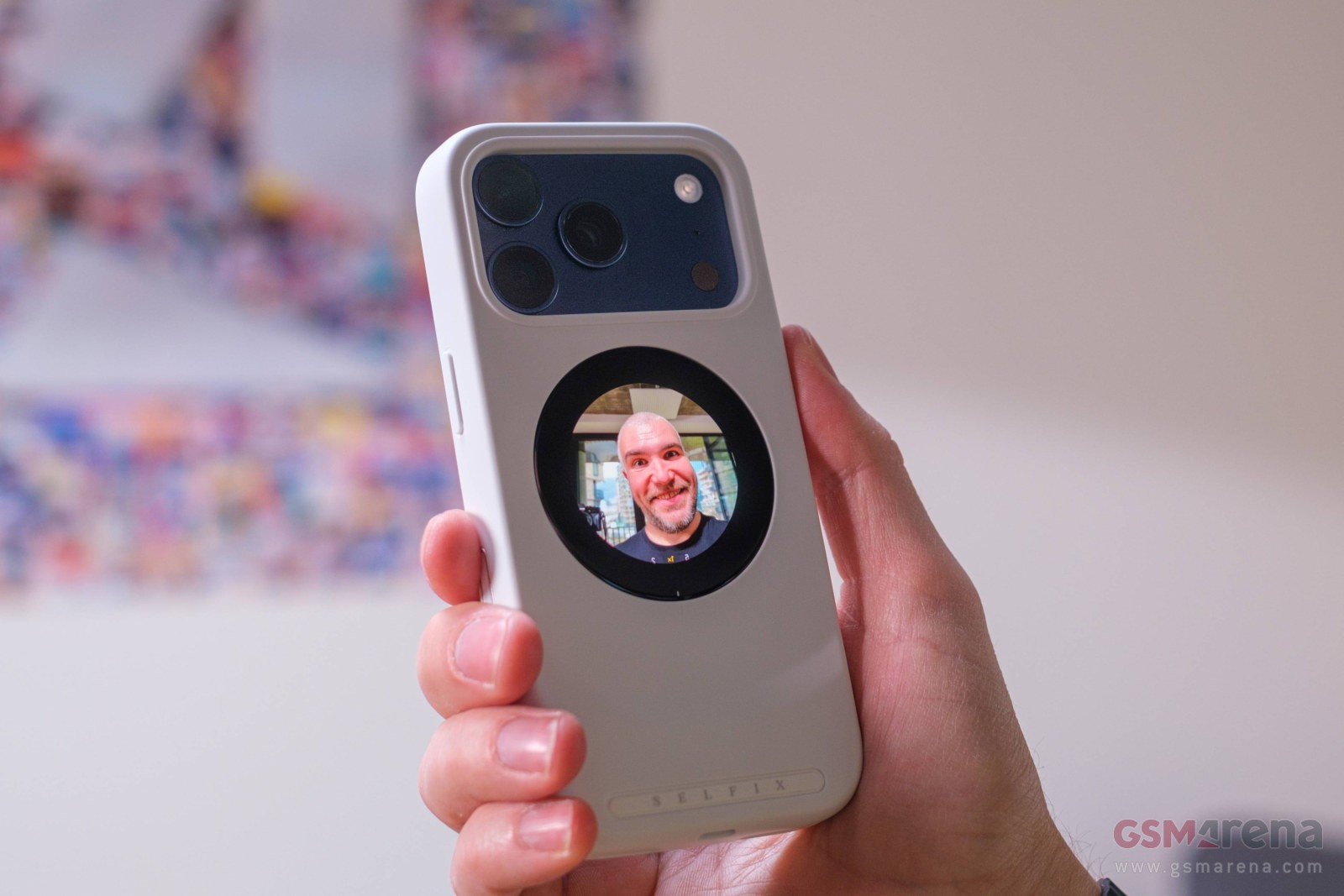
Using the rear display to frame a selfie
All this means that the case occupies the phone’s USB port, though. The case has its own USB-C port, which can pass power to the phone for charging. It needs a minimum of 18W to work, but a 27W USB-PD adapter is recommended. Ideally, though, you will use a 45W adapter as the case can send up to 40W to the phone (which is about as high as the iPhone 17 Pro and Pro Max can go). Do note that there are some limitations here. For one, you can’t charge the phone and use the rear display simultaneously. Also, the case’s USB port is for charging only (i.e. you can’t connect to a computer to transfer files via the case).
Since the display draws power from the phone, it dims after a minute of no screen updates and it switches off after 5 minutes. The case itself powers off after 10 minutes to preserve the phone’s battery. You can turn it back on using the case-only button that is on the lower left corner of the phone. Powering on takes 6-7 seconds. This button also lets you flip the image on the display horizontally, similar to the phone’s Mirror Front Camera mode (just for the rear camera instead).
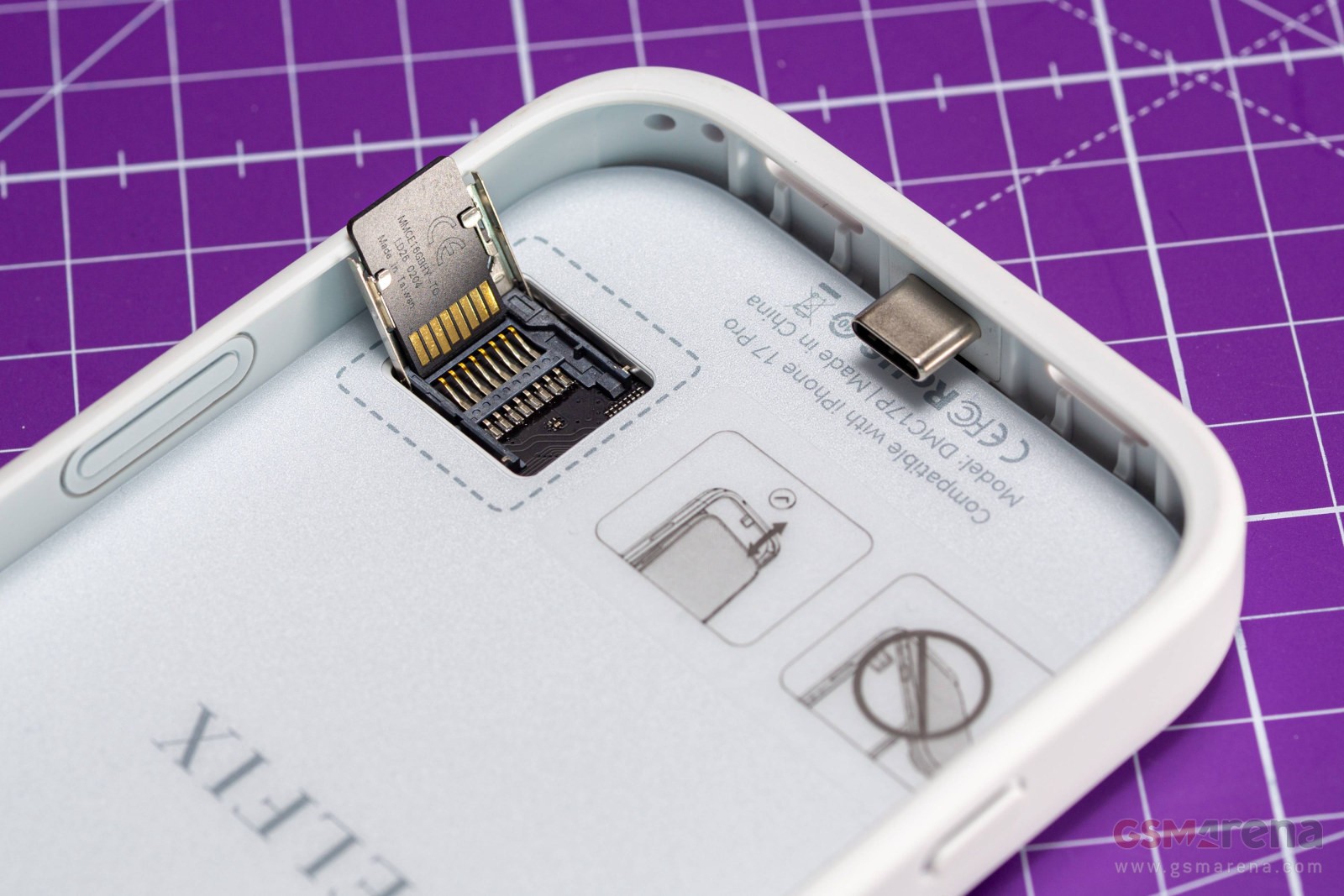
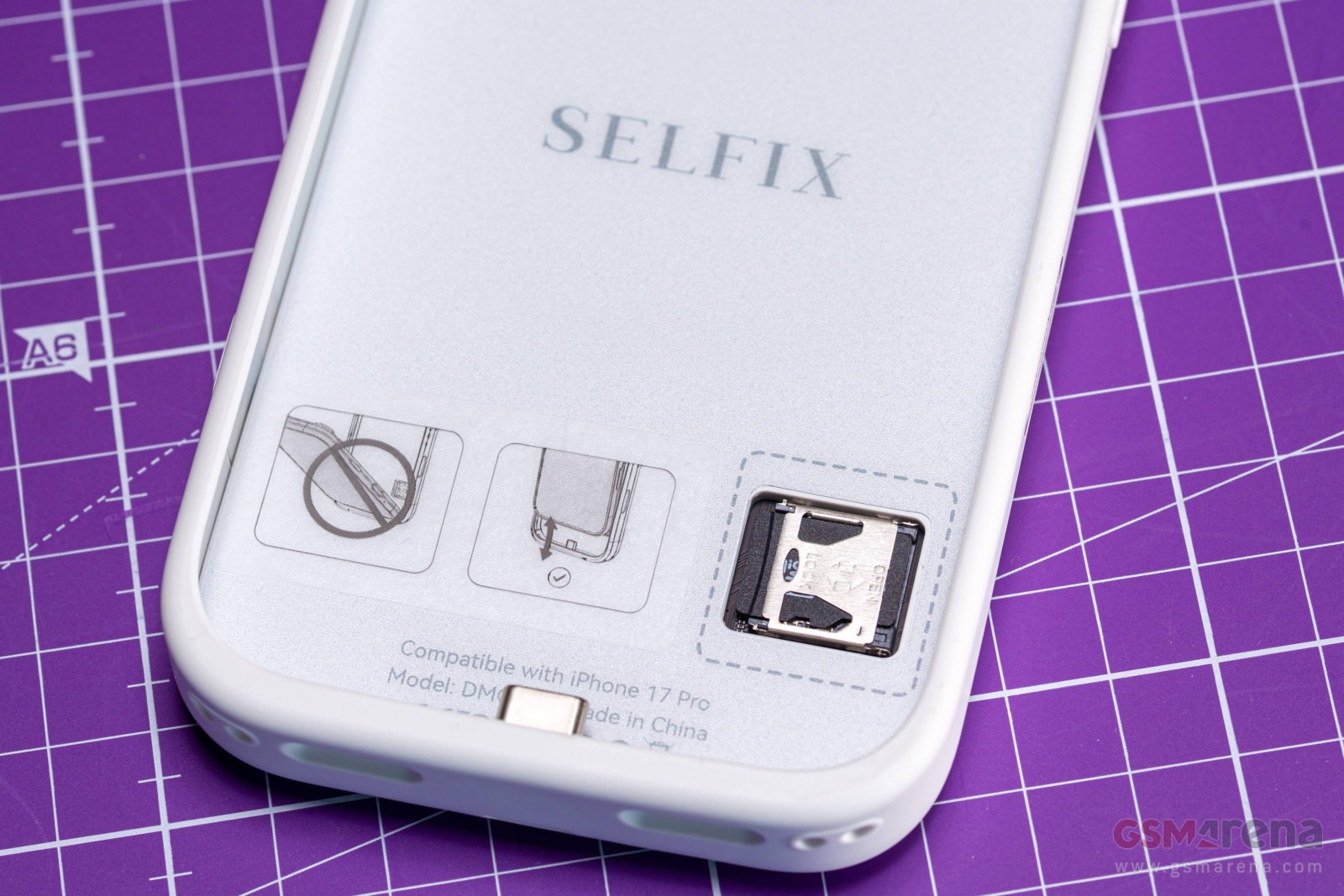
There’s a microSD slot inside, which supports cards up to 2TB
The display alone may be reason enough to get the Selfix case, but it has an additional feature – a microSD slot. This case lets you add up to 2TB of external storage, so you can copy files from internal storage to the microSD card and free up some space.
Or the other way around – as we alluded to in the opening paragraph, you can take a microSD card out of an action camera or a drone and read it using this case. The only hurdle for this use-case is that the card reader is only accessible from the inside, so you have to take the phone out every time you want to swap cards. iOS has the option to format external storage, though most microSD cards should come pre-formatted in exFAT. exFAT is also the format that action cameras and drones typically use as well.
You can also record video directly to the microSD card, though bandwidth limitations mean that you can’t use the most demanding modes. The card reader is rated V30, i.e. 30MB/s, while 4K ProRes 60fps footage needs write speed of 220MB/s. But if you are not shooting in ProRes, you can record to the internal storage and then offload the files to the microSD card. This is especially useful if you didn’t shell out for one of the higher storage tiers for your iPhone.
A 2TB iPhone 17 Pro Max costs $2,000 ($800 more than the base 256GB model), while a 2TB microSD card will cost you half that. And that’s only because 2TB cards are expensive – there’s nothing stopping you from carrying several 1TB or 512GB cards, for example, and swapping them as needed.
The Selfix case itself is made of high-quality TPU and is available in Satin White, Morganite Pink and Onyx Black. Only iPhone 17 Pro and iPhone 17 Pro Max cases are available – we tested the Pro version. In case you were wondering, no, the Pro Max case doesn’t have a larger display (again, the display is designed to fit inside the MagSafe ring of magnets, which is the same size on all phones).
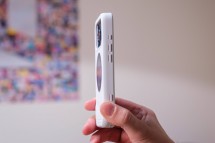
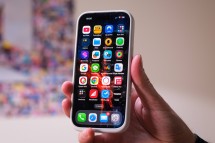
The Selfix case on the iPhone 17 Pro
The case does make the phone thicker – both the 17 Pro and 17 Pro Max cases measure 17mm thick, but it’s not too much extra bulk compared to a regular TPU case.
Right now, the Selfix case is on Kickstarter with three weeks left to go. You can get either the iPhone 17 Pro version or the 17 Pro Max for $79. There is also a $109 option that includes the Selfix Magnetic Ring Holder with Mirror (normally this costs $15) and the Selfix Adjustable Crossbody Strap-Black ($25 normally).