







The world remains on edge amid ongoing US-Iran tensions, with the closure of the Strait of Hormuz – an Iran-controlled chokepoint that handles about 20–25% of the global oil supply – adding to the crisis.Amid this, cooking gas prices are surging globally, and Indian households fear LPG cylinder shortages.Amid this scenario, several new cooking alternatives have emerged, offering clean energy options that enable independence from fossil fuels.
Imagine stoves powered by water and sunlight, free from cylinder dependence!
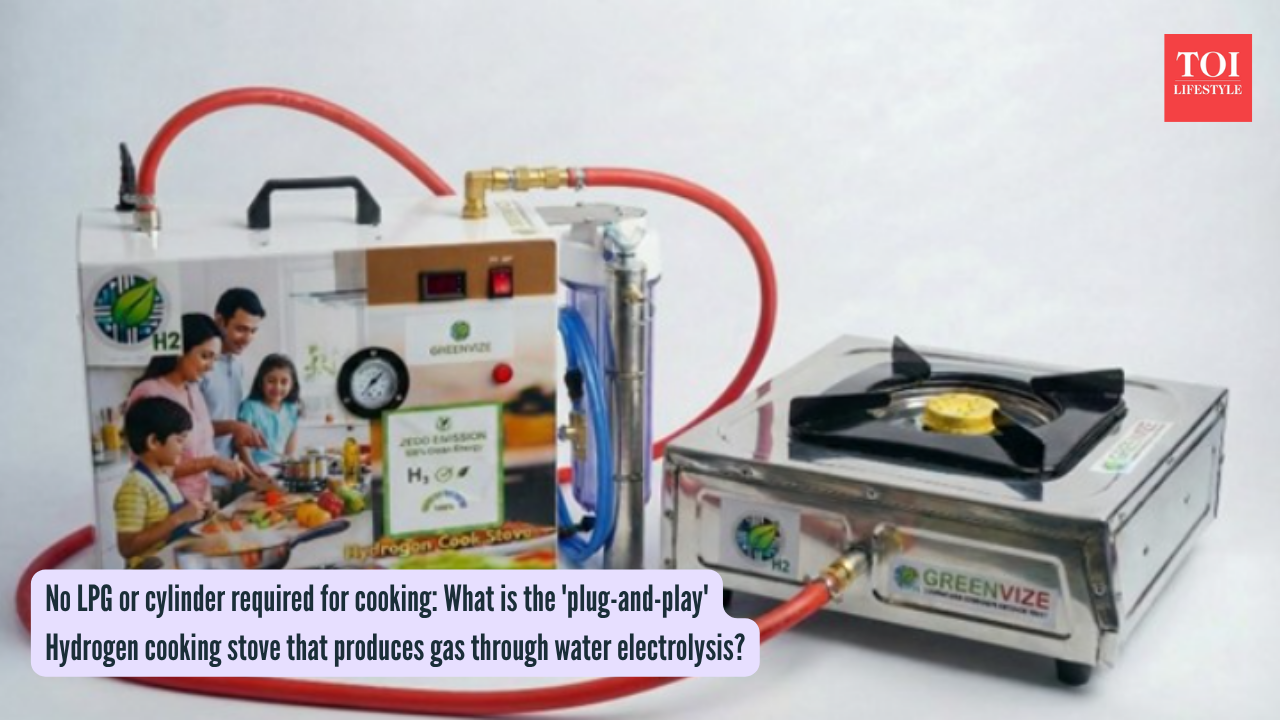
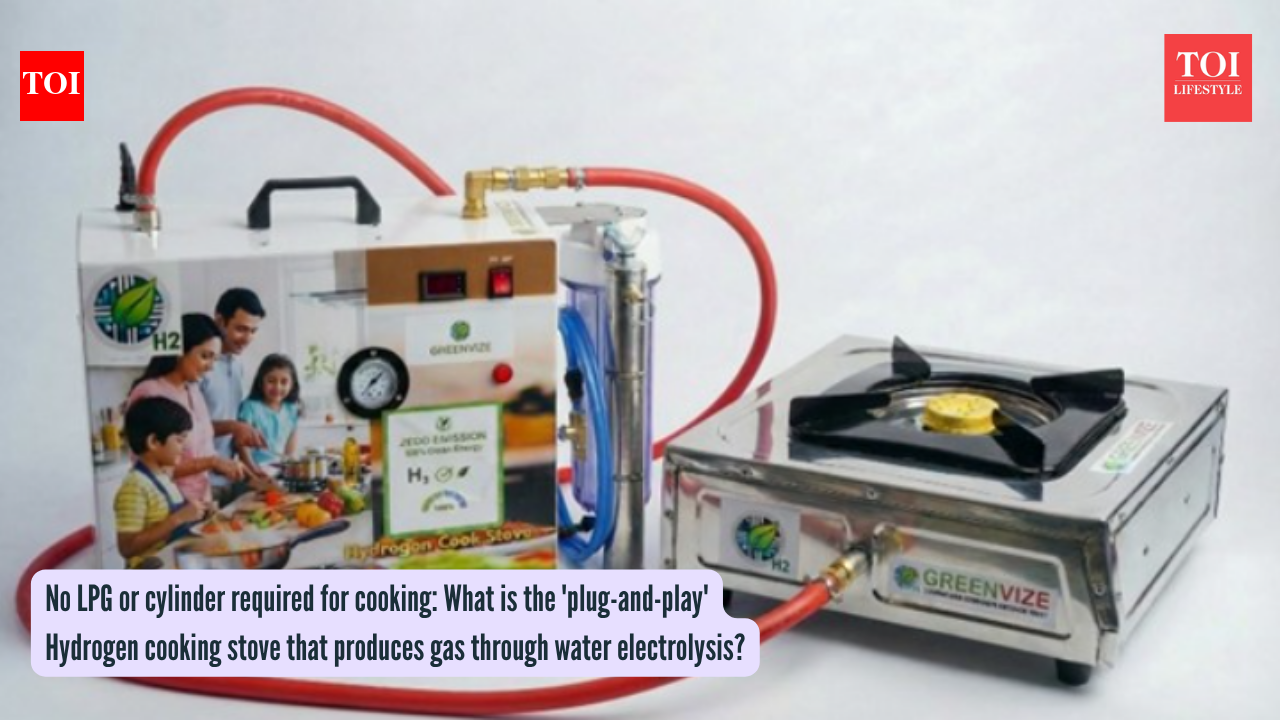
‘plug-and-play’ Hydrogen cooking stove (Photo: PV Magazine/ Greenvize)
What is the novel ‘Plug-and-Play’ Hydrogen cooking unit that produces gas through water
Indian clean-technology firm Greenvize has rolled out a hydrogen cooking gadget for homes and eateries. It has a proton exchange membrane (PEM) electrolyser right into the stove, making hydrogen from plain water on the spot without any bulky tanks or pipelines required, according to a PV Magazine report.Forget waiting for gas deliveries, instead just twist the knob, and electrolysis begins instantly on this cooktop, as water splits into hydrogen for clean burning and oxygen is released, freshening kitchen air. Only water vapor comes as a by-product, so it becomes super eco-friendly.Company’s founder Sanjeev Choudhary explained to the PV Magazine that the unit needs just 100 ml of distilled or RO water plus 1 kWh electricity for up to six hours of cooking.
Beats LPG and induction- Here’s why
The company pitches this as a smarter pick over LPG or electric induction, especially for hotels and community kitchens.“While both induction stoves and the Greenvize hydrogen cooking system use electricity, the efficiency, flexibility, and real-world usability are fundamentally different—especially for hotels, community kitchens, and high-demand cooking environments,” Sanjeev was quoted as saying.Induction uses around 1.5-2 kW per burner, or 9-12 kWh for six hours. Whereas this cooking system just uses around 1 kWh. Plus, it works with any pots, and no special magnetic ones are needed separately, which fits traditional Indian cooking.
It is quite handy to use
“In its standard configuration, the electrolyser is directly coupled with the cooking unit, with hydrogen generated and consumed in real time, eliminating the need for storage,” Sanjeev added.He further said, “However, the system can also be configured with hydrogen storage, allowing production during off-peak hours or periods of solar generation and subsequent use during peak demand.” He also stressed upon options like 200-300 bar cylinders or buffer tanks for busy spots.
What is it priced at?
Single-burner model costs around INR 1,05,000 + GST. Double-burner costs around INR 1,50,000 + GST. Amid big firms chasing industrial hydrogen, this brand shrinks it for everyday use.