



The trailer of Kerala Story 2 opens with a bold claim — “Insha Allah, in the next 25 years, India will be an Islamic state under Sharia law”. It then goes on to assure the viewer that the film is “based on many true events”.It is an attention-grabbing beginning. But it has also reopened a familiar debate.
The Kerala Story filmmakers have returned with a bolder sequel, vowing to “go beyond.” But before they could, it’s already mired in legal quicksand.The Kerala HC flagged the “wrong portrayal” of the state and said it had the potential to “incite passion.”“Kerala lives in total harmony. But you have portrayed that this is happening in all over Kerala,” the Kerala High Court remarked during a hearing on a petition against Kerala Story 2.


Against this backdrop, the question arises: Is something wrong with the Kerala Story?“Everything,” said Anitha, a journalist from Kerala, before launching into a spirited explanation.“Not all girls wear jasmine flower,” she added, recalling her experience of watching The Kerala Story 1.Since the movie is yet to be released, one could give the makers the benefit of doubt. However, the trailer and teaser have already made several Malayalis question the authenticity of certain scenes and the broader narrative.From claims about forced beef feeding, to the debate around “love jihad,” to questions about data and representation — the controversy surrounding the film continues to expand beyond cinema and into politics, law, and public perception.What follows is a closer look at the concerns, the counter-arguments, and the debate surrounding The Kerala Story 2.
Beef – and the case of missing parotta
One of the first things that was flagged the most, was the forcibly feeding beef scene. The parotta was missing, joked several Malayalis on social media.In the trailer, a woman is seen being held back by a few people until one person forcibly shoves beef into her mouth as she screams – ‘Mar jaaongi par kabhi beef nahi khaaongi’

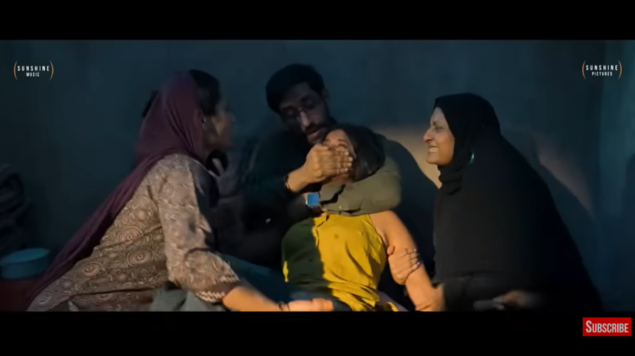
The director of the movie Kamakhya Singh said that he wanted to highlight the “religious conversions” that are taking place by forcibly feeding people beef.“Yeah, once you taste beef, you don’t want to go back to a life where beef is prohibited. It’s that tasty especially, with a hot fluffy porotta,” remarked Saneed Khader, 26-year-old Keralite who runs an event management company while pursuing his masters in journalism.Another Malayali who has spent most of her life in Kerala, but now works for an advertising firm in Bengaluru said: “I lived my whole life in Kerala, 25 years at least, I have met thousands and thousands of people.”But I have never met one Malayali who went eeeeewwhhh on beef. It was always ‘let’s go have beef parotta’,” she said.“Almost everyone in Kerala eats beef, be it Christian, Muslim or Hindu,” said Sooraj Sudhir, a 24-year-old Kerala resident who works as a sub editor for a Malayalam news outlet in Kottayam, a Christian-majority city in central state.
Has beef been a part of Malayali cuisine forever?
“Historically, the number of strict vegetarians in Kerala was very limited. With the spread of modern culture, beef has become widely consumed across the state. While in earlier times it was prepared mainly by non-Hindus, today it has become a common part of Kerala’s kitchens,” said Sivadasan Mankada, history professor at Calicut University.Hindu form 54.73% of Kerala’s population, almost double of Muslims. The state’s beef consumption is about three times that of Tamil Nadu and more than seven times that of Christian-majority Meghalaya, according to official data.The historical accounts offer varied accounts of how this particular dish became a central part of Kerala cuisine.“Meat also played a central role in rituals and festivals among the general public, including Hindus,” Mankada said.“Kerala’s food culture has been predominantly non-vegetarian since ancient times. Fish and meat have always been integral to the cuisine, and eating meat was never a matter of social conflict. Communities from the Nairs downward traditionally consumed a wide variety of meats. Hunting and catching animals for food formed an important part of Kerala’s culinary history,” he added.Another point of contention that the trailer has, is the ‘love jihad’ and the conversion issue.
Is Kerala ‘sick’?
“When you are sick, you must accept first that you are sick,” remarked Vipul Amrutlal Shah when asked if the movie was meant to spread hate against Kerala.“The Malayalis are ok here. We are okay here. The way they have portrayed this (love jihad) is very wrong. We are over this,” said Arunthathi.
Why is it called ‘Kerala’ story then?
The makers of the movie held a press conference where they brought victims of “religious conversion”, none of whom were from Kerala.When asked by the reporters, he said that it was a “pan-India movie”. Quickly clarifying after, director Kamakhya Singh said: “It’s related to Kerala also and from Kerala, how it’s all over India.”
The question arises, why is it named ‘Kerala’ Story. Is it more about creating a certain image of the state among north Indians instead of polarising Kerala itself?Film critic, journalist and academician from Kerala A Chandrashekar agrees.Chandrashekar further pointed out that the National Award–winning The Kerala Story, which initially claimed there were 32,000 alleged forced religious conversions in the state before later describing itself as a fictional film, was therefore misleading. “We have only 3 cases recorded in India about the conversion of girls from Kerala who were taken to Syria and later got recruited by the IS,” he said.“Any kind of such narratives like forceful feeding of beef etc doesn’t happen in Kerala and having a narrative like that even fictitiously cannot be tolerated as they are factually incorrect or fake. Hence the movie falls under the category of Disinformation or Mal information,” he added.The controversy around The Kerala Story began with its central storyline, which portrays three women from Kerala as victims of so-called ‘love jihad’ and recruitment into extremist groups. The controversy was about the film’s teaser that claimed that 32,000 women from Kerala had been radicalised and sent to Syria and Yemen. When questioned about the unverified and exaggerated, arguing that it misrepresented the state and could promote communal tensions. Following the backlash, the filmmakers clarified that the number was based on media reports, and later removed the specific figure from promotional material.Questions about the accuracy of the film’s claims were further highlighted by official data. Information obtained through an RTI from the ministry of home affairs showed that between 2014 and 2020, the National Investigation Agency arrested 177 individuals across India in ISIS-related cases, of whom 19 were from Kerala—figures that critics say contrast sharply with the numbers suggested in the film, a News Minute report said.The movie went on to receive a National Award.“The only Malayalam filmmaker who was in the National Film Awards Committee last year tried his level best to convince the Jury headed by Ashuthosh Gowarikkar that the plot narrated in Kerala Story 1 is absolutely baseless and based on a stray incident. He argued that if that film (which is cinematically a big zero in its visualisation and editing) is selected for the best film and director, it would be insulting and hurt the State’s sentiments, but even the chairman was unwilling to accept,” Chandrashekhar said.
The ‘love jihad’ debate
The movie’s teaser opens with three women, initially Hindu at least by their names, eventually clad in hijabs with bruises on their faces, speaking of their horrific experiences of falling in love with Muslim guys.The messaging is clear– love jihad is a thing.“There was a phase in all our lives, around ten years back, when we had this conversation for a month,” she said on love jihaad. She noted that the conversations sparked from TVs and social media where they said “love jihaad was happening. After then we never had that conversation.” “No body is concerned about these things any more,” Arunthathi said.She further recalled a specific incident that was used as an example to caution her by her parents. “One of our neighbours fell in love with a Muslim guy. She eloped with him. When they reached the guy’s home, suddenly he wanted her to change her religion threatening her of divorce. Her name was changed from Archana to Aashna,” she said, trying hard to recall the woman’s first name, adding how the woman was later forced by her in-laws to send her two sons to ‘Islamic schools’.The Calicut University history professor termed ‘love jihad’ “an artificially constructed narrative designed to malign and undermine Kerala’s composite culture.”“The concept of ‘love jihad’ is an artificially constructed narrative designed to malign and undermine Kerala’s composite culture. In reality, the number of young people choosing partners across religious boundaries has been steadily increasing throughout India. Kerala has often taken the lead in supporting such interfaith marriages. Couples are free to live anywhere in the state, and progressive-minded communities continue to extend their support to them,” he said.Saneed Khader questioned the legitimacy of the term. “Has any legitimate authority ever given a valid statement on love jihad happening in Kerala based on statistics and data? I don’t think so.. as far as I know, love jihad is a term found by right wing hindutva to terrorise Muslim community .. may be some cases of forced conversions have happened in Kerala in the cases of love marriages. But the thing is, similar incidents have been happening all over India and Muslims are not the only ones who are behind these forcible conversions.”Another term widely being associated with the movie is propaganda.Filmmaker Anurag Kashyap too dismissed it as a propaganda movie.
Is it a propaganda?
“It is not like propaganda movies like The Accidental Prime Minister or even Emergency, which were based on books written by persons who knew the persons in the narratives closely,” said film critic Chandrashekhar, adding, that “it does not have any concrete evidence or documents to support the claims put forth by the movies.”Propaganda is information, ideas, or messaging that is spread in a way designed to influence people’s opinions or beliefs, often by presenting only one side of an issue.It can use emotional language, selective facts, or exaggeration to shape public perception. Propaganda is commonly used in politics, advertising, and media, and it may sometimes leave out balanced or opposing viewpoints.He went on to highlight that many movies from Malayalam like Puzhu, Bharath Circus etc released over the recent past “have come up with fake and false narratives from within the state blaming the hindus for Dalit oppression placing the Hindutwa movements on the defensive.” “We should recognise that whatever opinions that are applicable to Kerala Story are applicable to them also,” he said.Speaking of intelligent propaganda, he said that movies like “Akshay Kumar’s Gold, and Yami Gautham’s HAQ” could be “politically read as intelligent propaganda movies against Pakistan/Islam”.