
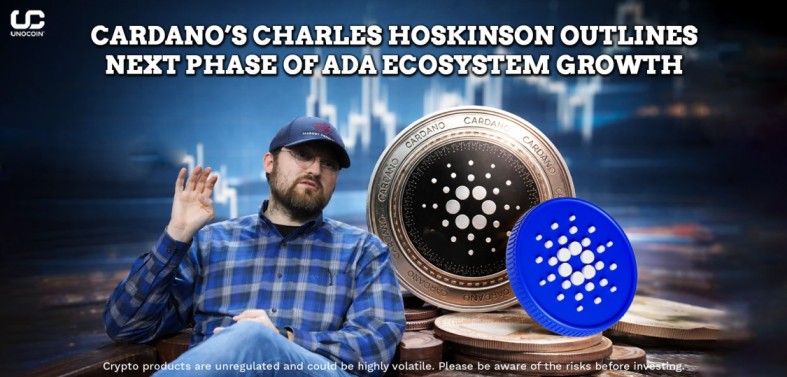
In early 2026, Cardano founder Charles Hoskinson unveiled an ambitious roadmap designed to accelerate the growth of the ADA ecosystem and position Cardano as a leading cross-chain blockchain platform. Hoskinson described 2026 as a crucial “execution cycle,” emphasizing that the focus will shift from research and theoretical development toward large-scale implementation, ecosystem expansion, and real-world adoption. The strategy highlights three core priorities: scalability, interoperability, and privacy, all aimed at transforming Cardano into a major infrastructure layer for the future digital economy.
A central component of the strategy is strengthening collaboration within what Hoskinson calls the “Pentad.” This structure brings together five key organizations working within the Cardano ecosystem: Input Output Global (IOG), Emurgo, the Cardano Foundation, the Midnight Foundation, and Intersect. The goal is to align these organizations under a faster and more coordinated development framework, enabling quicker decision-making and more efficient delivery of upgrades and products across the network.
Interoperability is another major focus of Cardano’s growth strategy. Hoskinson has repeatedly emphasized that Cardano should no longer function as an isolated blockchain but instead operate as part of a broader, interconnected crypto ecosystem. Plans include building bridges and integrations with other major blockchain networks such as Bitcoin and XRP to allow assets, liquidity, and decentralized applications to move across different platforms. Strategic integrations with technologies like LayerZero, expanded oracle services from Pyth, and the launch of a native version of the USDC stablecoin (USDCx) are expected to further strengthen Cardano’s role in the multi-chain landscape.
Performance improvements are also a key pillar of the roadmap. One of the most anticipated upgrades is Ouroboros Leios, a next-generation consensus protocol scheduled for development and testing through 2026. The upgrade aims to significantly increase Cardano’s transaction processing capacity while maintaining the network’s high level of decentralization and security. If successfully implemented, Leios could allow the network to handle more than 10,000 transactions per second, positioning Cardano among the most scalable blockchain platforms in the industry.
Another major highlight of the roadmap is the development of the Midnight privacy network. Hoskinson has described Midnight as one of the most important technological initiatives within the Cardano ecosystem. The privacy-focused sidechain is designed to enable private smart contracts, confidential transactions, and selective data disclosure. These features are intended to support enterprises and institutions that require privacy and compliance when building blockchain-based applications. The Midnight network is expected to roll out in multiple phases during 2026, eventually leading to the deployment of private smart contract capabilities and the distribution of the NIGHT token.
Beyond technology upgrades, Hoskinson has also outlined plans to significantly expand Cardano’s decentralized finance (DeFi) ecosystem. The strategy includes a proposal to deploy up to $100 million worth of ADA from the Cardano treasury to stimulate growth in the network’s DeFi sector. This initiative could involve supporting new liquidity pools, investing in ecosystem projects, and strengthening the availability of stablecoins within the network. Increasing the share of stablecoins relative to total value locked (TVL) is considered an important step toward building a more mature financial ecosystem on Cardano.
Another key area of focus is real-world asset tokenization. Cardano developers are exploring frameworks that would allow traditional assets such as stocks, real estate, and commodities to be represented on-chain. By enabling programmable tokens backed by real-world value, the network aims to bridge the gap between traditional finance and decentralized finance.
Governance is also entering a new era for Cardano. Following the implementation of the Voltaire governance framework, the network now operates under a fully decentralized decision-making structure. Through this system, ADA holders can delegate voting power to community representatives known as Delegated Representatives (DReps), who help guide funding decisions and protocol development. The Cardano community treasury, which holds a substantial amount of ADA, can now be used to support innovation, research, and ecosystem expansion.
Hoskinson believes that the success of these initiatives will determine whether Cardano can fulfill its long-term vision of becoming a globally influential blockchain platform. He has even suggested that by 2030, Cardano could evolve into what he describes as a “nation-state level” blockchain ecosystem, capable of supporting governments, financial institutions, and millions of users worldwide.
Please find the list of authentic Unocoin accounts for all your queries below:
Disclaimer: Crypto products are unregulated as of this date in India. They could be highly volatile. At Unocoin, we understand that there is a need to protect consumer interests, as this form of trading and investment has risks that consumers may not be aware of. To ensure that consumers who deal in crypto products are not misled, they are advised to DYOR (Do Your Own Research).