
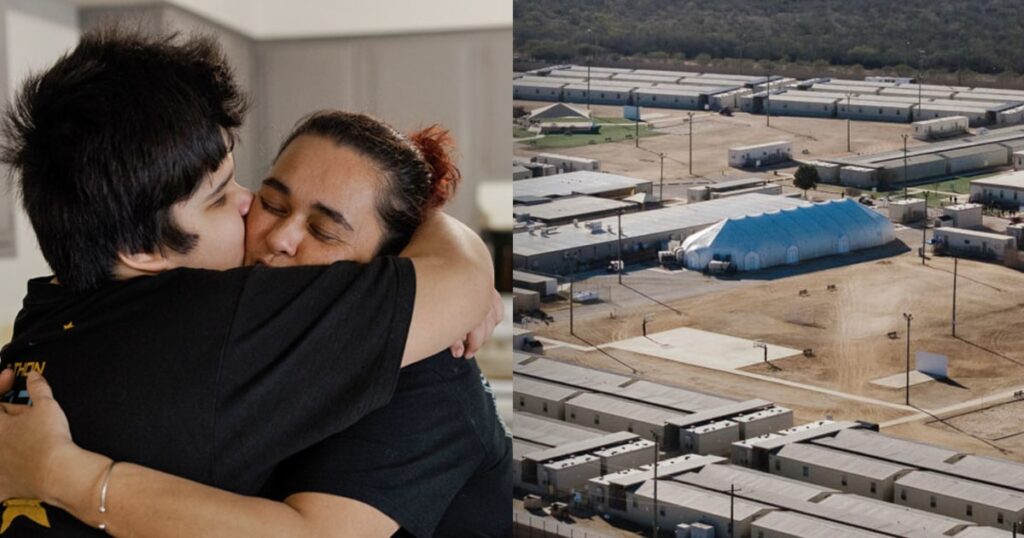
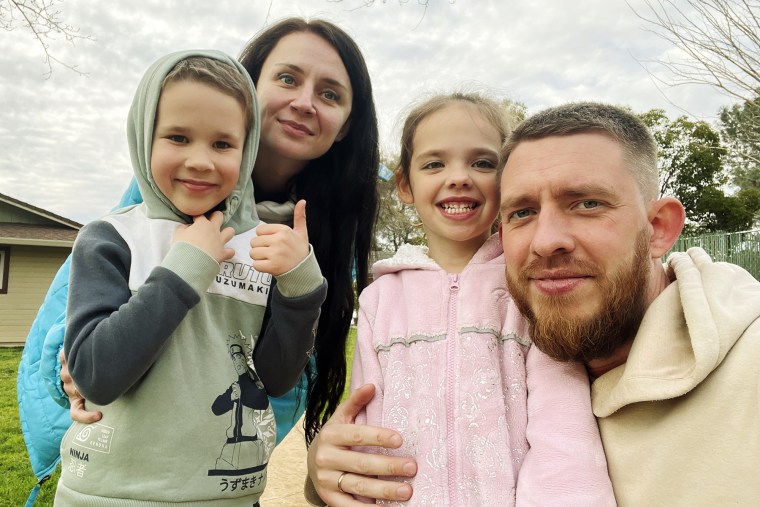
Soon after immigration officials arrested him along with his wife and kids at the U.S. border and dropped them off at the Dilley Immigration Processing Center in South Texas, Aleksei began counting down the days.
“OK, 20 days. We just wait and pray for God to release us please after these 20 days.”
The U.S. isn’t supposed to hold minors for longer than that, the Russian asylum-seeker had been told, under a decades-old legal settlement intended to shield children from the harms of detention.
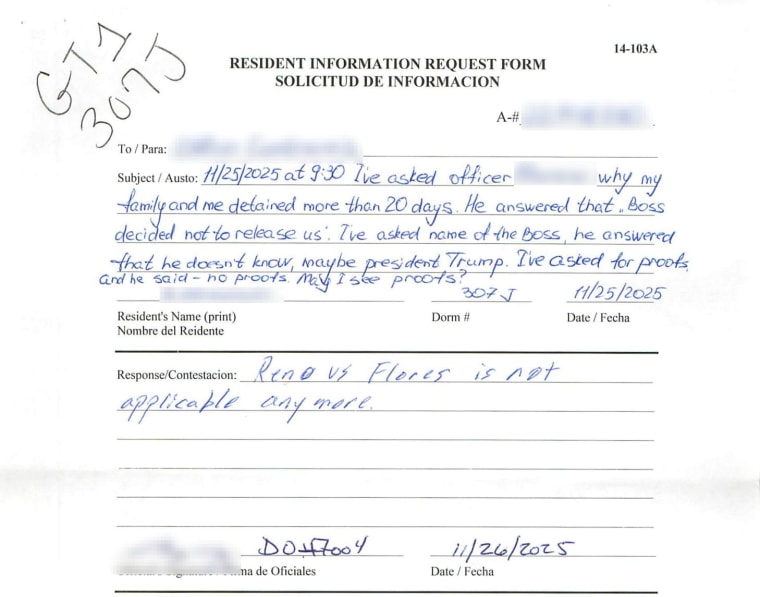
But 20 days came and went. Aleksei and his wife, who asked to be identified only by their first names out of fear of retaliation should they be deported, watched their 5-year-old twins unravel at the remote, prisonlike facility. When he approached an ICE officer and asked why the deadline had been ignored, the officer said to take it up with his boss.
“Who’s that?” Aleksei asked.
“Trump.”

The officer declined to provide the president’s phone number. When Aleksei followed up with a written complaint, another ICE officer responded in writing that the court agreement that established the 20-day rule “is not applicable anymore.”
That isn’t true. But since the start of President Donald Trump’s second term, officials routinely violate the limit, according to data collected by court-appointed monitors and shared with NBC News and NBC Dallas-Fort Worth. Children like Aleksei’s twins get confined for weeks or months in conditions advocates say can be traumatic and developmentally harmful.
As of January, more than 900 children had been held in family detention for longer than 20 days, according to the data. Roughly 270 of those children were confined for more than twice as long.

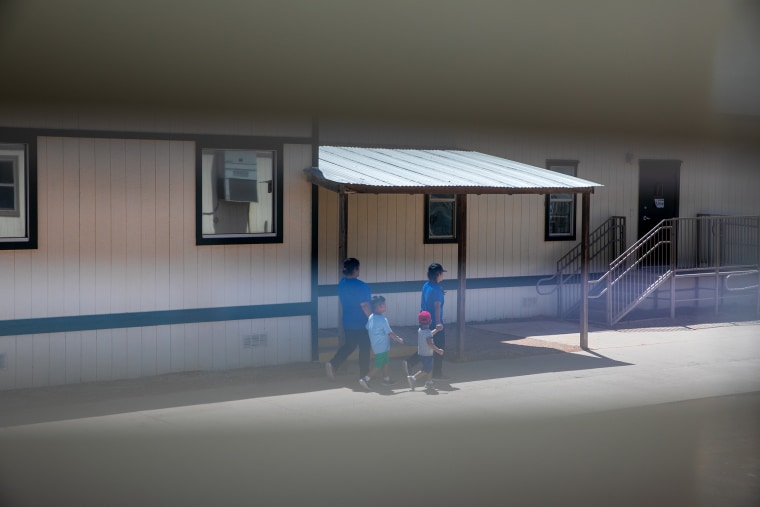
Lawyers representing families at Dilley say the prolonged stays reflect a broader strategy by the Trump administration to use detention as a deterrent, pressuring parents to abandon asylum claims rather than continue fighting their cases. As days stretch into weeks — and weeks into months — they say, the psychological and developmental toll deepens for children trapped inside a facility where detainees have complained of spoiled food, lax medical care and limited education.
Vilma Bautista Torres, who fled Honduras and sought asylum in the U.S. in 2021, said she and her 9-year-old son, Kenek, spent more than 80 days at Dilley before their release on parole last week. Kenek, who has severe autism, grew increasingly disoriented and distressed as the weeks dragged on without access to therapy, she said, hitting himself, crying through the night and begging her to let him return to his school in Louisiana.
In another case, Habiba Soliman, 18, and her four younger siblings — including twin 5-year-olds — have been detained at Dilley for more than nine months alongside their mother as they fight in court to return to their adopted home in Colorado rather than be deported to Egypt.
“This place broke something in us — something that I don’t know if we will ever be able to fix,” Soliman said in a phone call from the facility last week.
The 20-day threshold traces back to a 1985 class-action lawsuit, Flores v. Meese, which accused the federal government of holding immigrant children in unsafe conditions. The case dragged on for more than a decade before a landmark 1997 settlement established nationwide minimum standards for the detention of minors.
Under the Flores Settlement Agreement, children may be held only for the time reasonably necessary to arrange their prompt release or deportation — a process that federal courts have interpreted to mean no longer than 20 days. But immigration lawyers say the Department of Homeland Security’s adherence to that limit has been wildly inconsistent over the past year. Some families are released within days; others remain detained for months, with little explanation for the disparity.
At the same time, the Trump administration has been fighting in court to overturn Flores, arguing it incentivizes migrants to bring children to secure faster release into the U.S., fueling surges in border crossings and limiting the government’s ability to detain and remove families. A federal judge rejected that legal challenge in August; the administration has appealed.

In a statement, DHS attacked the Flores settlement as “a tool of the left that is antithetical to the law and wastes valuable U.S. taxpayer funded resources.” The department has dismissed allegations of poor care at Dilley as “mainstream media lies,” writing in February that the facility is “purpose-built to ensure that families in detention are comfortable and have all of their needs cared for.”
CoreCivic, which manages Dilley under a federal contract that’s expected to earn the company $180 million annually, said it’s not responsible for how long children are held. It referred reporters to a statement from last month defending the quality of accommodations, food and medical care provided at the facility. “Nothing matters more to CoreCivic than the health and safety of the people in our care,” the statement said.
Becky Wolozin, a senior attorney with the National Center for Youth Law and a member of the legal team responsible for enforcing the Flores settlement, said she and her colleagues have documented significant regression among minors held beyond 20 days. Parents report school-age children wetting the bed again, sucking their thumbs and experiencing frequent night terrors. Some withdraw and become despondent.
“One parent told us that their 5-year-old asked, ‘Are we bad people? Are they going to kill us here?’” Wolozin said. “That’s what these children are feeling as time goes on.”
Children trapped in ICE detention
Attorneys for families held at Dilley argue that in many cases there was no justification for detaining them in the first place. Many had been living in the U.S. for months or years without incident, checking in regularly with immigration authorities while pursuing asylum or other relief. Some were arrested at immigration appointments — encounters that in prior years might have resulted in continued monitoring outside detention rather than confinement.
“Where is the public safety risk?” said Sergio Perez, executive director of the Center for Human Rights and Constitutional Law, which helped bring the original Flores case. “Where is the threat that a 5-year-old, 13-year-old, 14-year-old presents? There is none.”
Bautista Torres said the nearly three months she and her 9-year-old spent at Dilley were the hardest they have ever endured.
Her son, Kenek, has Level 3 autism — the most severe classification — and relies on specialized schooling and daily therapy to regulate his emotions and behavior. At Dilley, she said, those supports vanished. He struggled to understand where he was or why he couldn’t leave. The lights stayed on through the night, and the constant noise of patrolling guards left him agitated and afraid. The unfamiliar food on his plate often went untouched.