
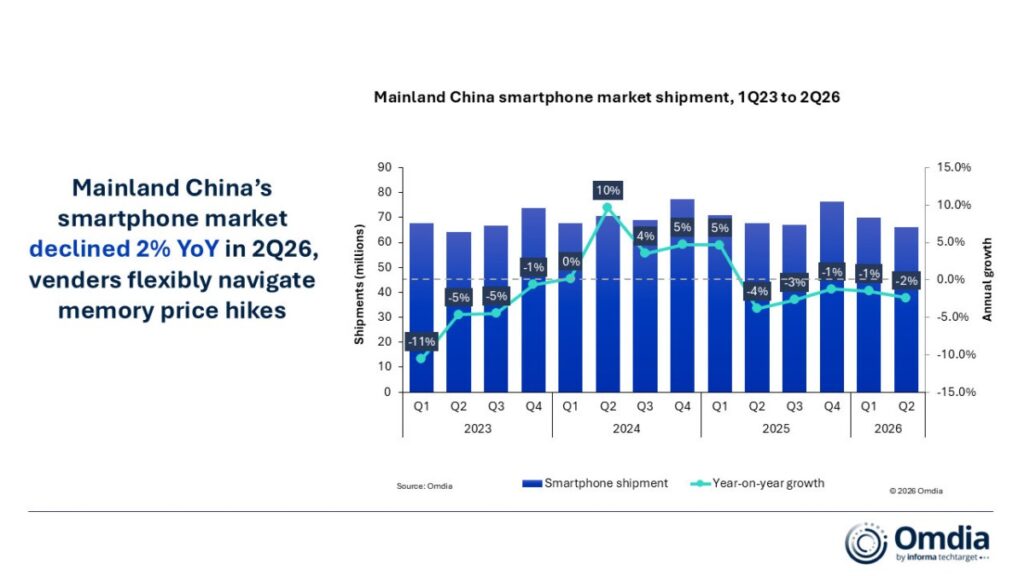
Omdia released its global smartphone market share report for the second quarter of this year (April-June) yesterday, and today it’s following up with the picture for the Mainland China market.
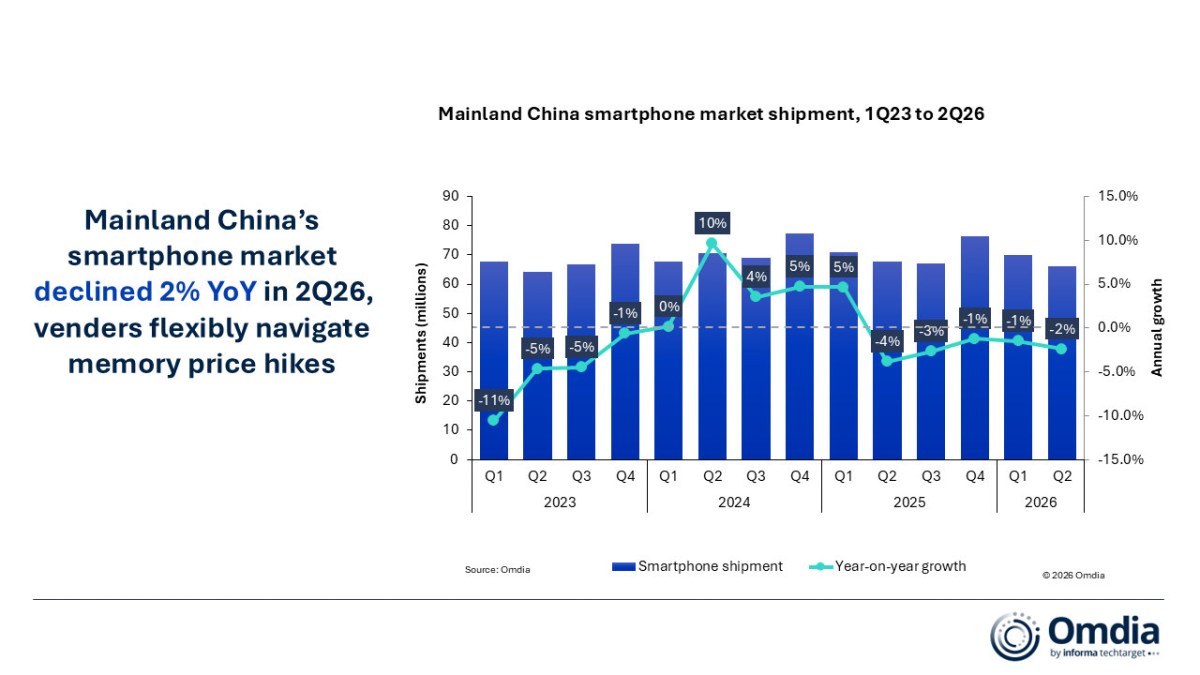
Overall shipments have declined by 2% compared to Q2 2025. Despite that, both Huawei and Apple have managed to grow their shipments and market shares.

As you can see below, Huawei shipped a record 15.2 million devices for a 23% market share, up from 12.2 million and 18%, respectively, in the year-ago quarter. Apple, on the other hand, shipped 12.4 million iPhones for a 19% market share, up from 10.1 million and 15%, respectively, in Q2 2025.
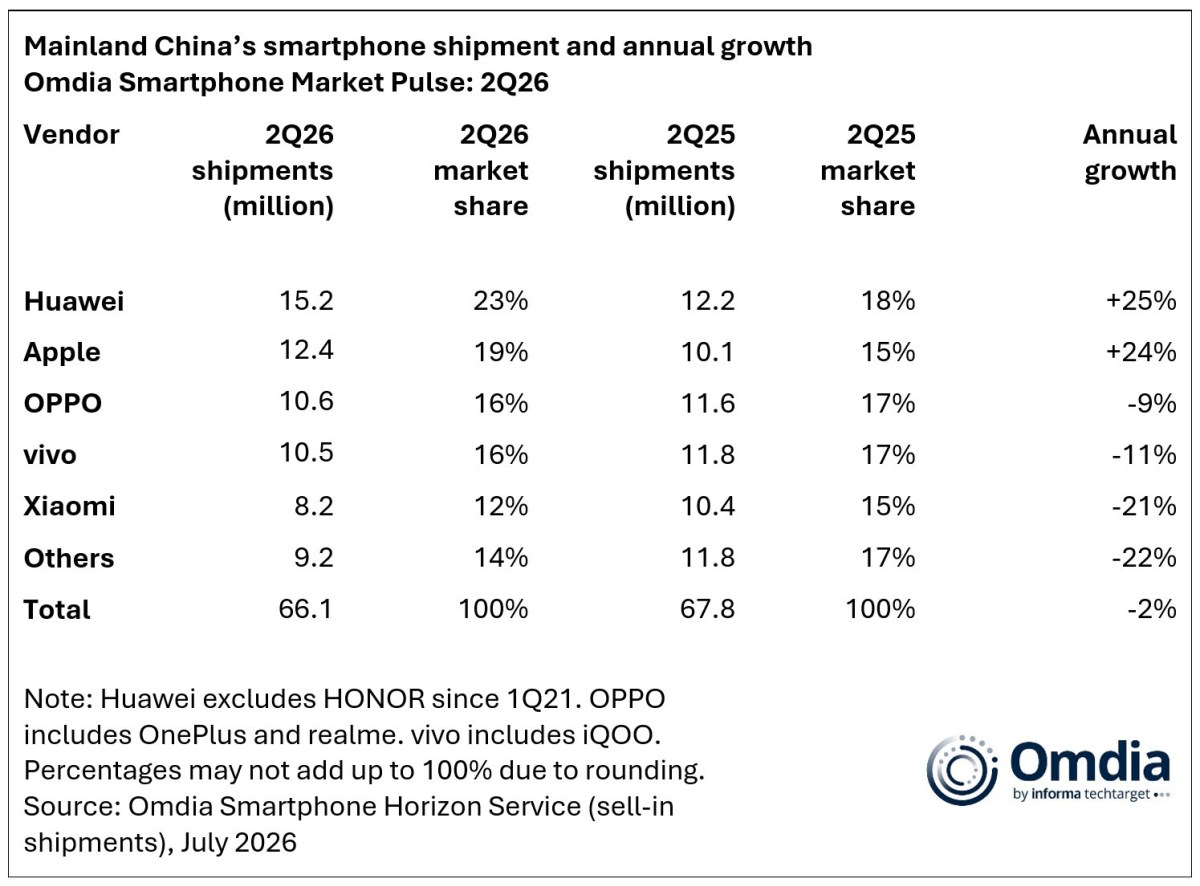

Oppo was in third place with 10.6 million devices shipped and a 16% market share (down 9%), with vivo posting almost identical numbers – 10.5 million shipments and the same 16% market share (though it was down 11%). Xiaomi rounds out the top five with 8.2 million devices shipped and a 12% market share, down by a whopping 21% year-on-year.
Interestingly, the overall Chinese smartphone market’s decline in Q2 was lower than the global market’s, which went down by 4% in the same period. Total smartphone shipments in China in Q2 were 66.1 million. The memory crisis and consequent rising component costs are also intensifying the market’s polarization in China.
Huawei’s growth is explained by its “relatively stable pricing structure” by Omdia Principal Analyst Hayden Hou, as well as “resilient demand in the premium segment”. Both the Pura X Max and the Enjoy 90 Pro Max have been well received. Huawei can also count on its strong in-house R&D and “deep alignment with domestic supply chains” to “remain resilient amid cost volatility”. The fact that Apple hasn’t raised prices yet has obviously helped it too.
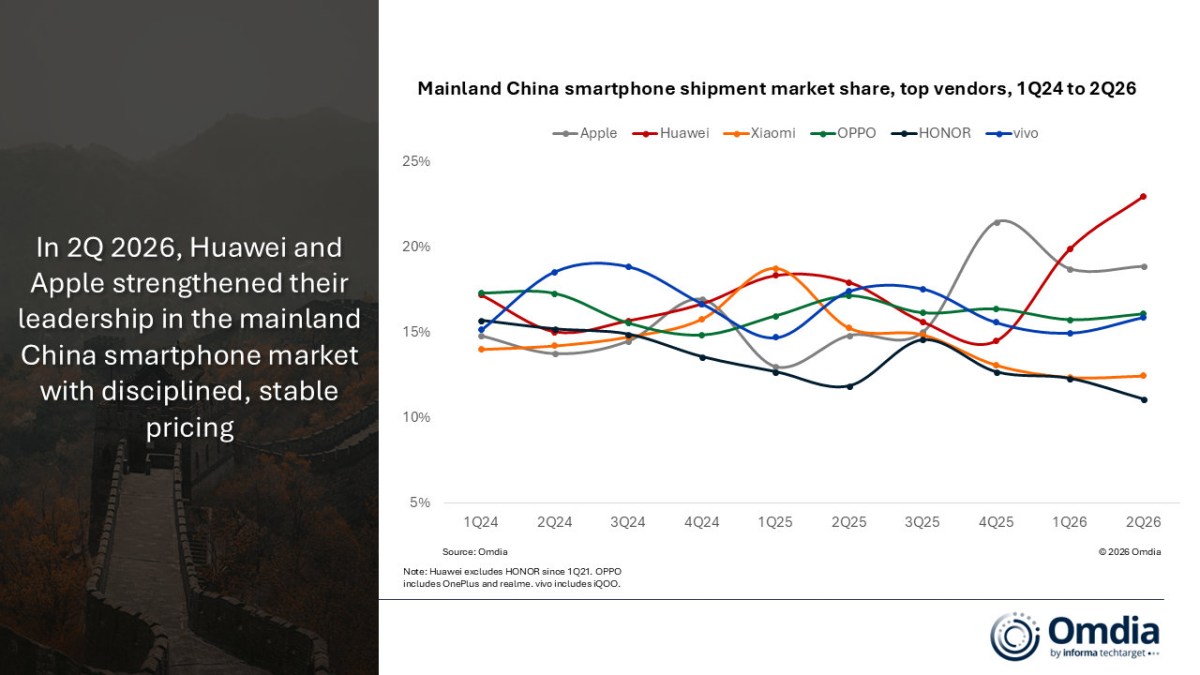
Omdia projects that the Chinese smartphone market will decline by 6% for the full year compared to 2025, which should still be less than the global market. All makers that aren’t Huawei or Apple are optimizing their portfolios to adapt to the new reality. Demand will remain relatively stable, but consumers are “expected to be more cautious about upgrading their devices”.