
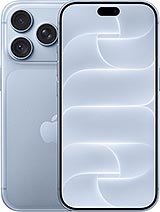
Pre-orders for the new iPhone 18 Pro and 18 Pro Max started this Saturday. And since this is Apple we are talking about, there are no pre-order goodies – the opposite, actually, since Apple raised the iPhone 16, 17 and Air prices by $100. But we won’t be looking at the vanilla models today since the vanilla iPhone 18 isn’t expected until next year.
So, here are the iPhone 18 Pro and 18 Pro Max. They feature Apple’s first 2nm chip, the A20 Pro, which runs at close to 5GHz (it peaks at 4.93GHz) and posted massive Geekbench scores. Additionally, the new models promise longer battery life, especially the Pro Max. And they have a variable aperture for the 48MP 1/1.28” main camera (f/1.5-f/4.0).


By the way, if you want to pick up a carrier deal instead of getting an unlocked iPhone 18 Pro (Max), check out the offers from AT&T, T-Mobile and Verizon here.
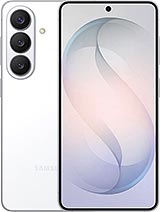
You can save quite a bit of money by getting a Galaxy S26 instead of an iPhone 18 Pro. Both have 6.3” displays (and both are 120Hz LTPO panels at that), but Samsung’s 10MP 3x/67mm telephoto and 12MP ultra-wide cameras are no match for Apple’s Pro setup, which includes a 48MP 4x/100mm telephoto and a 48MP ultra-wide. Samsung still doesn’t do magnetic charging either.
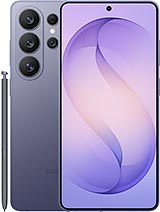
Looking at the 6.9” offerings, the Galaxy S26 Ultra is also a lot cheaper than the iPhone 18 Pro Max (in fact, it’s cheaper than the small Pro too). The Ultra is a lot more competitive when it comes to cameras – it has a 200MP 1/1.3” main, a 10MP 3x/67mm telephoto plus an additional 50MP 5x/111mm telephoto module and a 50MP ultra-wide. The S26 Ultra also offers unique features like the Privacy Display and the S Pen.
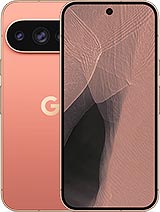
Google also has a 6.3” model, the Pixel 11 Pro. However, it’s pretty light on discounts at the moment. The Tensor G6 mostly fixed the battery efficiency woes of the G5, but performance is still nowhere close to the Apple A20 Pro or the Snapdragon 8 Elite Gen 5 for Galaxy. The Pixel does have a more promising set of cameras than the small S26, including a 50MP 1/1.3” main, a 48MP 5x/106mm telephoto and a 48MP ultra-wide. And would you look at that – it has Pixelsnap magnetic wireless charging.
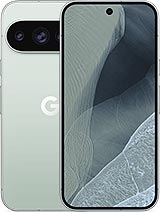
Google’s Pixel 11 Pro XL has a 6.8” screen and the same set of cameras as its smaller sibling.
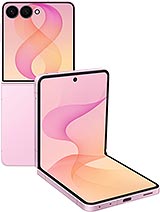
Given Apple’s prices, you can even consider a foldable instead of an iPhone 18 Pro. The Galaxy Z Flip8 costs the same as the S26 Ultra and while it doesn’t have its cameras (it only has a 50MP 1/1.57” main and a 12MP ultra-wide), it does have a 6.9” inner and a 4.1” cover display. This one is also powered by the Samsung-customized Snapdragon 8 Elite Gen 5 (at least in the US market).
Speaking of foldables, the iPhone Duo is Apple’s first – Cupertino chose to enter this market with a wide foldable. It’s not available yet, though. Pre-orders will start in mid-October and sales will commence a week later. We have some thoughts on the iPhone 18 Pro (Max) vs. iPhone Duo debate that you can peruse while you wait.

Since there aren’t many wide foldable alternatives in the US, the Duo’s main rival is the Galaxy Z Fold8. The Samsung phone is thinner (9.7mm vs. 11.3mm) and much lighter (201g vs. 254g). The 7.6” inner displays on both are nearly identical in size and aspect ratio, but Samsung has had several years to optimize One UI for foldable use. Meanwhile, this is the first time iOS tries to transition apps from a cover to a larger internal display. However, Apple offers stylus support and uses an under-display camera, which are features that Samsung abandoned last year.
The two foldables have comparable cameras with a 48MP main camera with sensor shift OIS for the iPhone Duo and a 50MP camera with lens shift OIS for the Z Fold8. They are joined by a 48MP and a 50MP 120° ultra-wide cameras, respectively. Check out a more detailed comparison between the iPhone Duo and Galaxy Z Fold8 here.
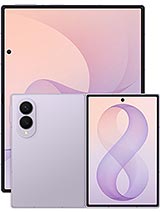
Of course, Samsung also has a larger book-style foldable, the Galaxy Z Fold8 Ultra. Despite having a larger 8” inner display (nearly 1:1 aspect ratio) and a larger 6.5” cover display (with a tall and skinny aspect ratio), the Ultra is still a lot lighter than the iPhone Duo (215g vs. 254g). It’s thinner too – in fact, at 8.9mm, the Z Fold8 Ultra is only 0.1mm thicker than the iPhone 18 Pro Max (which weighs 249g, by the way).
This one has a 200MP 1/1.3” main camera plus a dedicated 10MP 3x/67mm telephoto lens, which is missing from both the Z Fold8 and the Duo. There’s a 50MP ultra-wide camera too. The cameras are not as good as the S26 Ultra, but they are better than the Z Fold8 cameras.
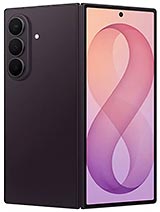
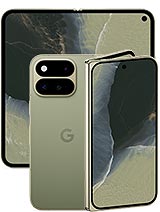
Google also makes a large foldable, the Pixel 11 Pro Fold. The large 8” inner display is built for multitasking and it enjoys several years of Google working on UI enhancements for foldables. But as we mentioned above, the Tensor G6 is no match for the Apple and Samsung chipsets.
The Pixel 11 Pro Fold doesn’t have the same cameras as the other two 11 Pro models. There’s a 48MP 1/1.56” main, a 10.8MP 5x/112mm telephoto and a 10.5MP 127° ultra-wide. At least it gets to keep the magnetic wireless charging.
Alongside the new phones, Apple also refreshed its wearables lineup. The Apple Watch Series 12 has upgraded optical and electrical heart rate sensors. It also offers several AI-powered audio features – it can detect important sounds for people with hearing issues, it can summarize conversations and it will remember that song you heard half an hour ago.

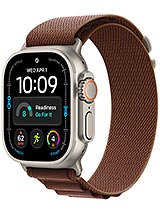
The Apple Watch Ultra 4 focused on improving battery life. Apple is mum on mAh numbers, but the new model should last up to 50 hours of normal usage (that’s 8 hours longer than the Ultra 3). If you put it in Low Power Mode, it should last up to 84 hours (+12 hours compared to the old model).
Despite Apple having a reputation for making expensive products, the new AirPods 5 are cheaper, while also improving things like noise cancellation, transparency mode, spatial audio and Adaptive EQ. Note that there are two versions – one with USB-C charging and a $20 upgrade that adds wireless charging to the case.

We may get a commission from qualifying sales.