
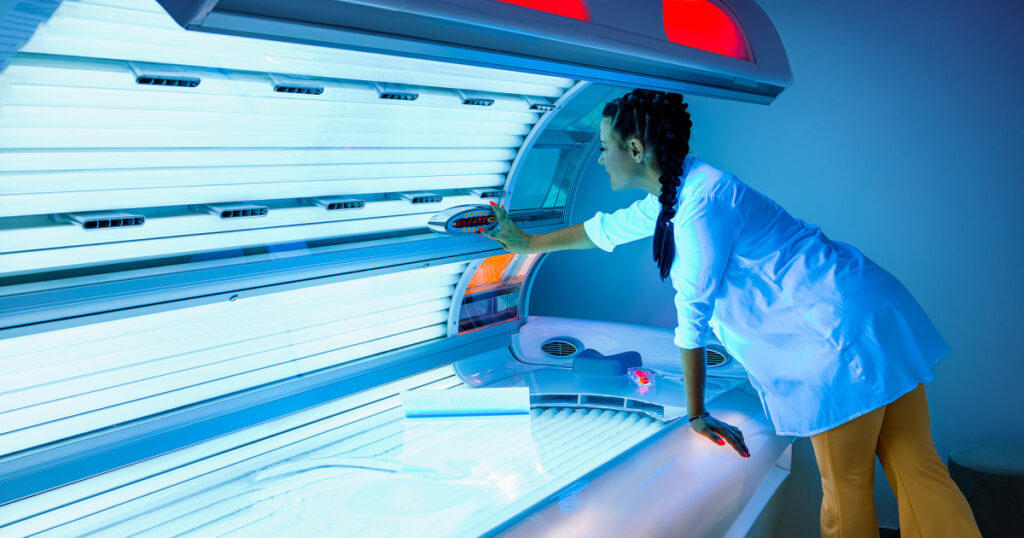
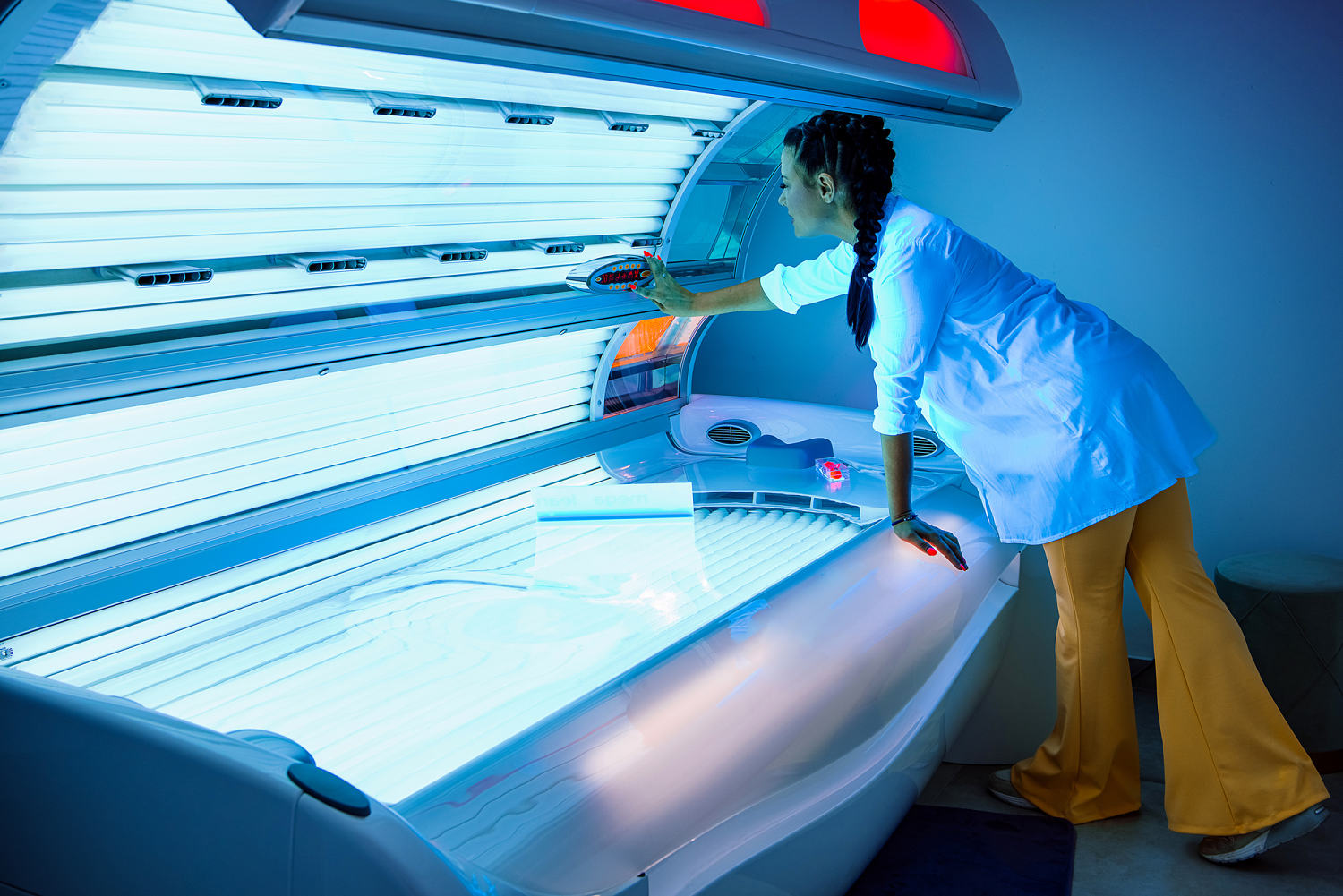

The Food and Drug Administration on Tuesday withdrew a proposed rule that would have barred all Americans under age 18 from using tanning beds.
Dozens of states — including California, Delaware, Illinois, Kansas and Minnesota — as well as Washington, D.C., already ban the use of tanning beds for minors. Other states have restrictions that allow teens to use tanning beds with parental consent.
The federal rule, first proposed in 2015, aimed to prevent minors from using indoor sunlamps or tanning beds, and required anyone over 18 who uses a tanning salon to sign a waiver acknowledging the risks, including skin cancer and severe burns.
Tanning beds can emit as much as 15 times the amount of ultraviolet radiation –– invisible light that causes suntans and sunburns –– than direct sunrays. This exposure damages the DNA in skin cells and can trigger changes that cause those cells to grow out of control and turn cancerous.
“Withdrawal of the proposed restrictions does not mean that exposure to UV radiation does not cause skin cancer,” an FDA spokesperson told NBC News in an email. “The FDA encourages users of sunlamp products to discuss the potential risks with their physician before using sunlamp products.”
Skin cancer is the most common type of cancer in the United States. A 2025 study found that melanoma rates among people who used tanning beds was more than double — about 5% compared to about 2% — than those who did not. Using tanning beds before age 20 can increase the risk of developing melanoma by nearly 50%, according to the American Academy of Dermatology.
A 2025 survey by the American Academy of Dermatology showed that younger generations, specifically Gen Z, may not understand the risks associated with tanning. The survey found that nearly 60% of adult Gen Zers believed some tanning myths, such as that getting a base tan will prevent skin from sunburn.
More on skin cancer risks
The FDA’s notice of withdrawal states that the agency “received more than 8,100 comments on the Proposed Rule from entities including industry associations, medical and healthcare professional associations, law firms, cancer advocacy groups, and other interested parties, including individuals.”
Some of the comments supported “personal choice and parental decision-making” about who was old enough to be exposed to UV radiation from sunlamps. The agency also stated that commenters expressed concern about the “vulnerability of young people to the risks of sunlamp products,” and concerns about “compliance burdens on small businesses.”
The notice, which was signed by Health Secretary Robert F. Kennedy Jr., stated the agency “continues to consider regulatory initiatives related to sunlamp products.”
The FDA regulates sunlamps and tanning beds as class II medical devices and requires the products to include a “black-box” label — a warning stating that the products should not be used by anyone younger than 18.
However, without a federal rule determining who can legally use tanning beds, that warning holds little weight in states that don’t have restrictions on teens under 18 using sunlamp products.
Dr. Susan Taylor, president of the American Academy of Dermatology, said the industry shouldn’t be counted on to monitor itself in preventing minors from using tanning beds.
“A warning might allow people to stop and think, there are warnings on cigarettes, for example, but if you have a law that says those who are under 18 are not allowed to use these, that is enforceable,” she said.
The American Academy of Dermatology was involved with lobbying for the proposed rule to regulate who can use sunlamps.
The American Suntanning Association, which represents tanning salons, didn’t respond to a request for comment.
Dr. Kendra Bergstrom, a board-certified dermatologist at UW Medicine in Seattle, said small doses of ultraviolet rays from the sun are important for the body to produce vitamin D, which supports bone health.
However, UV radiation is a carcinogen in the same class as cancer-causing substances such as tobacco and asbestos, which cause cancer over time, Bergstrom said.
The FDA doesn’t regulate how much of each type of UV radiation a bed emits.
“Age 18 is a natural barrier for maturity and decision-making, and we have to draw a cutoff, like we do for cigarettes or gambling,” said Bergstrom, who was not involved with the proposed rule.
UVA radiation is longer waves that penetrate deep into the skin and cause wrinkles, freckles and skin damage. UVB radiation —short waves that affect the surface of the skin — cause sunburn and skin cancer mutations. UVB radiation only accounts for about 5% of the UV radiation emitted by the sun.
It’s very difficult for consumers to know how much UVA versus UVB a person is getting exposed to from a tanning bed, Bergstrom said.
Although she appreciates the desire to allow for flexibility between states, that doesn’t always make sense for health policy, she added.
“Skin damage is the same in every state and I feel like we are just giving kids in states without these laws the ability to expose themselves to UV damage that will be with them for the rest of their lives,” Bergstrom said. “There is a hint that skin cancer is starting to slow down among younger people and I am hopeful that’s because of awareness and prevention, but trends change.”
Alabama requires a prescription from a doctor for anyone under 15 to legally use a tanning bed, and requires parental consent for 16- and 17-year-olds. Several states –– including Kentucky, Idaho, Indiana and Michigan –– require written consent from a parent or guardian for minors, and many states ban anyone younger than 14 from using UV tanning devices.
In 2013, New Jersey banned anyone under 17 from using commercial tanning beds, after a mother brought her 5-year-old daughter to a tanning salon.
Taylor is particularly worried about teenagers.
“We know that ultraviolet radiation, either through the sun or sunlamps, increases risk for cancer,” she said. “Not everyone is going to read what is on the outside of the tanning bed, so for the protection of our citizens, we need federal rules.”