
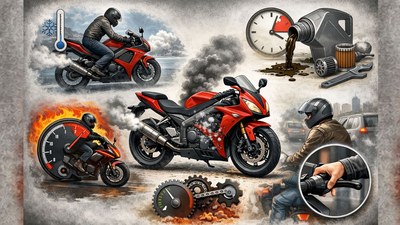
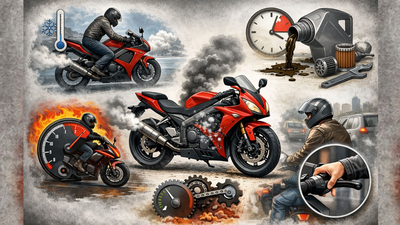
Premature engine wear in motorcycles is often linked to daily usage habits rather than mechanical defects, despite improvements in engineering, materials and thermal management. Engine condition typically deteriorates over time due to repeated minor mistakes rather than a single failure. Riding style, maintenance practices, traffic conditions and fuel quality all influence long-term durability. These effects are more pronounced in urban settings, where stop-and-go traffic and high temperatures increase engine stress. While the impact may not be immediate, it can lead to reduced performance, higher fuel consumption and repair costs over time. Here are five common mistakes that many bike owners continue to make.Improper cold startsImproper cold starts are among the most frequent issues. When the engine is cold, oil has not fully circulated, leaving components such as pistons and camshafts with limited lubrication. Riding aggressively at this stage increases friction and wear. Allowing the engine to idle briefly and riding gently in the initial minutes helps reduce stress.Skipping or delaying oil changesSkipping or delaying oil changes also affects engine health. Engine oil degrades over time due to heat and contamination, reducing its ability to lubricate and cool. Continued use of degraded oil increases friction and temperature, leading to gradual damage. This effect is more pronounced in conditions with heavy traffic and high temperatures. Following recommended service intervals remains essential.
High-rev riding and luggingSustained high-rev riding puts additional load on internal components such as the crankshaft and valves. While engines can handle high RPMs, prolonged use in this range increases heat and accelerates wear, especially in city conditions with frequent acceleration. Running the engine at low RPM in higher gears, known as lugging, also causes strain. It forces the engine to work harder, leading to knocking and increased load on key components. Using the appropriate gear for speed helps maintain smoother operation.Excessive clutch useExcessive clutch use, particularly partial engagement in slow traffic, leads to heat build-up and faster wear of clutch components. It also affects power delivery and efficiency. Using the clutch only when required helps avoid unnecessary strain. These practices, though minor individually, have a cumulative impact over time. Addressing them through better riding habits and regular maintenance can help maintain performance and extend engine life.