
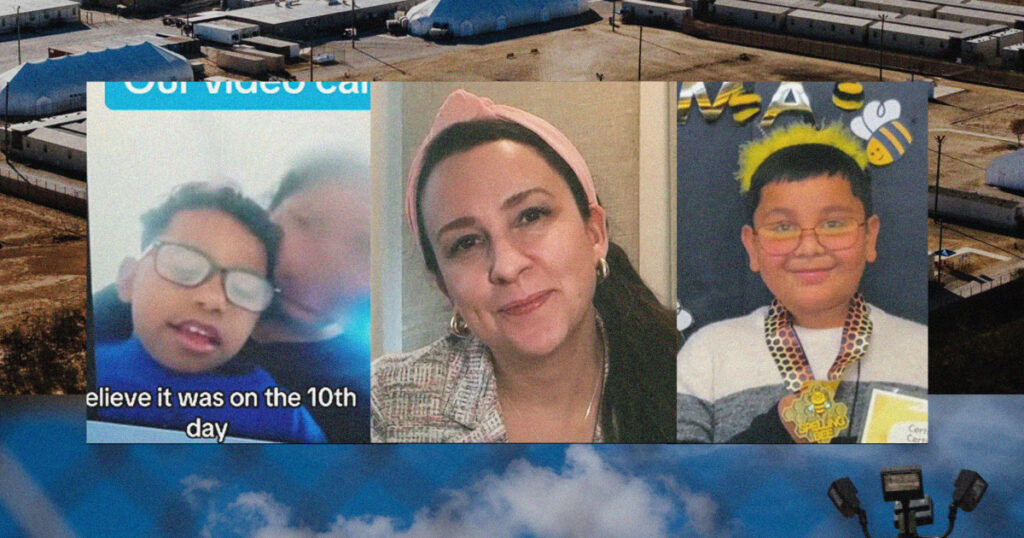
The boy in the grainy video feed sounded desperate.
“I don’t want to be here anymore,” he said. “Nothing is good here.”
Since early March, 9-year-old Deiver Henao Jimenez had been held with his parents at the Dilley Immigration Processing Center in South Texas, where children have complained of limited education, lights that never turn off and moldy food. Now he was on a video call with someone who said she wanted to help: Ms. Rachel.
Wearing her signature pink headband, the popular children’s entertainer leaned toward the screen, trying to comfort the boy.
“Oh, I’m so sorry,” she said in a warm, high-pitched voice familiar to millions of children and parents. “A lot of people want to try to help.”
Deiver told her he missed his friends and that the food at Dilley made his stomach hurt. But that wasn’t what worried him most. Before he was detained, he had won his school spelling bee and placed third at regionals, earning a spot at New Mexico’s state competition in May.
“I want to leave and go to the spelling bee,” he said.
Ms. Rachel tried to reassure him.
“You have a real gift for spelling. You’re so smart.”
Then her smile faltered.
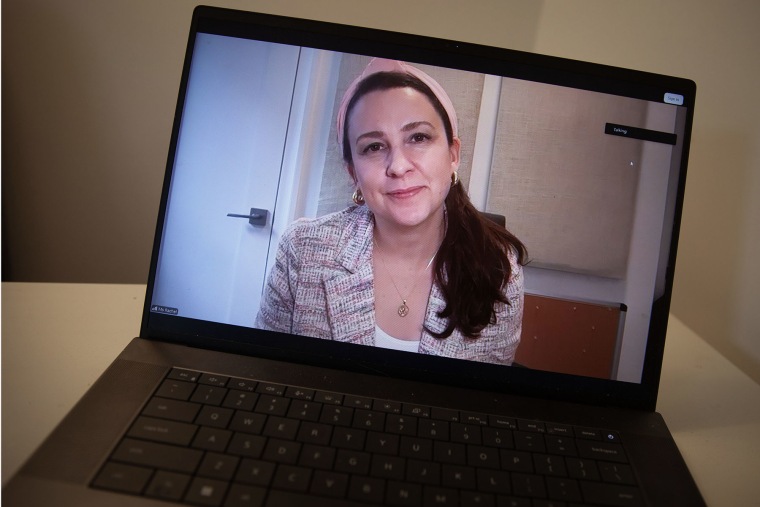
“It was unbelievably surreal to see this sweet little face and feel like I was on a call with somebody who’s in jail,” Ms. Rachel, whose real name is Rachel Accurso, told NBC News in an exclusive interview this week. “It broke me, and it was something I never thought I’d encounter in life.”


Like many Americans, Accurso said she first became aware of the family detention center in Dilley, Texas, in January, after federal immigration agents detained the father of 5-year-old Liam Conejo Ramos in Minneapolis and sent them both to the remote, prisonlike facility. A photograph of the child — wearing a blue bunny hat and a Spider-Man backpack — spread widely online, drawing national attention to the center and the treatment of families held there. They were eventually released but the family’s asylum claim was denied this week.
In the first year of its expanded immigration crackdown, the Trump administration placed more than 2,300 children into detention with their parents, with the overwhelming majority held at Dilley, according to figures provided by court-appointed monitors. Many have been held for several weeks or months.


During that time, Accurso — whose educational videos for babies and toddlers have made her one of the nation’s most recognizable kids’ entertainers — has become an increasingly prominent voice speaking out on behalf of vulnerable children. She has drawn attention to the plight of children in war-torn Gaza, Sudan and the Democratic Republic of Congo, raising hundreds of thousands of dollars and drawing backlash from critics who have accused her of picking sides in global conflicts.


She has repeatedly defended her advocacy under a simple mantra: “I see all children as precious and equal.”
After her video call last week with Deiver and another boy held at Dilley, Accurso told NBC News she is now embarking on a new mission closer to home: working with lawyers and immigration rights activists “to close Dilley and make sure that kids and their parents are back in their communities where they belong.”
Parents and immigration lawyers have described children there losing weight after finding worms in their food, growing anxious as guards patrol and standing in line for hours for single doses of medicine. Some have suffered medical emergencies while detained.
About 50 children remained at Dilley this week, down from about 500 in January, The New York Times reported Friday based on a review of government figures and advocacy group estimates. Some of the families were released in the U.S.; others were deported. It’s unclear what led to the sharp decline, but it follows months of pressure from human rights advocates, Democratic members of Congress and immigration lawyers.


The Department of Homeland Security didn’t answer questions about the families Accurso met over video. The agency has disputed reports of poor conditions as “mainstream media lies,” saying families at Dilley are provided comprehensive care in a facility “purpose-built” for their needs.
The more Accurso read about Dilley after Liam’s detention, she said, the more unsettled she became. Then, last week, she got a chance to hear directly from children held there.
Journalist Lidia Terrazas, who has spent months reporting on conditions inside Dilley for the Spanish-language network N+ Univision, set up the video call.
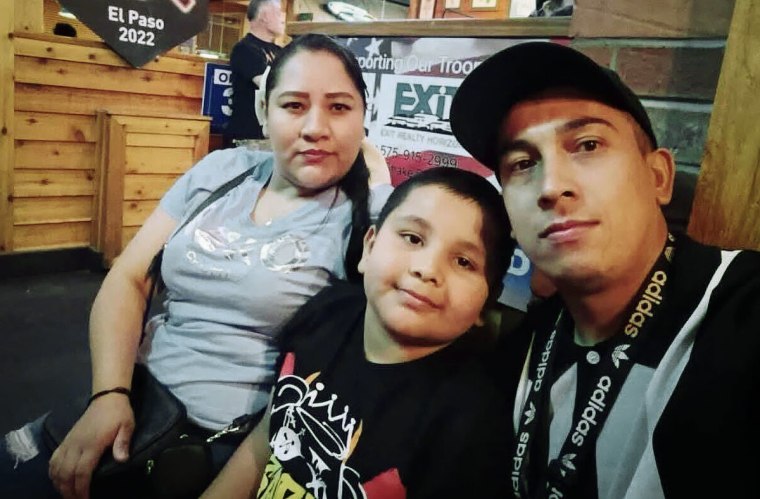
Before chatting with Deiver, Accurso spoke to Gael, a 5-year-old with significant developmental delays. The boy, who is nonverbal, was in the process of being assessed for autism when he and his parents were detained in El Paso at a routine immigration check-in, according to the family’s lawyer, Elora Mukherjee. Like Deiver’s family, Gael’s parents fled Colombia, have pending asylum claims and no criminal history in the U.S., and had been working and living in the country for years before their arrests, the families’ lawyers said.


Mukherjee, a professor at Columbia Law School and the director of its Immigrants’ Rights Clinic, said Gael has a history of severe constipation that had been managed at home with a specialized diet, including fresh fruit and soups. In detention, she said, his condition spiraled.
In a brief video interview on Friday, Gael’s parents, Nelsy and Leonardo, told NBC News their son’s condition had continued to deteriorate in detention, both physically and emotionally. They asked to be identified only by their first names, fearing retaliation should they be deported to Colombia.
“This is not a place for him because he needs special care,” Leonardo said, as Gael wandered around the bare, gray meeting room. “No human being should ever go through this.”
On Accurso’s call with her, Gael’s mother said her son had not been able to poop in nine days and was struggling to eat, gagging when he tried. The facility had been treating him with laxatives and later an enema, but his condition hadn’t significantly improved, his mother said. His stomach was visibly distended, Accurso said, leaving her “incredibly worried.”
“Imagine if your child hadn’t pooped in nine days,” she said. “This is not normal. This is an important medical situation.”
As his mother spoke, Accurso slipped into character and tried to engage him — singing “Wheels on the Bus,” holding up a toy and talking to him about his love of trains — but he appeared restless and overwhelmed, she said.


Amid his confusion and discomfort, Gael has grown increasingly distressed at Dilley, Mukherjee said, at times hitting himself — behavior his parents had not previously seen.
“Treating a child this way is a crime,” Accurso told NBC News. “It’s neglect and child abuse.”
Accurso said she was no less concerned about Deiver.
In their brief conversation, he moved quickly past the conditions inside the facility to what he was missing outside it — his classmates, his gifted and talented courses and, most of all, the spelling bee he had been preparing for.
“He’s so proud,” Accurso said.
The juxtaposition, she said, was difficult to process: a child talking about his love of pizza and school one moment, then asking for help getting out of a federal detention center the next.
“We’re trying to get a child out of a jail to do a spelling bee,” she said. “I just never thought those words would go together.”

Accurso recalled winning her own second-grade classroom spelling bee with a lucky guess on the word “chocolate” — a small, long-ago victory she still remembers in vivid detail.
Moments like that are more than milestones, said Accurso, who has master’s degrees in music education and early childhood development. They shape how children see themselves — their confidence, their sense of belonging, their sense of what comes next.
Taking those kinds of opportunities away from a child, she said, “is cruelty.”
After speaking with the children, Accurso said she initially hesitated to speak out publicly.
Her advocacy for children in Gaza had led to a torrent of criticism from right-wing groups that accused her of antisemitism for centering Palestinian children rather than Israelis. Accurso has pushed back on those claims, noting that she advocates for children suffering on both sides of the conflict. The controversy has led to threats against her family, she said, and she worried that speaking out about ICE detention might inflame the situation.
But she kept coming back to the example set by Fred Rogers, the late children’s television icon she considers her hero, who used his platform to speak out on behalf of children.

Ultimately, she said, the decision felt clear.
And unlike in the past, when she painstakingly sought to frame her activism as apolitical, Accurso said she is ready to embrace the label.
“I am political,” she said. “It’s political to believe that children are worthy of love and care, and that every child is equal, and that our care shouldn’t stop at what we look like, our family, at our religion, at a border.”
If being political is what it takes to bring Gael home, or to get Deiver to his spelling bee, Accurso said, then her conscience leaves her no other choice.