


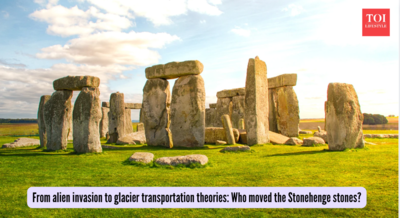
Looking at the timeless circle of Stonehenge, one can’t help but wonder how Neolithic people managed to build such an engineering marvel over 5,000 years ago.Without wheels or beasts of burden, they somehow positioned giant bluestones from Wales, sarsens from nearby downs, and even an Altar Stone from distant Scotland. For ages, theories swirled about glaciers dumping rocks for easy pickup, but recent theories might change the script.

From alien invasion to glacier transportation theories: Who moved the Stonehenge stones?
Who actually transported the Stonehenge rocks from faraway lands
A new geological analysis of river sands near Stonehenge provides strong proof that ancient people, not Ice Age glaciers, transported the monument’s massive stones to Salisbury Plain. By studying microscopic minerals in local sediments, scientists found no traces of far-off rocks that glaciers might have left behind. This stands contrary to the long-held theory that ice sheets dragged boulders from Wales or Scotland for Neolithic builders to use.Curtin University geologists Anthony J. I. Clarke and Christopher L. Kirkland examined over 700 grains of zircon and apatite from nearby streams. These minerals hold “geological passports” with age and origin clues.The zircons dated 1,700 to 1,100 million years old, matching southern Britain’s ancient sediments, while apatites clustered at 60 million years from local marine sands. No matches appeared from Preseli Hills bluestones or northern Altar Stone sources, ruling out glacial delivery.

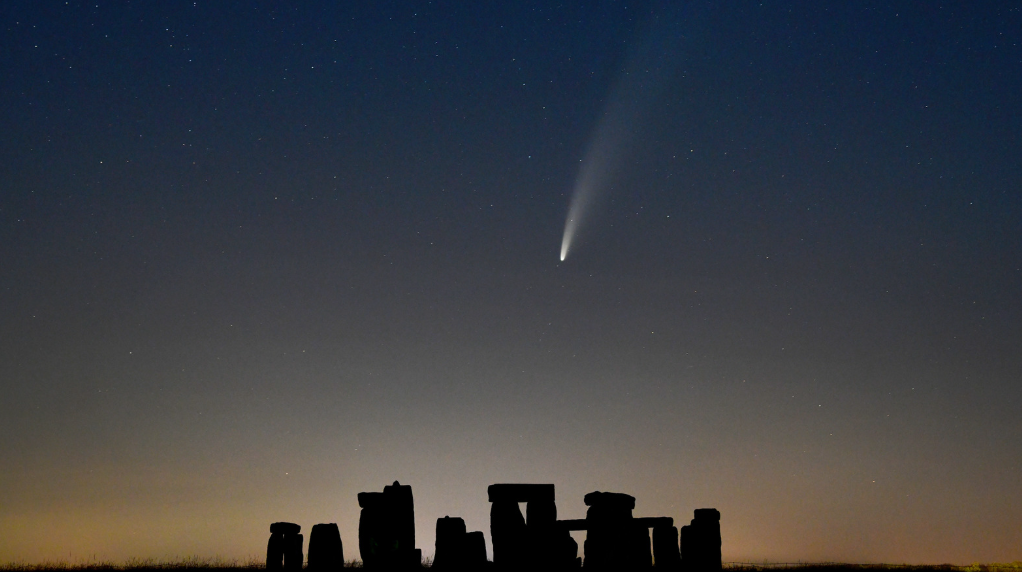
Representative Image
So who really did it?
Lead author Clarke noted, “Those rocks would have eroded over time, releasing tiny grains that we could date to understand their ages and where they came from,” adding that their absence makes “the alternative explanation that humans moved the stones” far more likely, according to the study published in Communications Earth & Environment.Salisbury Plain lacks glaciation signs like till layers or foreign boulders, further debunking ice transport during the last Ice Age.
Previous research had contrasting views
Previous studies link the sarsens to Marlborough Downs, which is about 32 km away, the bluestones to the Preseli Hills, which is 290 km distant, and the Altar Stone to Scotland’s Orcadian Basin, over 700 km away, hinting at intentional transport by ancient people. Without wheels or modern equipment, this required careful organisation, teamwork, and strong leadership, making Stonehenge a true testament to prehistoric collaboration.