








Lenovo brought multiple new laptops and tablets to the MWC and we got the chance to go hands-on with the Legion Tab gaming tablet and the factory-oriented ThinkTab X11. But the company also presented several cool concept devices – here is a closer look at what the future might hold.
Lenovo Legion Go Fold Concept
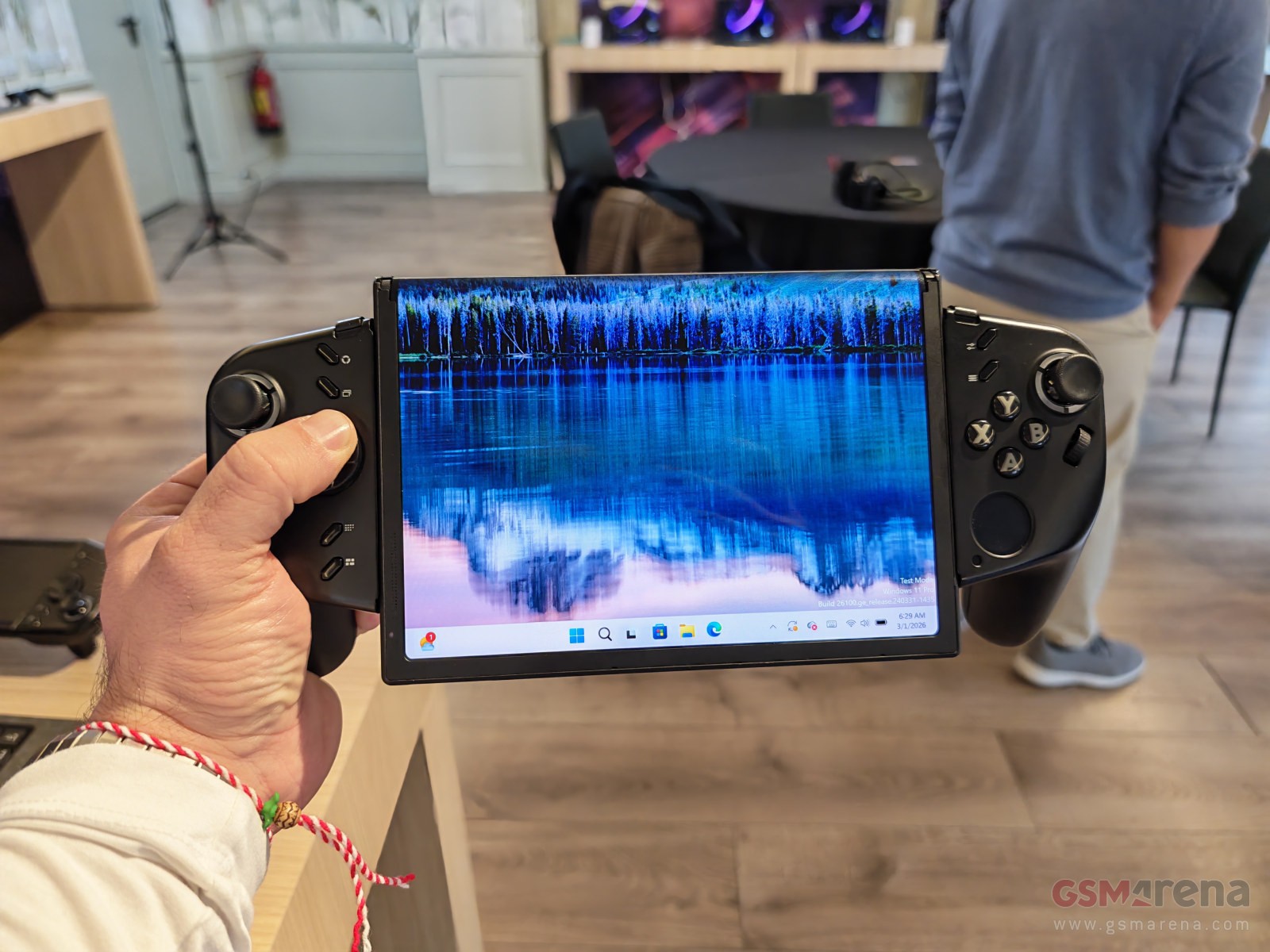
There is a renaissance of portable gaming devices, though portability varies quite a bit. What if foldable screens are the answer? This is exactly the question that the Lenovo Legion Go Fold Concept tries to answer.
The Lenovo Legion Go 2 came out last year. It was a petite AMD Ryzen Z2/Z2 Extreme tablet with an 8.8” OLED display. The Go Fold is another x86 device, though this time powered by the Intel Core Ultra 7 258V processor. But we’re not here to debate Intel vs. AMD.
Lenovo Legion Go Fold Concept
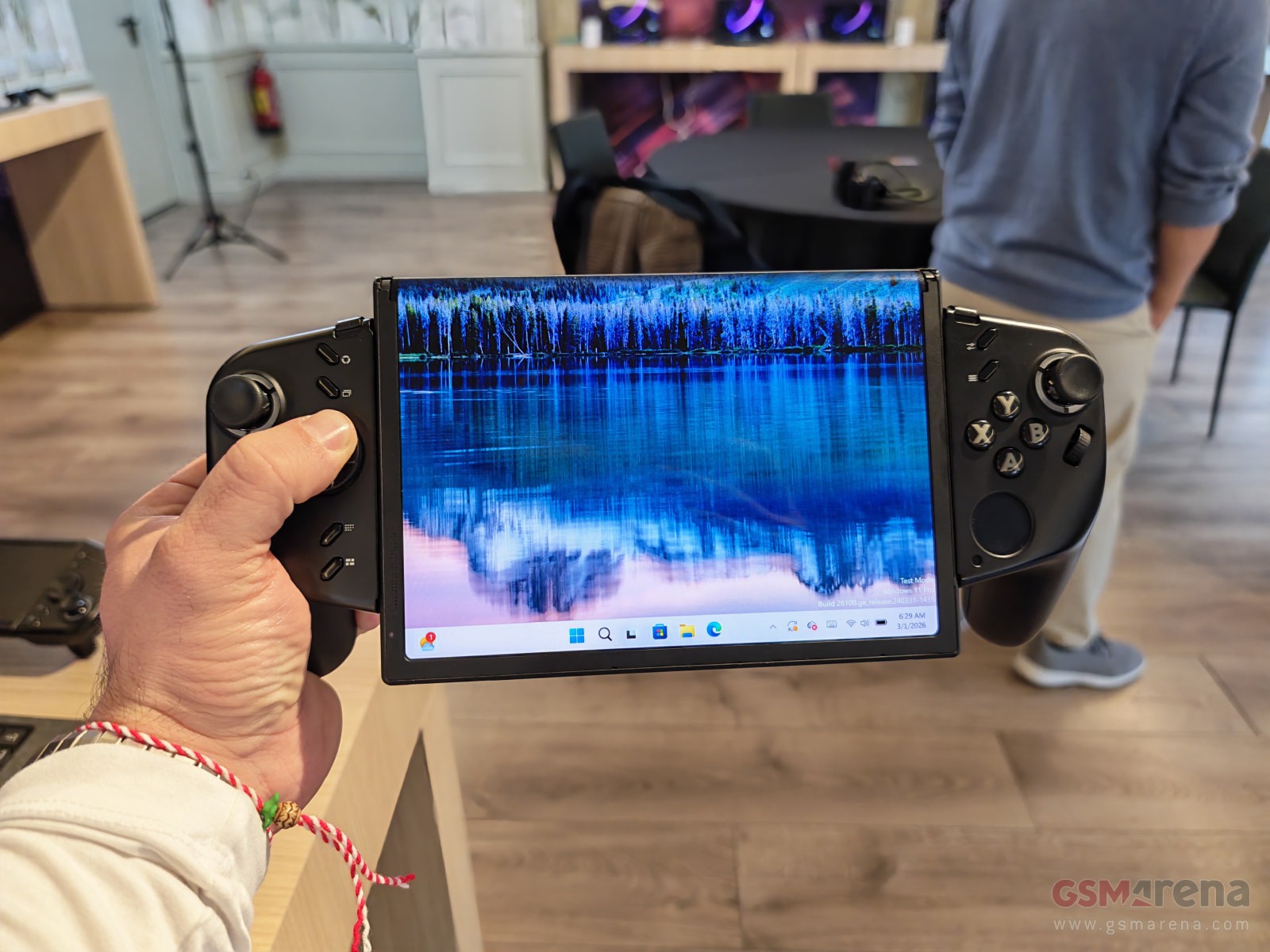
As the name suggests, this device can fold in half – it shows a 7.7” display in its closed state and can expand to an 11.6” display when unfolded. The aspect ratios don’t line up, but this is more screen real estate than the Go 2.
You can game on the device in either configuration – if you are in a tight airplane seat, you can just attach the gaming controllers to it and play that way. If you have more room, you can open up the device and enjoy the larger display.
You can even turn it into a sort of laptop with the optional keyboard – some games just work better with a hardware keyboard. You may want to pair a mouse with that as playing with a touchpad is tricky at best. Either way, this is one versatile device.
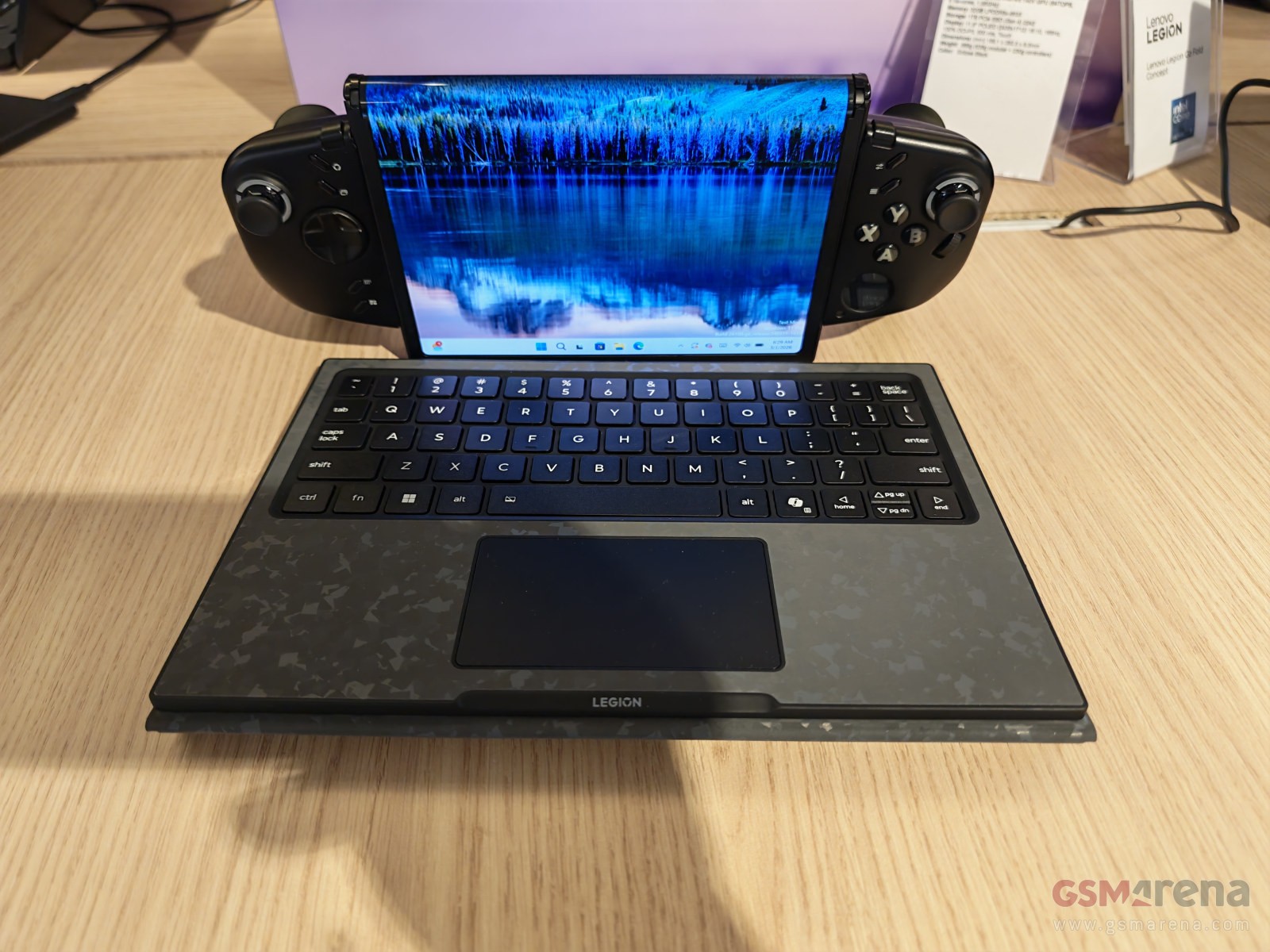
Lenovo Legion Go Fold Concept and the optional keyboard
Let’s go back to the folding action – what’s interesting about the Legion Go Fold Concept is that it folds with the display remaining on the outside. This removes the need for a cover display like on book-style foldables. On the downside, we’re not sure that the currently available foldable screen tech can survive in a backpack or even in a pocket. And yes, the Go Fold is pocketable, if you have large enough pockets.
Lenovo mentioned that a split-screen mode is available – you can play on one half and watch a video on the other. “Dual screening” is a pretty normal way to play these days. The company didn’t mention it, but with the way this folds, we’d love to see a “tent mode” – you and a friend can sit across a table so that each sees half of the screen. Come on, let’s bring back local multiplayer!
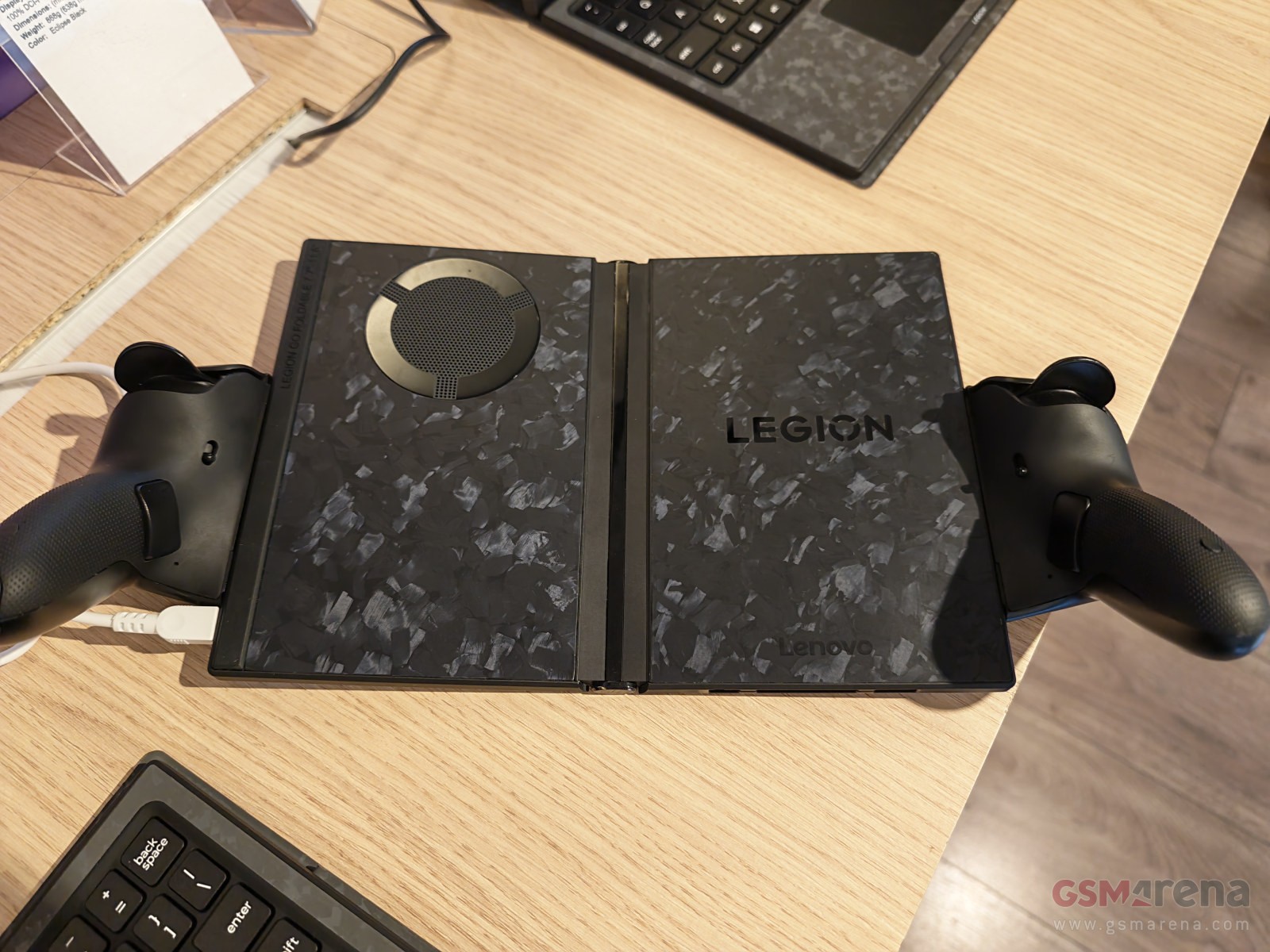
Lenovo Legion Go Fold Concept and its detachable controller
We also want to talk about the detachable gaming controllers. These can be attached to the Go Fold itself or they can turn into a sort of wireless gaming controller. This was the case with the Go 2 controllers too. However, Lenovo did something interesting here – it replaced the small touchpad on the right controller with a smartwatch-like display.
This mini display can still be used as a touchpad, but it’s configurable too – you can turn it into a hotkey or set it to display key performance metrics or other settings.
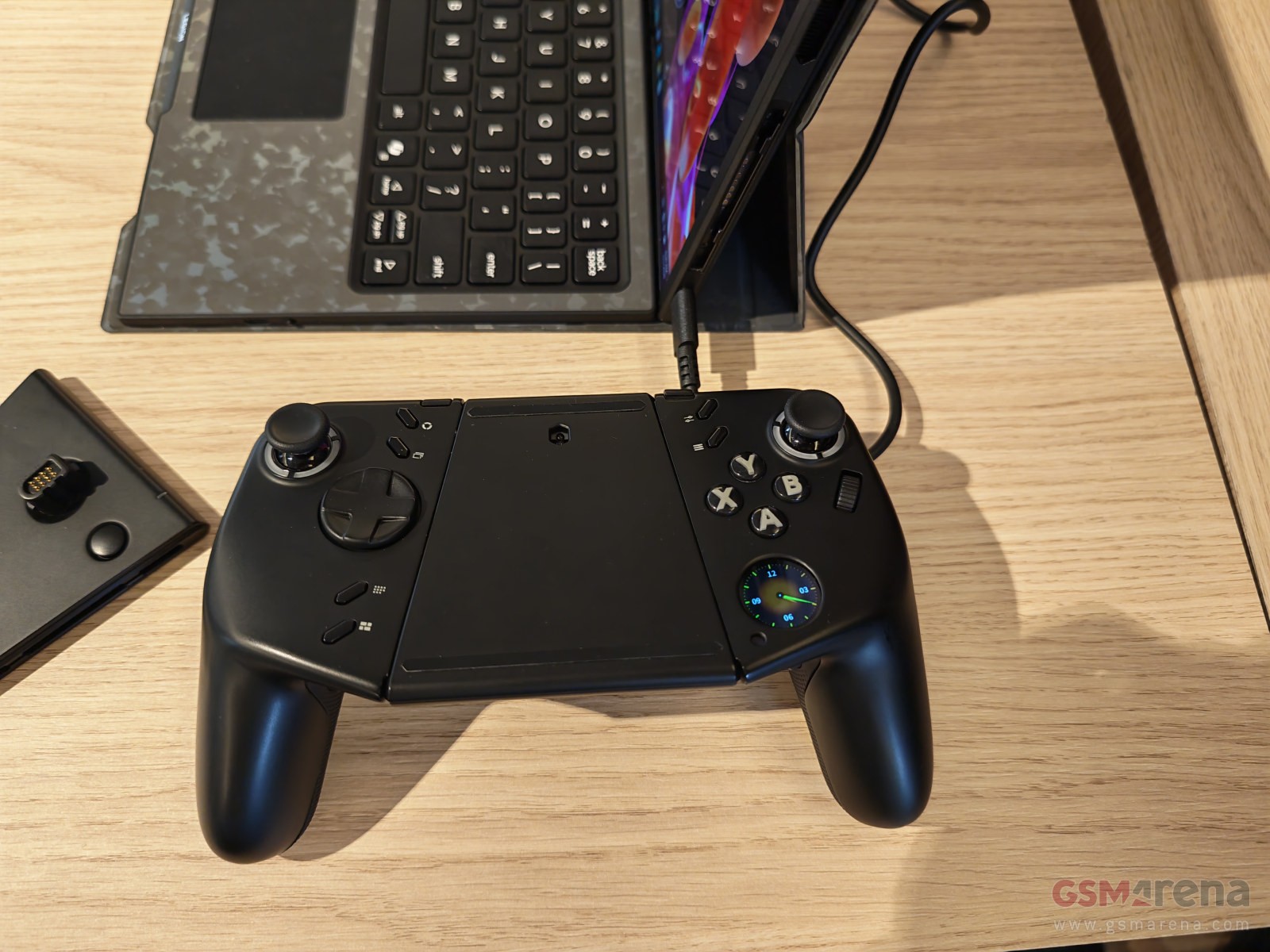
The gaming controller
There is no price for the Lenovo Legion Go Fold Concept and no launch date either. This exact hardware will probably never be available commercially, but we do think that the idea of folding gaming tablets holds a lot of promise – especially with a rich ecosystem of accessories like Lenovo demonstrated here.
Lenovo Yoga Book Pro 3D Concept
While not exactly a foldable, the Lenovo Yoga Book Pro 3D Concept is close enough and is probably much more likely to hit store shelves than the Legion Go Fold Concept.
In short, it’s a dual-screen laptop similar to the Yoga Book 9i, for example. There is a second screen where the keyboard usually goes. And yes, they are two separate screens instead of one large folding screen.
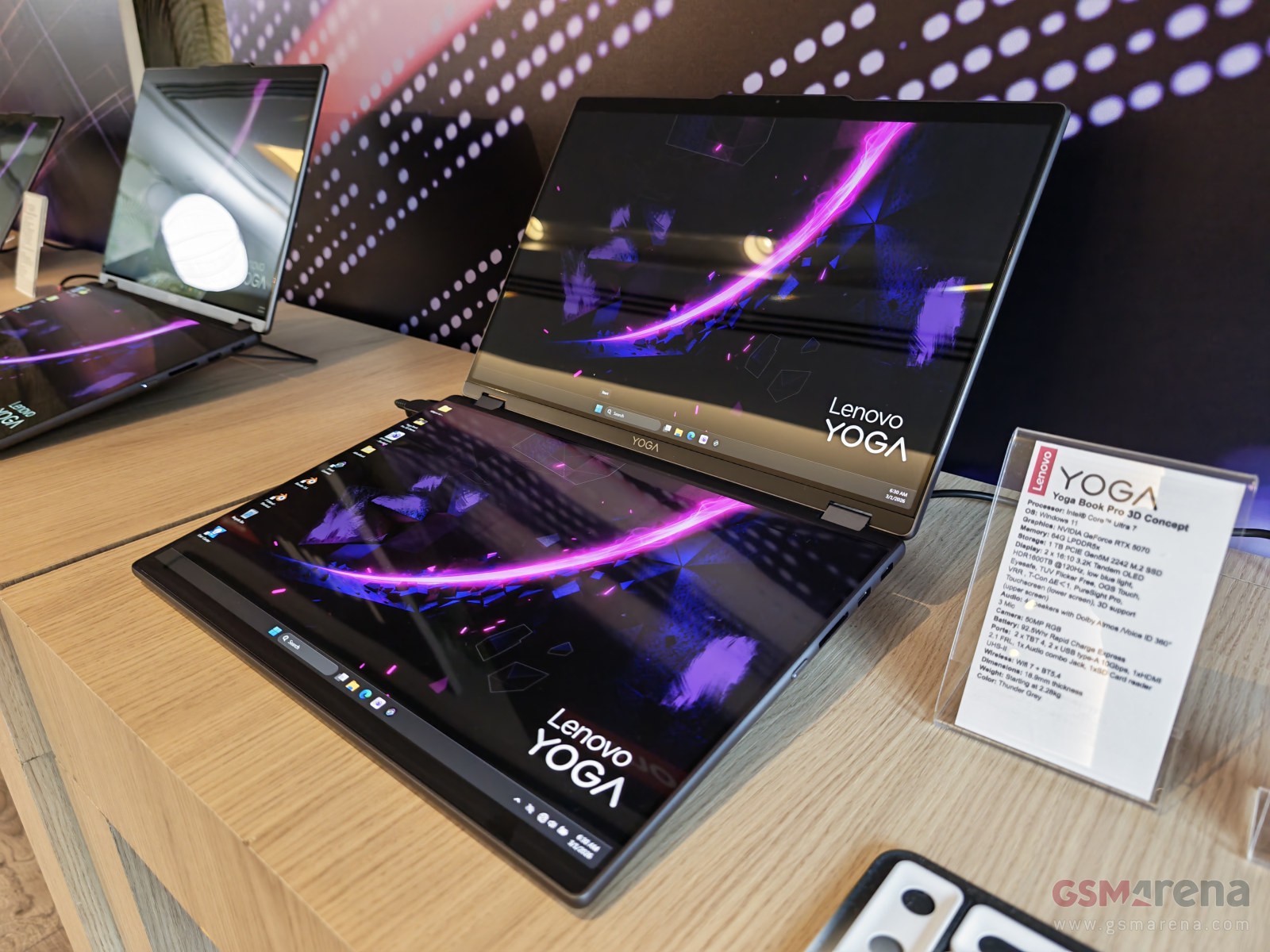
Lenovo Yoga Book Pro 3D Concept
The name already gave it away, but yes – the top panel is a glasses-free 3D screen. Specifically, a PureSight Pro Tandem OLED screen. The lower screen has a touch panel – a built-in kickstand helps to hold it at a comfortable angle.
Lenovo thinks this will appeal to creators (be it professionals or advanced hobbyists) who design and work in 3D. Lenovo quotes market analysis that predicts that the demand for glasses-free displays will triple by 2032.
Lenovo has developed its own AI-based software that can upconvert 2D imagery. The company says that the AI will help you quickly go from a concept to editable 3D assets. The built-in 50MP camera on the top half detects gestures, so that you can zoom, rotate and otherwise interact with 3D objects without touching the laptop.
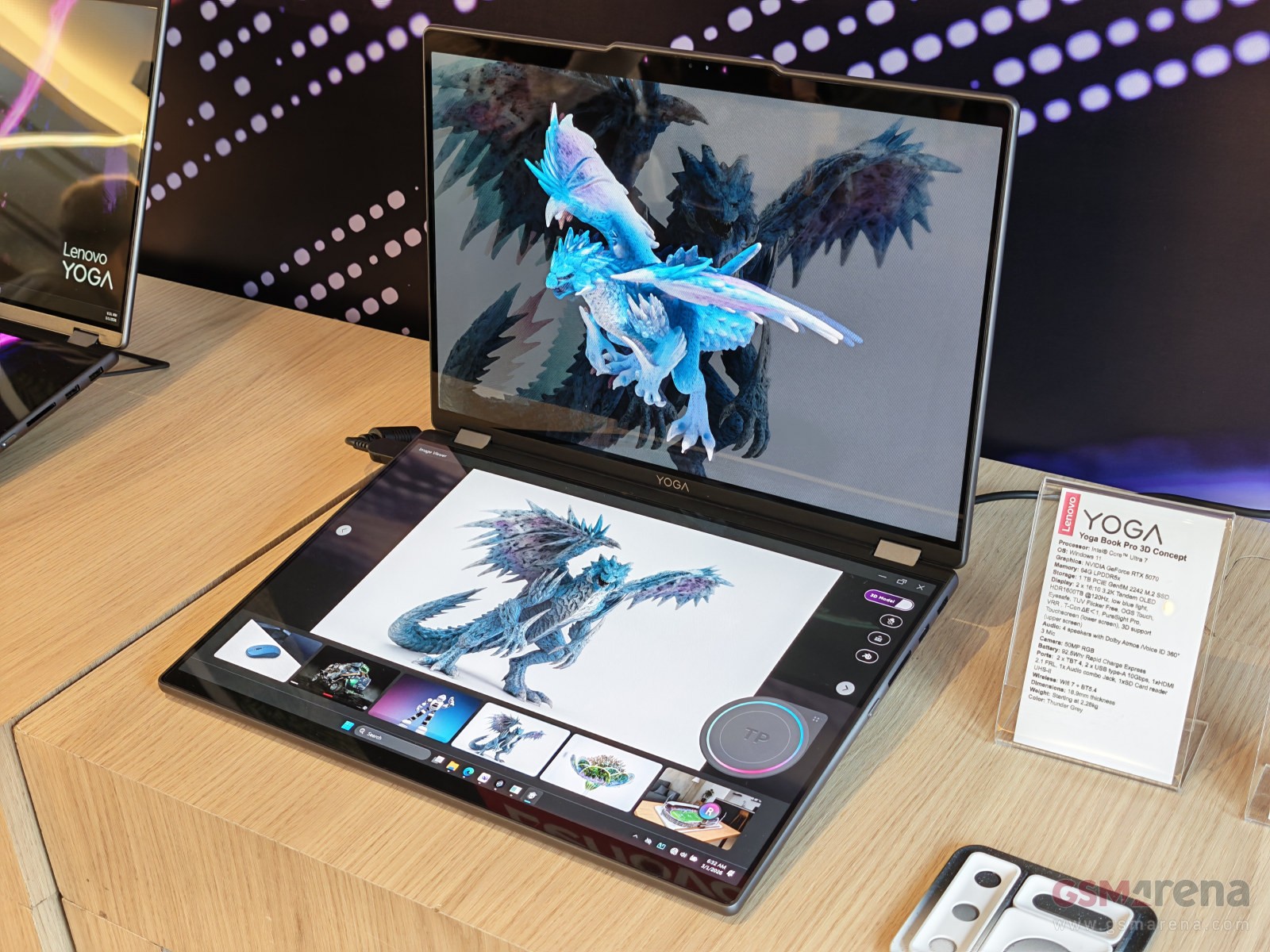
Lenovo Yoga Book Pro 3D Concept
The Lenovo Yoga Book Pro 3D Concept is powered by an Intel Core Ultra processor and an Nvidia GeForce RTX 5070 GPU. It supports up to 64GB of LPDDR5X RAM and up to 1TB storage (M.2 2242 PCIe Gen 5). The whole thing – including a 92.5Wh battery – measures 18.9mm thick and weighs 2.28kg.
The laptop has abundant connectivity options: two Thunderbolt 4 ports, two USB-A 10Gbps ports, an HDMI port, headphone/microphone combo jack and an SD card reader (UHS-II). The HDMI port even supports the new FRL transmission mode, which enables higher resolutions and refresh rates.
Like with the Legion Go Fold Concept, we don’t expect to ever see the Yoga Book Pro 3D Concept on sale. And we’re not sure how much we believe that prediction about glasses-free displays, anyway – the 3D fad died a decade ago.
But a sub-2cm dual-screen laptop with a large battery, powerful silicon and plenty of ports? That sounds like something that we would be interested in.