








In a musty, multipurpose auditorium at the top of a winding staircase, close to 75 New Yorkers of many political stripes, from MAGA conservatives to progressive environmentalists, gathered Tuesday night to share their worries about the concentrated wealth and power steering today’s rapid AI development.
“Artificial intelligence is not a problem of the future. It’s a source of power right now, to do great good and to do great harm,” proclaimed Jeremy Ornstein, one of the organizers, at the start of the meeting. “Billionaires will lay their claim to AI and say it shouldn’t be in public control, and tyrants will lay their claim to AI and deny our fundamental freedoms.”
“But there’s another opportunity here. We the people, whoever we are, will lay our own claim to this technology,” Ornstein said, “and carve a path that protects people.”“That’s our movement,” he said.

The event, held at St. Michael’s Church in Manhattan and advertised online, was the latest in a series of nationwide events held by Humans First, a group that aims to become a grassroots movement giving voice to the growing number of Americans wary of the fast-moving AI industry. Its current flagship campaign focuses on getting politicians to reject financial contributions from major AI companies and their venture capital backers.
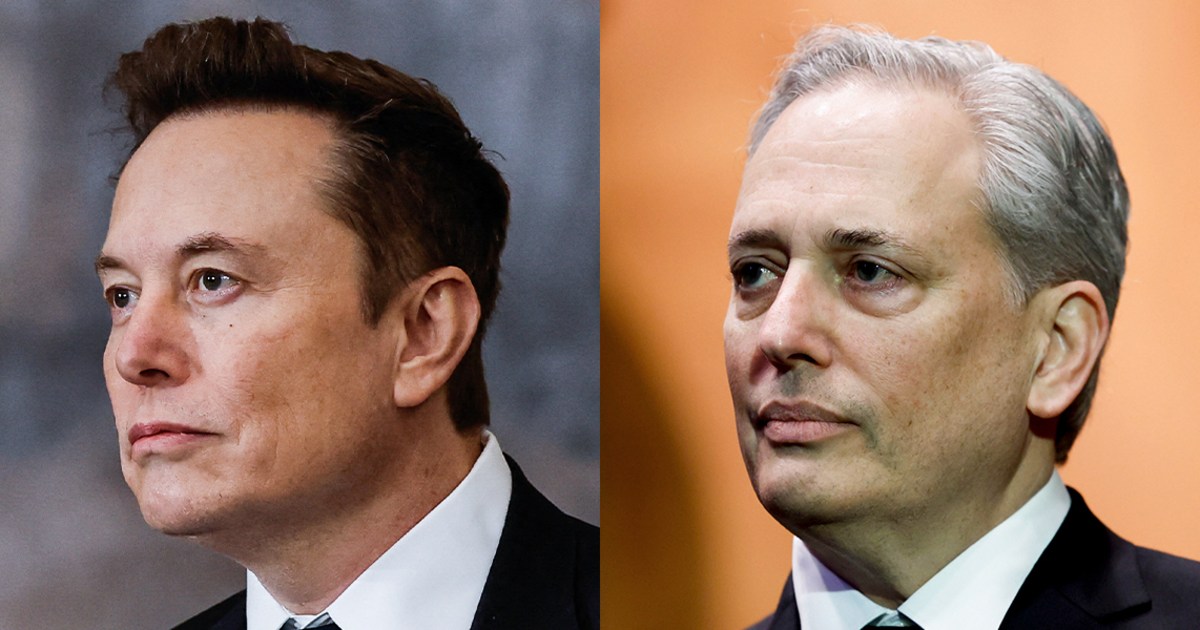
The group’s pitch — that AI should be subject to more democratic control and less “big money” influence — is already colliding with a broader, increasingly ideological fight over AI regulation. That clash surfaced online this week when White House AI czar and venture capitalist David Sacks shared a critical essay about Humans First and Elon Musk echoed it, revealing how even a nascent group hosting small gatherings can become a new front in the AI power struggle.
Humans First calls itself nonpartisan and has members who are both staunchly progressive and conservative activists: Ornstein was a key organizer on climate change issues as part of the anti-Trump Sunrise Movement from 2018-2022. The leader of the left-wing coalitions for Humans First, Alexander McCoy, is a former Marine and climate advocate who helped organize events for Kamala Harris during her presidential run.

Amy Kremer, director of conservative coalitions for Humans First, previously co-founded the Women for Trump organization and led grassroots organizing for the Republican National Committee, while Humans First senior fellow Joe Allen reported on AI with conservative firebrand Steve Bannon for his “War Room” podcast.
Tuesday’s event drew attendees from disparate backgrounds, including engineers at AI companies worried about how the technology will change human creativity and curious neighbors wondering whether the price of electricity will increase as a result of data center expansions.Yet half an hour into the meeting, Sacks, one the White House’s leading AI architects, shared an unvarnished critique of Humans First on X, calling the group “a censorship power play” in a post that was viewed over 21 million times. Elon Musk shared Sacks’ post early Wednesday morning, calling the piece “troubling.”
Musk is the founder and CEO of xAI, which is racing to develop advanced AI systems as smart as or more capable than humans.
The long-form article shared by Sacks was authored by Jordan Schachtel, a conservative writer. The article claimed Humans First was set up to lure in conservative supporters by people with strong links to Effective Altruism, a social movement that aims to support causes and allocate resources based on evidence of positive impact. Many effective altruists are skeptical of the speed of today’s AI development and have long called for regulation to guide it.
Schachtel wrote that while attempting to appeal to conservatives, the effective altruism movement, and the subset of members focused on AI safety efforts, has “a structural problem when it comes to conservative America. Its donor class is all Bay Area progressives. Its flagship organizations are institutionally associated with the Big Tech left.”
As a result, Schachtel said that members of an effective altruism organization, the Center for AI Safety, founded Humans First to be a sort of Trojan horse to make AI safety issues more palatable to a conservative political audience. The project leaders specifically targeted Allen, the Bannon ally, to bolster its conservative credentials, Schachtel said.
Allen vocally rejected the charges that he had been unwittingly recruited for the effort and instead said that Schachtel’s post “raises questions about shadowy influence operations” for its disbelief that progressives and conservatives could unite on an issue like AI.
“I have not been head-hunted and stooged,” Allen told NBC News. “I’ve been at this for many years. The people who count know what I am about. Any attempt to coopt me, or tell me what to say, will fail.”
The Center for AI Safety also rejected the insinuation that it had been influenced by the effective altruism movement to secretly seed Humans First with conservative activists, writing on X Wednesday night that “the less influence [effective altruism] has on AI safety, the better.”

Ornstein told NBC News that Humans First had been incubated by the Center for AI Safety and had received an initial loan that would be paid back after the group raised donations from individuals who cared about fostering safe and beneficial AI.
“We’re growing as a cross-partisan and nonpartisan movement that will move and pull politicians across the political spectrum together to stand up to big AI money in politics, to hold the big AI companies accountable and to put more of the benefits and the control of AI in the hands of the public,” Ornstein said.
“We’re here to make noise and shake the cage,” said Alexander McCoy, the leader of Human First’s liberal wing, while sitting on the stage on the second floor of the church annex Tuesday night. McCoy emphasized that the desire to incorporate more democratic oversight on the growth and development of artificial intelligence should unite people from all political persuasions who often otherwise disagree with each other.
“I’ve had conversations with people whose politics I do not share. But let’s fight it out on other issues not under the tyranny of Skynet,” McCoy said, referencing the malicious AI network in the “Terminator” movies.
After McCoy wrapped up his comments and the official presentation concluded, the crowd mingled for another hour, animatedly discussing what AI issues they found most pressing.
Victoria Flack, a middle school teacher who also advises people part time on how to implement AI tools in their work, said she thinks AI deserves much more debate and deliberation beyond Silicon Valley boardrooms.
“I’m torn because AI taught me a lot in my personal life and business life, and put money in my pocket these last three years,” she said at the event, “but at the same time, I see the dangers.”