








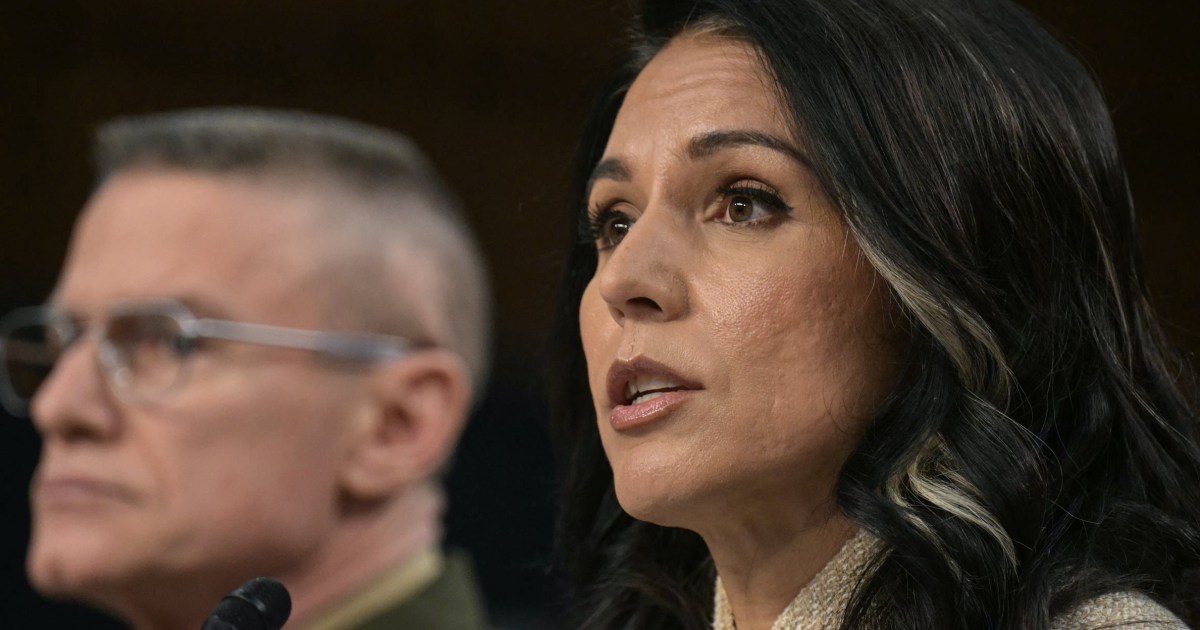
WASHINGTON — Director of National Intelligence Tulsi Gabbard declined to say if Iran’s nuclear program presented an “imminent threat,” deflecting questions from lawmakers about whether U.S. intelligence backed up White House statements on the rationale for starting the war.
Gabbard’s congressional testimony Wednesday at an annual hearing on worldwide threats came a day after a top deputy, Joe Kent, resigned in protest over the Iran war, saying that the Tehran regime posed no imminent threat and the joint U.S.-Israeli air campaign was unnecessary.
Kent and Gabbard, both military veterans, had found political common ground over their opposition to foreign military interventions and “regime change” wars like Iraq and Afghanistan. Gabbard has not publicly endorsed the decision to go to war, staying mostly silent on the U.S.-Israeli air campaign that began on Feb. 28.
Her appearance before the Senate Intelligence Committee took place as the war entered its third week, with no clear end in sight. The White House has offered shifting rationales for launching the offensive, and Iran has retaliated, essentially shutting down a critical passageway for commercial shipping.
The conflict has triggered a spike in gas prices, creating political problems for President Donald Trump at home ahead of the congressional midterm elections in November.
Gabbard’s reluctance to offer a full-throated endorsement of the president’s decision to wage war on Iran, unlike other Cabinet officials, raised fresh questions about her standing in the administration.
In her opening statement, Gabbard omitted language included in her written remarks saying that Iran had not tried to rebuild its uranium enrichment capability after U.S. air strikes in June.
“Iran’s nuclear enrichment program was obliterated. There has been no efforts since then to try to rebuild their enrichment capability,” her prepared remarks read, according to her written statement posted on the Senate Intelligence Committee’s website.
That assessment appeared to contradict Trump, who has said Iran was working to rebuild its nuclear program.

Sen. Mark Warner, the ranking Democrat on the intelligence committee, asked Gabbard why she had omitted the paragraph.
She replied: “I recognized that the time was running long, and I skipped through some of the portions of my oral delivered remarks.”
Her answers remained neutral throughout the hearing on Wednesday.
When pressed by Sen. Jon Ossoff, D.-Ga., on the threat posed by Iran’s nuclear program, Gabbard echoed an online statement she posted Tuesday after Kent’s resignation, saying that only the commander in chief could decide what represented an urgent threat to the country.
“False,” Ossoff replied. “You’re evading a question because a candid statement would contradict the White House.”
CIA Director John Ratcliffe, though, weighed in when asked a similar question by Sen. John Cornyn, R-Texas, saying he disagreed with Kent’s objections to the war.
“I think Iran has been a constant threat to the United States for an extended period of time, and posed an immediate threat at this time,” Ratcliffe said.
Democrats at the hearing also pressed Gabbard about what intelligence was conveyed to Trump about how Iran would react to a potential U.S. attack, saying the president has expressed surprise at Iran’s strikes on neighboring countries.
Gabbard and Ratcliffe said that before the U.S. launched air attacks on Iran, U.S. intelligence indicated that Iran would possibly launch strikes on energy sites in the Middle East region and try to close off the Strait of Hormuz.