
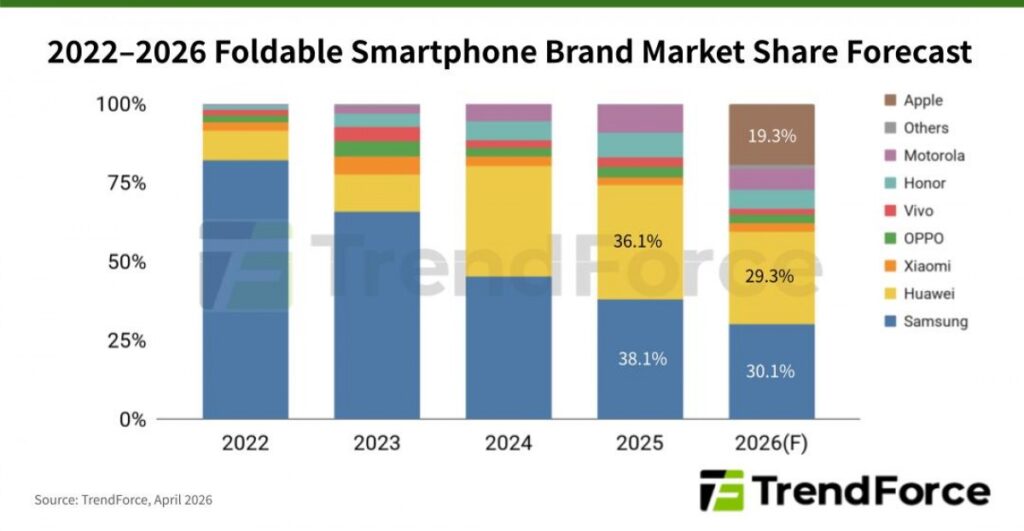
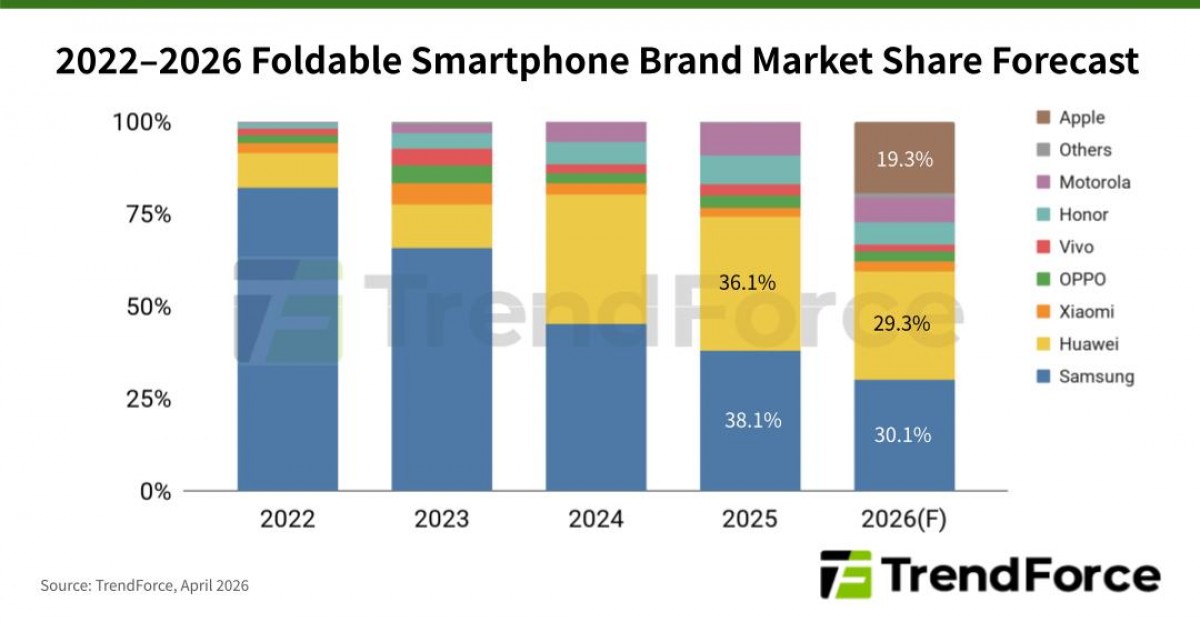
The upcoming iPhone Fold will be Apple’s first and long-awaited foray into foldable smartphones, and it’s forecasted to be a big hit. According to a new report from TrendForce , Cupertino’s first foldable will help it reach a 19.3% market share for foldables in 2026, which would directly slot it into the third spot behind Huawei and Samsung.
Apple is a late entrant in the folding phone market, but TrendForce analysts believe pent-up demand from Apple users who want to try a foldable phone, combined with a strong brand and ecosystem loyalty, will propel Apple as one of the market leaders in the segment.

One of Apple’s main goals with the iPhone Fold is to minimize the folding display crease, and the new report shines light on how material science is the solution. We’ve already heard about Apple’s use of 3D printing and liquid metal in the iPhone Fold’s hinge alongside dual layers of ultra-thin glass (UTG), but we now have another key component – optically clear adhesive (OCA).
This compound is actually already used in foldable phone displays from other manufacturers, but Apple is trying to optimize its behavior in terms of absorbing stress and altering its stiffness while also reducing stress buildup in a single area.
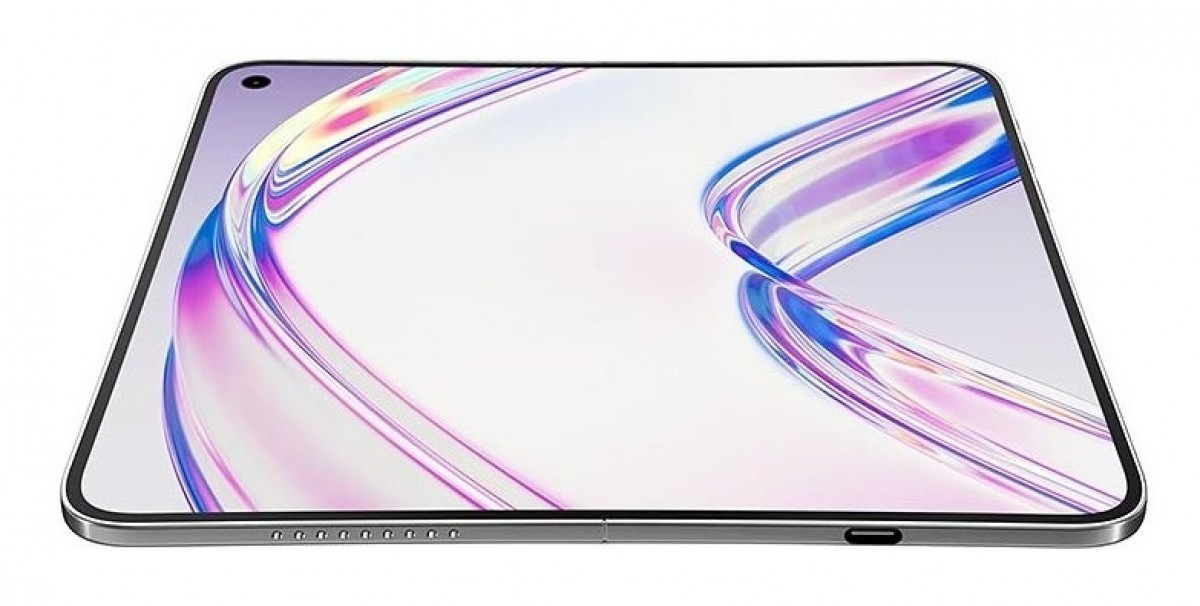
iPhone Fold main display render

OCA is usually located between the different screen layers, and Apple’s version will allegedly help tackle three main issues with folding displays. It can absorb stress evenly, so it does not concentrate in one visible area, while also keeping the display layers perfectly aligned and attached. It is also made to remain completely clear, which reduces the chance of light distortion and visible display creases.