








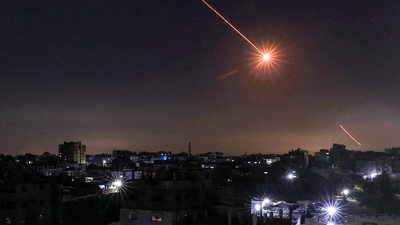
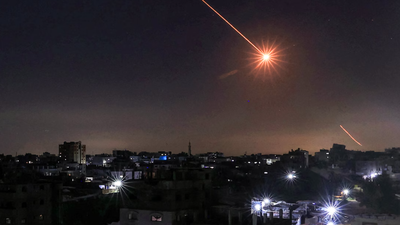
Nato air defences in the eastern Mediterranean have shot down a second ballistic missile that was fired from Iran and entered Turkey’s airspace, the Turkish defence ministry said on Monday, warning that it will take necessary steps “without hesitation”. This marks the second Iranian ballistic missile that has targeted Nato member Turkey in the last week. In a statement, the ministry said some ammunition parts had fallen in the southeastern province of Gaziantep and that there were no casualties in the incident. It called on all parties to adhere to Ankara’s warnings.The attack comes just days after the first Iranian missile was downed on March 4. Debris from both interceptions littered Gaziantep, Turkey’s southeastern hub near SyriaTurkey’s defence ministry has doubled down on its resolve, echoing prior vows: “All necessary steps against threats toward Turkey will be taken without hesitation,” while urging Iran and others to heed Ankara’s red lines for regional stability.President Recep Tayyip Erdogan’s government has ramped up air patrols and mobilised reserves along the Iranian frontier. Turkish F-16s and S-400 systems have reportedly been primed, with speculation mounting over strikes on Islamic Revolutionary Guard Corps (IRGC) bases in Syria or Iraq.
Nato’s Article 5 triggered?
Nato’s Article 5 states that an “armed attack” against one member in Europe or North America is considered an attack against all, prompting each ally to assist as it “deems necessary,” potentially with armed force.Nato secretary General Mark Rutte, who ruled out collective defense after the initial launch, now navigates heightened stakes. Ankara’s calibrated rhetoric so far avoids naming Article 5 but hints at Article 4 consultations if Tehran persists, testing Nato’s unity.Any Nato member can request Article 4 consultations if it feels its territorial integrity, political independence, or security is threatened. This leads to meetings of the North Atlantic Council for discussion, often signaling concern without committing to action.Why this incident falls short (so far)
- The second missile was also intercepted before impact; there are no confirmed casualties or damage on Turkish territory, and even the precise intended target remains uncertain.
- Ankara so far looks more likely to use (or threaten to use) Article 4 consultation—raising the issue formally with allies—rather than demanding Article 5.
- Nato’s own guidance says what counts as an “armed attack” under Article 5 is decided case by case by the North Atlantic Council; it is not automatic and is deliberately ambiguous