
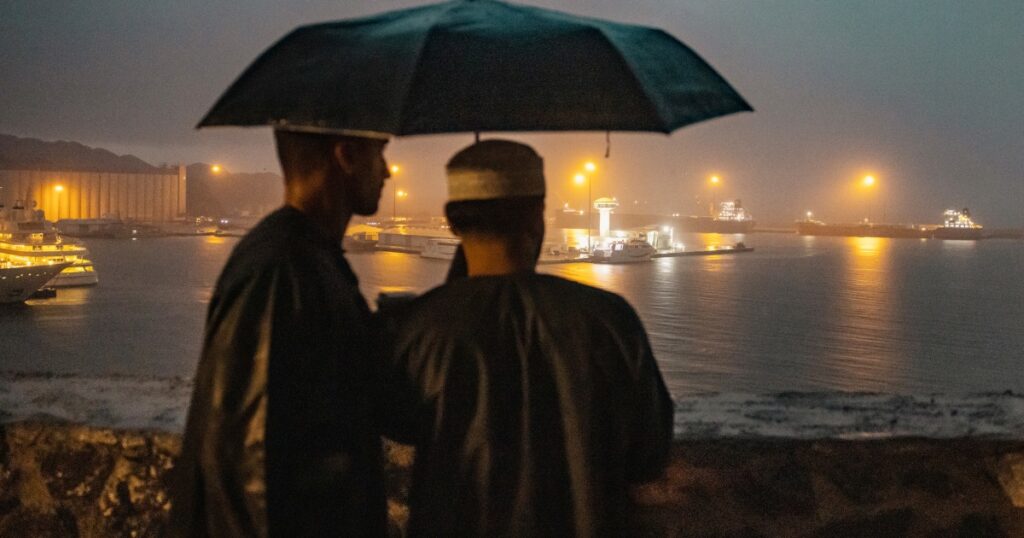
DOHA, Qatar — Call it the world’s most dangerous toll booth.
Iran is forcing oil tankers to take a new route in the Strait of Hormuz through a narrow passage controlled by its Revolutionary Guard, with some ships charged millions of dollars to transit, according to maritime data shared with NBC News.
The new system — dubbed “the Tehran toll booth” by shipping industry experts — indicates Iran remains firmly in control of the critical waterway despite intense strikes on the country, and may be looking to cement that control over the longer term.
Before the U.S. and Israel launched their bombing campaign on Feb. 28, around 110 ships were passing through the Strait of Hormuz every day, data from Lloyd’s List Intelligence shows. Since then, that number has plummeted to fewer than 10 a day, according to the London-based maritime intelligence service.

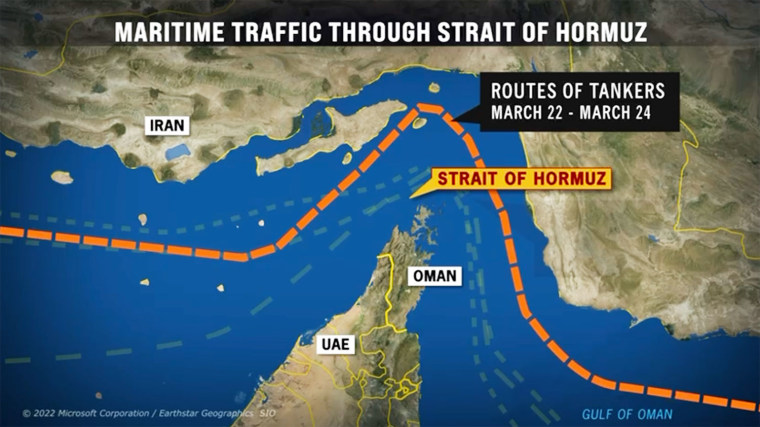
Instead of sailing down the middle of the strait, those ships are now taking a new route into Iran’s territorial waters and through a tight passage between the islands of Qeshm and Larak, Tomer Raanan, a maritime risk analyst with the Lloyds List shipping journal, told NBC News on Wednesday.
“Whatever we can detect going out of the strait right now is going through this narrow channel in Iranian territorial waters, where the Islamic Revolutionary Guard Corps essentially verifies the ship’s information and acts almost like a toll booth,” Raanan said.
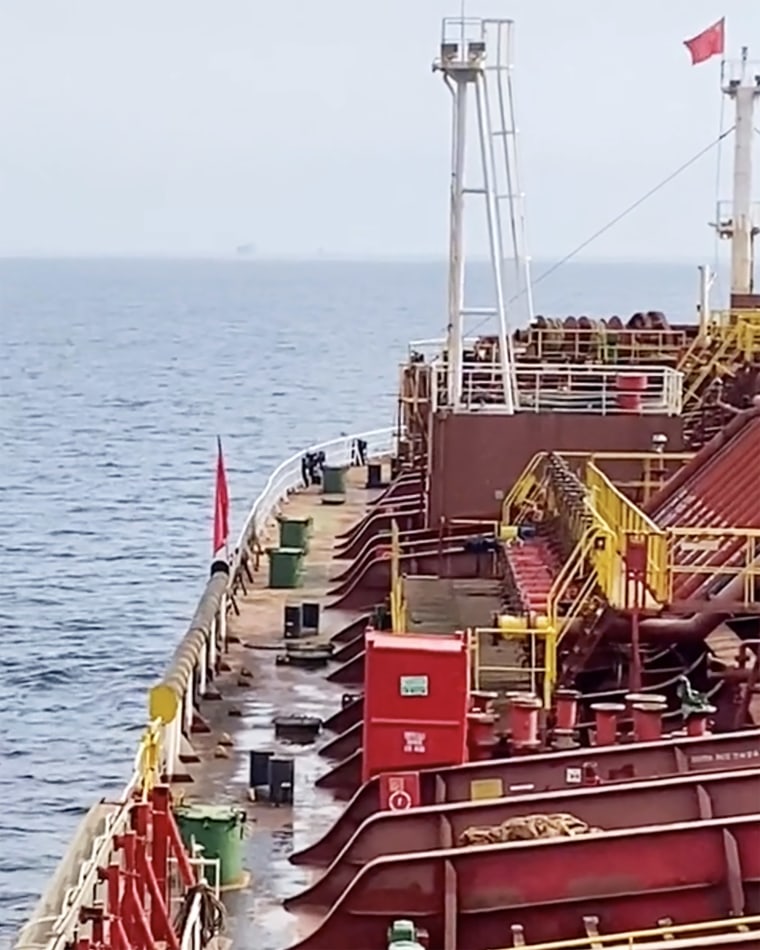
At least 25 vessels have taken the new route — which is less than 20 miles from Iran’s main naval base at the port of Bandar Abbas — since March 13, according to Lloyd’s List tracking. Among them was a Chinese tanker called Bright Gold, which made the voyage on March 23.
Video footage posted that day to Douyin, the Chinese version of TikTok, by one of the Bright Gold’s crew and verified by NBC News, shows the ship passing between the two islands.
“In a few days, American soldiers might come here. This might be the main fighting spot,” the crew member says in the video, pointing to high-rise Iranian buildings in the distance.
The video ends with the unidentified sailor saying it was too dangerous to continue filming.

Raanan said Lloyd’s List was aware of at least two ships that had made payment in Chinese yuan to cross the strait. It does not appear that Iran has yet established a consistent policy, he added.
But Jasem Mohamed al-Budaiwi, of the Gulf Cooperation Council, a bloc of six Gulf Arab nations, said Thursday that Iran was officially charging for safe passage through the shipping channel, which is crucial to the world’s energy supply.
Iranian state media also reported that the country’s parliament was preparing legislation to formalize the toll.
“We provide its security, and it is natural that ships and oil tankers should pay such fees,” lawmaker Mohammadreza Rezaei Kouchi was quoted as saying by the state-aligned Fars and Tasnim news agencies, both of which are close to the Revolutionary Guard.
His comments came days after Alaeddin Boroujerdi, a member of Iran’s national security committee, suggested on state television that a $2 million fee would demonstrate Iran’s authority over the waterway.
Israel said on Thursday that it had killed Alireza Tangsiri, the head of the Revolutionary Guard’s naval forces and the commander responsible for mining and blockading the strait.
Before his death, Iran was believed to be responsible for attacking at least 18 ships in and around the Persian Gulf since the outbreak of war, according to data compiled by the International Maritime Organization. In the deadliest incident, four sailors were killed on a tug boat as it sailed near the Strait of Hormuz on March 6.
In a letter to the United Nations Secretary General António Guterres this week, Iran’s foreign ministry said the waterway remained open to “non-hostile vessels” on the condition they act “in coordination with the competent Iranian authorities”.
Statements from the Iranian regime suggest that it now aims to turn its ad-hoc wartime control of the strait into a longer-term reality. On Thursday it issued five conditions it said would need to be met before it would agree to an end to the war.
Among them, “recognition of Iran’s sovereignty over the Strait of Hormuz.”