





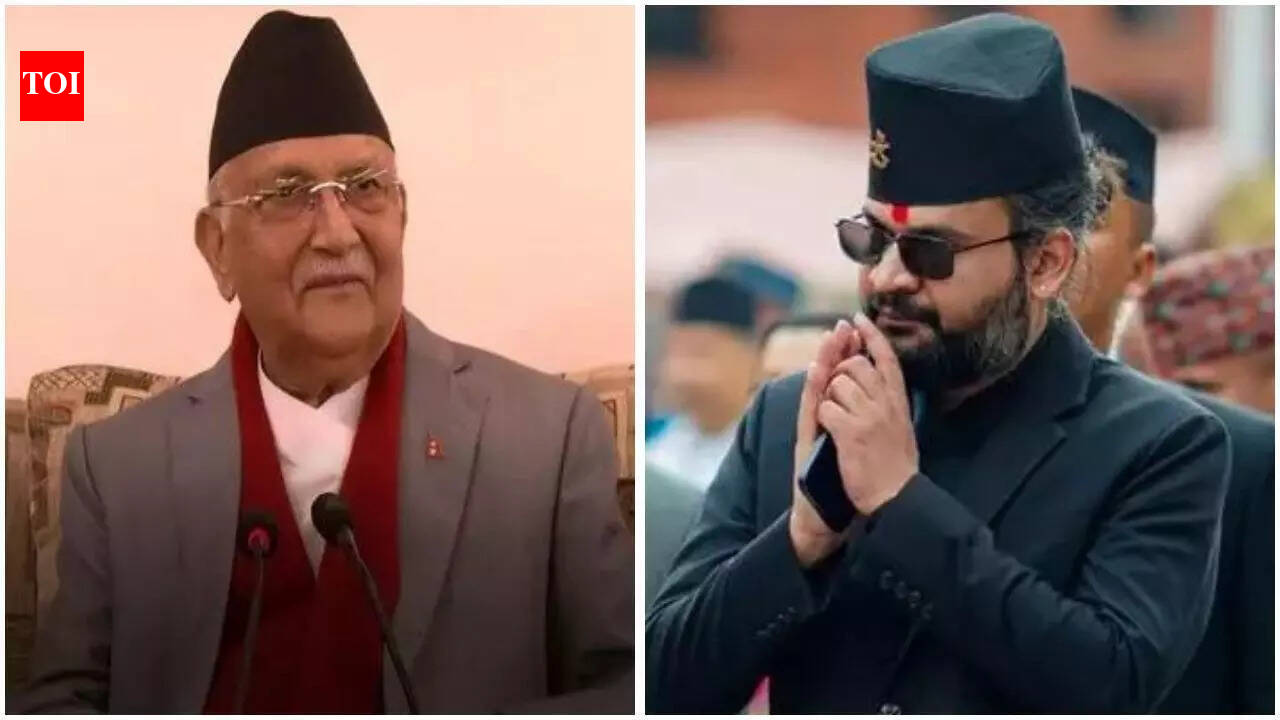
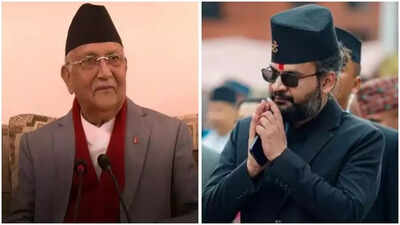
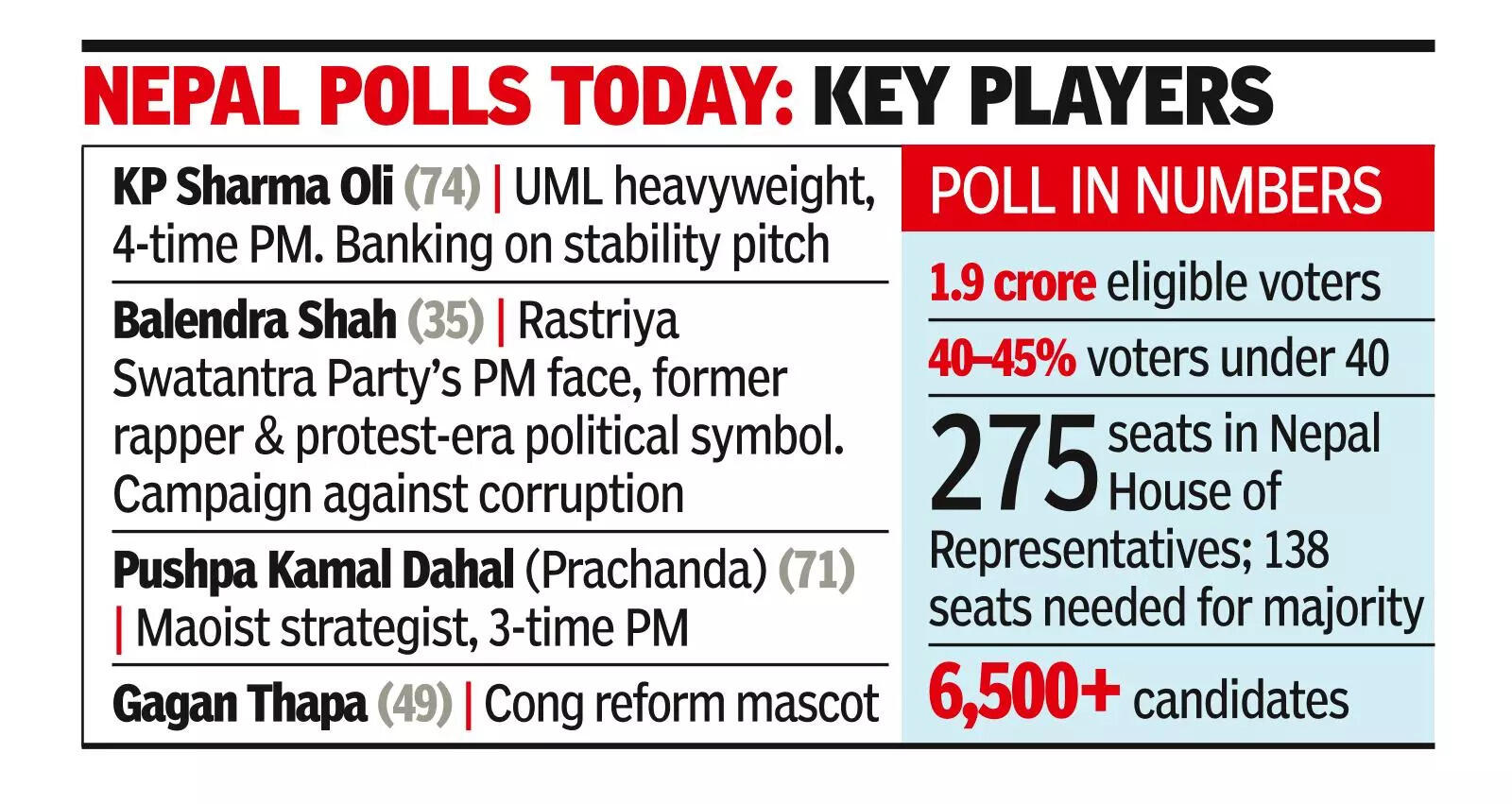
KATHMANDU: As Nepal votes on Thursday, a generational shift has reshaped the political mood in the Himalayan nation. In Kathmandu and other cities, many Gen Z voters – the cohort that toppled the KP Sharma Oli govt and propelled figures like the 35-year-old (Balen) into prominence – have grown impatient with Nepal’s traditional leadership. Yet Oli remains one of the most enduring faces of Nepal’s political establishment.Even after years of turbulence, Oli commands loyalty in Jhapa-5, the constituency along eastern Nepal’s border with India that has anchored his national career. This time though Balen has chosen to challenge him in a direct contest, as if to prove a point.Born in 1952, Oli came of age during Nepal’s Panchayat era, when political parties were banned — in 1970, as a teenage communist activist opposing the monarchy’s partyless system. Arrested in Oct 1973 for his role in the Jhapa rebellion and anti-monarchy activities, he spent 14 years in prison, four of them in solitary confinement. Decades later, the former dissident would become one of the most powerful figures in the very establishment he once fought.
Those years shaped his political instincts. “Leaders who came through Panchayat-era prisons developed a hard view of politics,” a political analyst told a Nepali daily in 2018. “They believed power had to be exercised decisively because they had seen how easily it could be suppressed.”After the 1990 People’s Movement restored multiparty democracy, Oli entered open politics through the Communist Party of Nepal (Unified Marxist-Leninist). In parliament, he quickly gained a reputation for blunt rhetoric and biting humour. A Kathmandu newspaper wrote in 2014 that Oli approached debate “as a contest of endurance and wit rather than quiet compromise”, often using sarcasm to unsettle opponents.Ever since, he has remained a prominent figure in Nepal’s unstable coalition politics.His national breakthrough came in 2015, when Nepal adopted a new constitution and relations with India deteriorated sharply. Protests along the southern border disrupted the flow of fuel, medicines and essential supplies into the landlocked country. The shortages lasted months and were widely seen in Nepal as an unofficial blockade by India. Oli cast the crisis as a question of sovereignty and national dignity, a message that resonated. The nationalist sentiment that followed helped a left alliance sweep the 2017 elections, bringing him back to office with a rare parliamentary majority.But the stability he promised proved short-lived. Facing dissent within his own party, Oli dissolved parliament in Dec 2020. Nepal’s Supreme Court reinstated it. In May 2021 he dissolved it again, triggering another constitutional confrontation that eventually forced him out of office at that time. “A leader who once spent years in prison resisting state authority was now accused of pushing constitutional limits to retain power,” a constitutional scholar wrote in 2021.Oli returned to office again in 2024 as part of a coalition government and was PM during the deadly Gen Z protests last Sept. Many in Nepal believed that his resignation after the protests would end his political career. Instead, Oli has returned to the ballot from Jhapa-5, a reminder of the resilience that has defined his five-decades-old career.A leader who survived prison, political upheaval and repeated challenges to his authority, he now faces voters who will decide whether the rebel who became the establishment still has a future in it.