
The gumdrop-shaped Orion spacecraft can carry up to four passengers. At 16.5 feet wide, it has a habitable volume of around 330 cubic feet. So the crew members have been training to sleep, eat, exercise, use the bathroom and communicate with ground controllers in very tight quarters.
The Orion capsule includes a space toilet (with a door for privacy) that uses a vacuum system to vent urine into space. All other waste is stored for disposal at the end of the mission.
After launch, the astronauts will be able to remove and stow two seats until landing day to give them more room to move. The astronauts will do 30-minute workouts every day, according to the Canadian Space Agency. The capsule has a small device, known as a flywheel, that can be used for squats, deadlifts and other activities.


NASA aims to reuse parts of Orion for the subsequent Artemis III flight, which is slated to launch in mid-2027 and demonstrate key docking and landing technologies in low-Earth orbit. After that, a moon landing is planned for the Artemis IV mission in 2028.
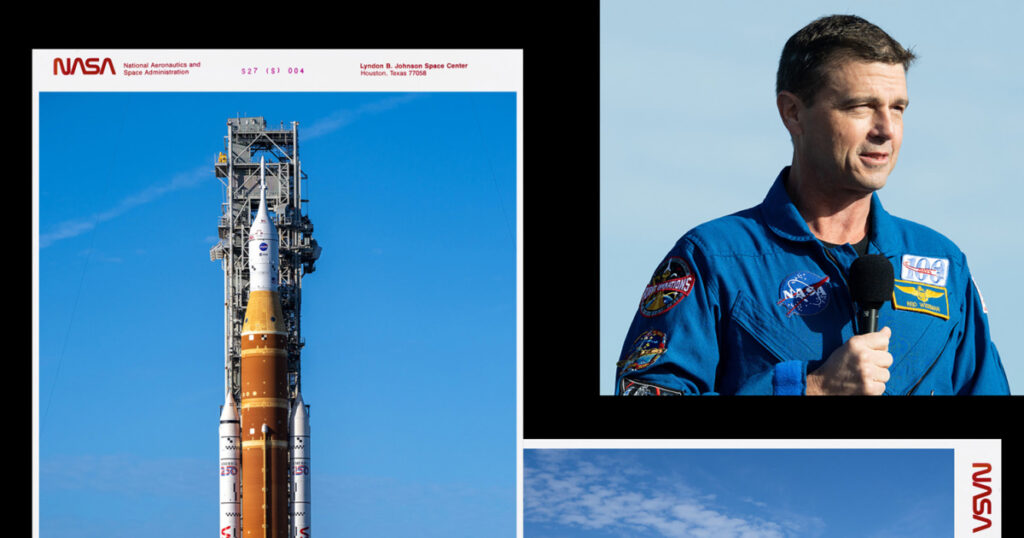
NASA’s Wiseman will command the Artemis II mission, with Glover serving as the pilot. NASA’s Koch and Canada’s Hansen will be mission specialists. The crew arrived at the Kennedy Space Center on Friday ahead of their planned launch.