


Panaji: State govt has decided to introduce a bill to stop landlords from selling land until mundkars’ rights are settled. The move is likely to come as a major relief for mundkars who live in landlords’ properties but who are yet to officially be declared mundkars.

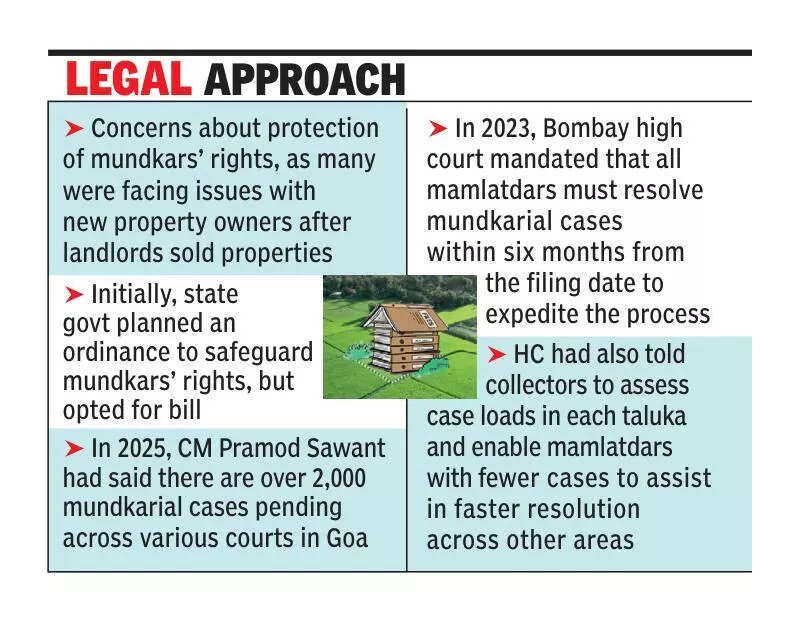
The bill is likely to be introduced in the winter session of the Goa legislative assembly, which begins from Jan 12, said CM Pramod Sawant.There are over 2,000 mundkarial cases pending in various courts in the state. Sawant told TOI that there were a lot of complaints that mundkars’ rights were not protected, and properties were sold to others. “The landlords are selling their properties, including mundkars’ houses, and the mundkars face problems with new property owners,” he said.The CM explained that govt decided to provide relief to mundkars who were staying in landlord properties but had never filed any case to officially declare them mundkars.Sawant said that initially, state govt had decided to issue an ordinance to protect the rights of mundkars, but as the assembly session was summoned, govt will introduce the bill.The chief minister emphasised the need to clear long-pending mundkarial cases, and said govt has attempted to dispose of these petitions.Govt had fixed Dec 2022 as the deadline to dispose of such cases, but no substantial progress was made. In 2022, revenue minister Atanasio ‘Babush’ Monserrate said that by the end of that year, mamlatdars would be given targets to dispose of mundkarial cases.In 2023, the high court of Bombay at Goa directed all mamlatdars to ensure that such cases were disposed of within six months of the date of filing.The division bench comprising justices M S Sonak and Valmiki Menezes directed both the collectors to “analyse the pendency of each taluka and properly assign the cases to revenue officers”. It also directed the collectors to designate mamlatdars with less pendency to other talukas for speedy disposal of cases by issuing appropriate orders to empower the officers.“The collector is enjoined to regularly assess the workload on the revenue officers,” the high court stated.