
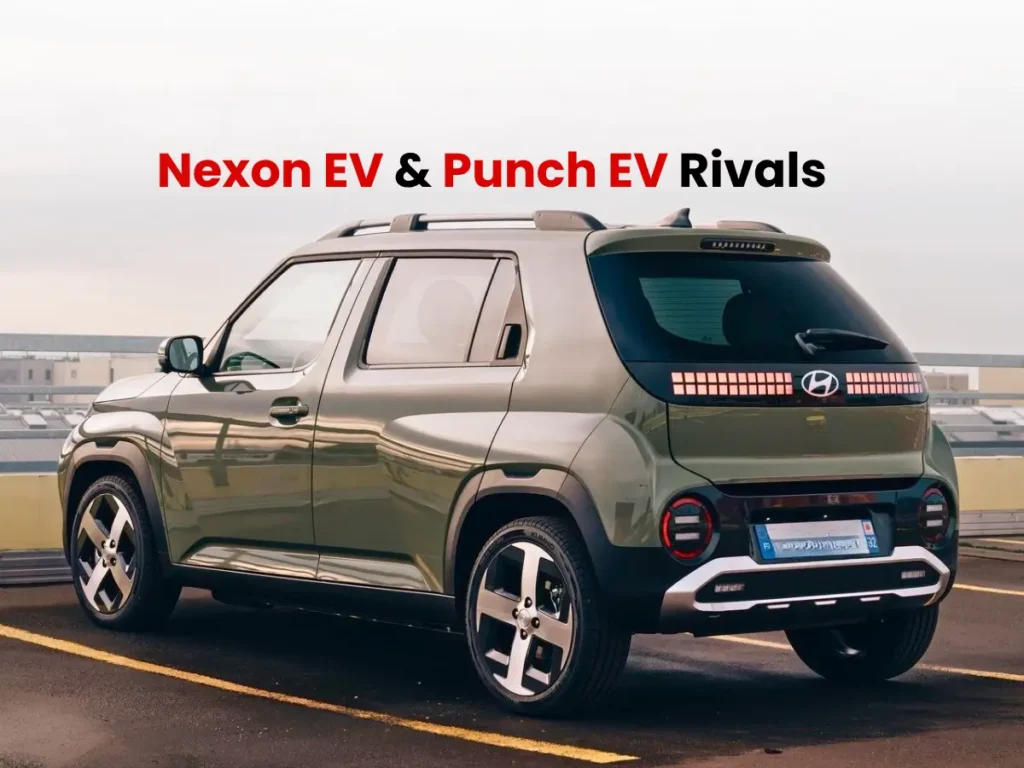
The new Made-in-India Hyundai compact electric SUV is coming sooner than expected. Speaking to Autocar India, Tarun Garg, Managing Director and CEO of Hyundai Motor India, has confirmed that the electric SUV will debut by the end of this year. Earlier, it was planned to be unveiled by March 2027. Mr. Tarun also revealed another important detail that the EV will initially feature battery cells sourced from Svolt instead of Exide. Svolt is one of China’s largest EV battery suppliers.
Also Read: New Hyundai SUV (Victoris Rival) Spied With A Secret “ON” Message
Why Svolt Over Exide?
In April 2024, Hyundai and Kia signed an MOU with Exide Energy Solutions for localised EV battery production in India. This partnership is aimed at reducing the carmaker’s dependence on imported batteries, while achieving higher localization and cost competitiveness. However, In August 2026, Exide revealed that its specific battery-cell localization project with Hyundai and Kia would not be completed during the current financial year.
Hyundai cannot wait for Exide and risk delaying the launch of the new compact EV. Therefore, the Korean automaker has taken another route and decided to initially use Svolt battery cells. This will enable Hyundai to compete vehicle validation, begin production and launch EV within the scheduled timeline.
Interestingly, Svolt is also the technology partner of Exide’s lithium-ion cell manufacturing program. In March 2022, Exide announced a long-term technical collaboration with Svolt, under which the Chinese market granted Exide the rights to use and commercialise its lithium-ion cell technology in India. Svolt also supported Exide in establishing its manufacturing facility on a turnkey basis.
Why Hyundai Can’t Wait for Exide?
The new Hyundai compact electric SUV is an important mass-market product form the carmaker, which will be the based on the brand’s E-GMP (K) architecture. The same platform also underpins the globally sold Hyundai Inster EV. The new Hyundai EV is likely to share its powertrain with the Inster EV, and will take on the Tata Nexon EV, Kia Syros EV and Mahindra XUV 3XO.
Hyundai expects EVs to account for over 7% of its domestic sales within the next year, making the launch timing of its compact EV’s extremely important. Delaying the EV could cause Hyundai to lose valuable time in the mass-market EV segment, which is getting competitive with arrival of several new models.