
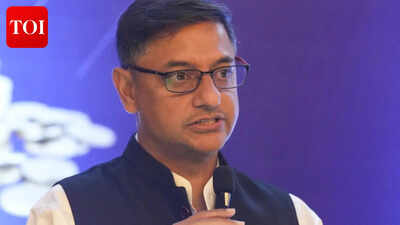
Sanjeev Sanyal (File photo)
India’s heavy dependence on foreign-flagged vessels, which carry more than 90 per cent of the country’s trade by volume, poses a serious strategic vulnerability risk, according to Sanjeev Sanyal, Member of the Economic Advisory Council to the Prime Minister.Speaking to ANI, Sanyal argued that India’s limited merchant fleet constrains the nation’s economic resilience, particularly during periods of global instability. While naval strength remains essential, he stressed that commercial maritime capacity must grow alongside it.
“I have argued many times before that ships and this maritime capability is one of our biggest strategic weaknesses,” Sanyal said, adding that a robust merchant fleet is necessary to “provide support to the economy in good times and bad.” He also said that relying solely on military power is insufficient. “Until we own our own ships, build our own ships, it’s not enough to only have a navy.”Menawhile to address the gap, the central government is accelerating efforts to develop a domestic shipping and shipbuilding ecosystem. Recent policy measures have granted ships infrastructure status and introduced legislative reforms aimed at easing ownership structures and attracting private investment. Sanyal said that these initiatives are backed by a Rs 77,000 crore package intended to expand India’s national fleet and strengthen maritime capabilities.Beyond strategic considerations, Sanyal pointed to the significant economic benefits of scaling up shipbuilding. Describing it as an “ecosystem of jobs,” he noted the sector’s labour-intensive nature and its wide industrial linkages. “It requires basically a large amount of welding. There is all the engineering that goes into it, the steel that comes from it,” he said, emphasising the ripple effects across engineering, heavy manufacturing, and logistics.Eastern India, particularly West Bengal, could emerge as a key beneficiary of the maritime push. Sanyal cited the region’s longstanding maritime heritage and existing infrastructure, including facilities such as Garden Reach Shipbuilders. He pointed to historical ports like Chandraketugarh and Tamralipti, along with modern hubs in Kolkata and Haldia, as indicators of the state’s natural advantages.“I’m sure this big effort that the central government is doing in terms of building out the shipbuilding and shipping industry has many paybacks to places like Bengal,” Sanyal said.The expansion of domestic maritime capacity also ties directly to India’s evolving trade strategy. As the country deepens economic engagement through new free trade agreements, including with major partners such as the US, Sanyal argued that shipping infrastructure will play a decisive role.“As trade grows, the shipping industry will be a very important part of that trade,” he said, calling strong maritime linkages and a capable merchant navy “absolutely critical” for sustaining long-term economic growth.