
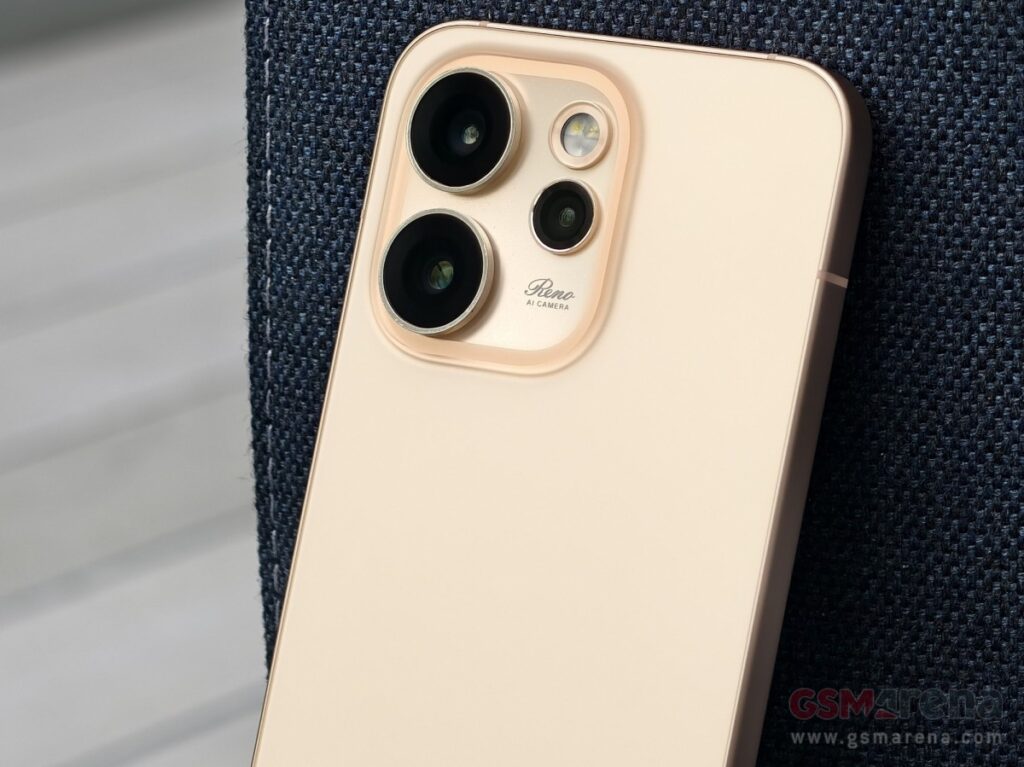
Oppo announced the Reno15 series earlier this year for international markets, marking its first major announcement of 2026. The smartphones introduced to the international markets include the Reno15, Reno15 Pro, Reno15 Pro Mini, Reno15 Pro Max, and Reno15c. But it isn’t as simple as it sounds, because some of these phones are sold with different names in different regions.
The global Reno15 Pro, for example, is sold as the Reno15 Pro Mini in India, while the Indian Reno15 Pro is available as the Reno15 Pro Max in some countries.
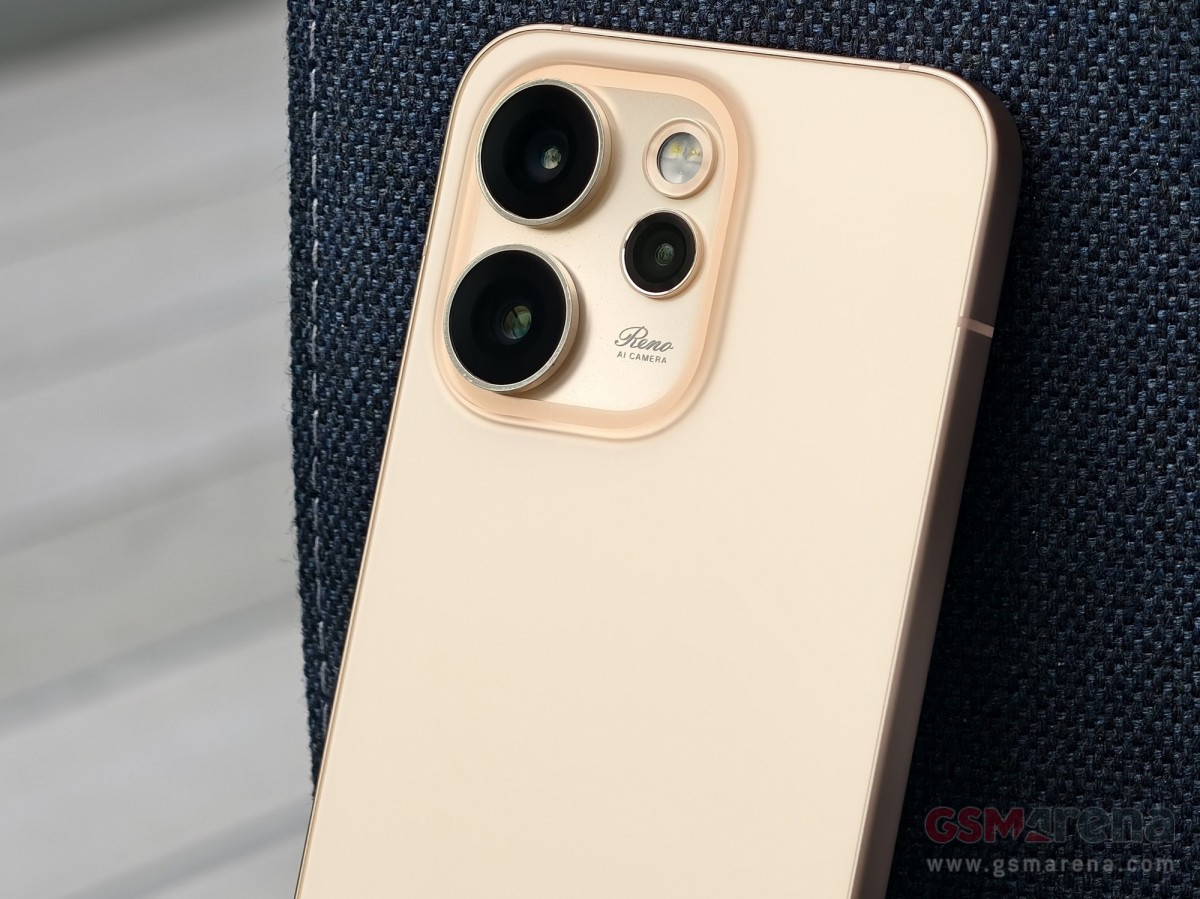
Indian Oppo Reno15 Pro

We already reviewed the Reno15 and global Reno15 Pro and gave you an early look at the Indian Reno15 Pro. Today, we are here to report on how the Indian Reno15 Pro performed across different departments during our long-term use of the smartphone.


Indian Oppo Reno15 Pro Mini (left), Oppo Reno15 (center), and Indian Reno15 Pro (right)

While the Indian model of the Oppo Reno15 Pro is called Reno15 Pro Max in some regions, we will refer to it as the Reno15 Pro in this review, as that’s what it’s called in India. Let’s proceed.
Design
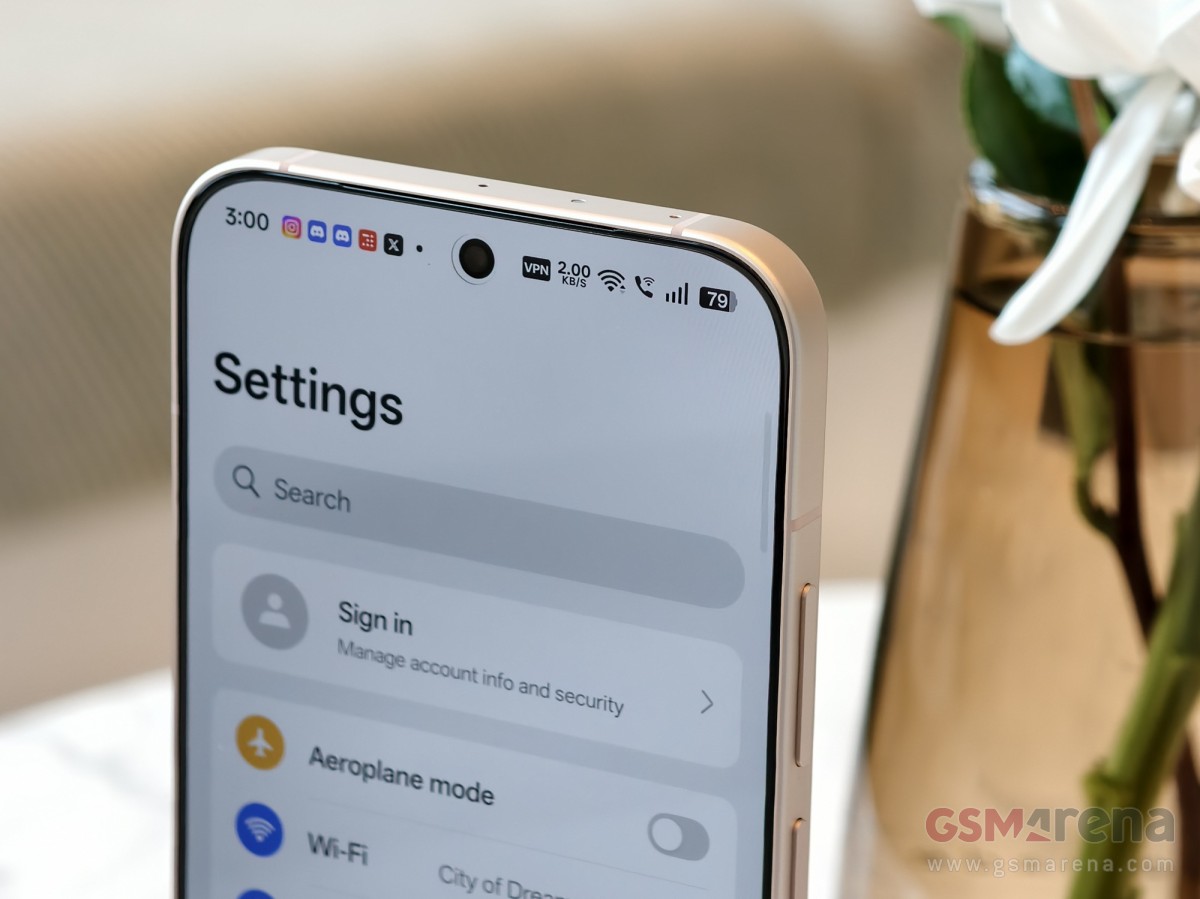
The Oppo Reno15 Pro is built around a 6.78″ LTPO AMOLED display with a 120Hz refresh rate and 3,600 nits peak brightness. The panel has a centered punch-hole for the 50MP selfie camera, and underneath it is an optical fingerprint scanner for biometric authentication.


The fingerprint scanner was fast and accurate, but we would’ve liked it placed higher for easier reach, which could’ve offered a more convenient phone-unlocking experience given the Reno15 Pro’s size.
Moreover, given the Reno15 Pro’s price, an ultrasonic in-display fingerprint scanner instead of an optical one would’ve been nice.

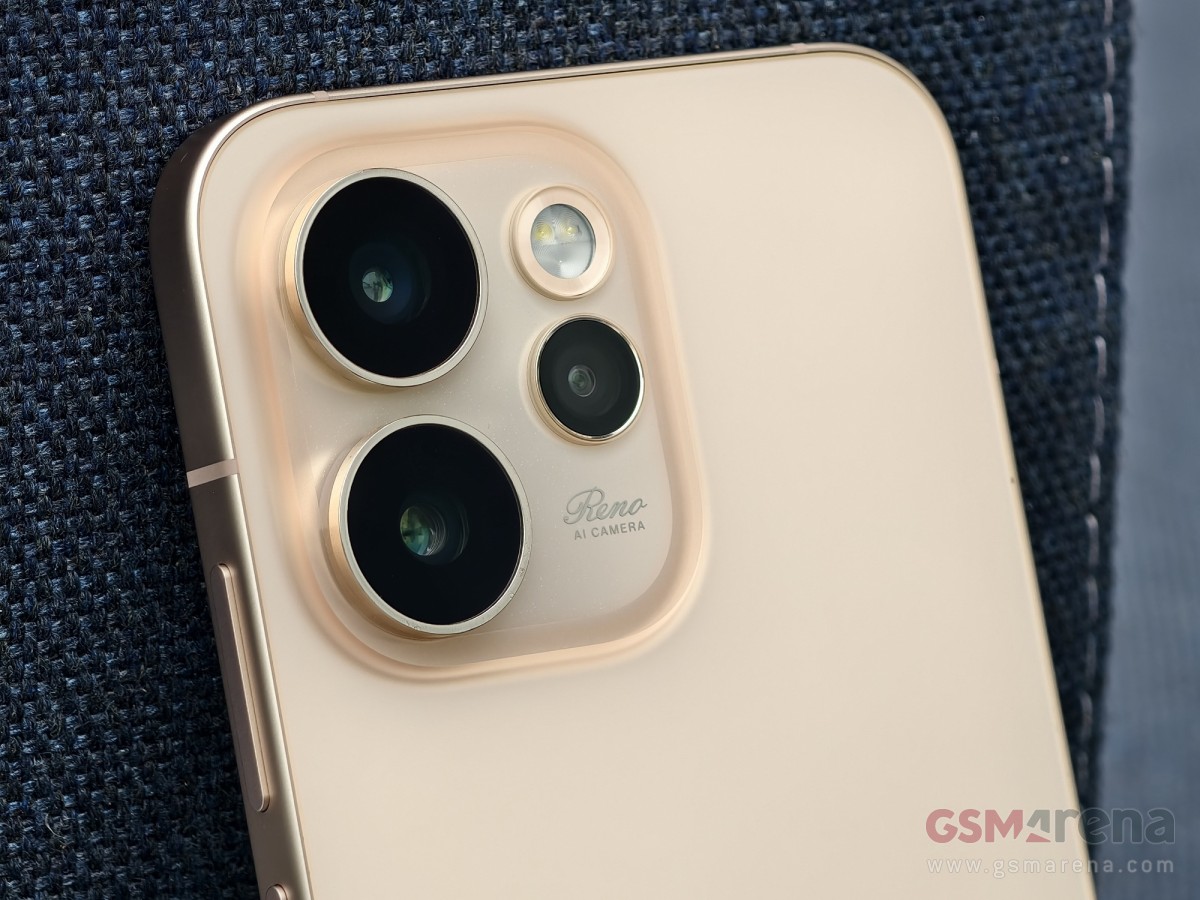
Turn the Oppo Reno15 Pro around, and you see a squircle-shaped camera island, housing an LED flash and three cameras arranged in a way that will inevitably draw comparison with an iPhone Pro. This camera setup comprises a 200MP primary camera, a 50MP ultrawide camera, and a 50MP telephoto camera.
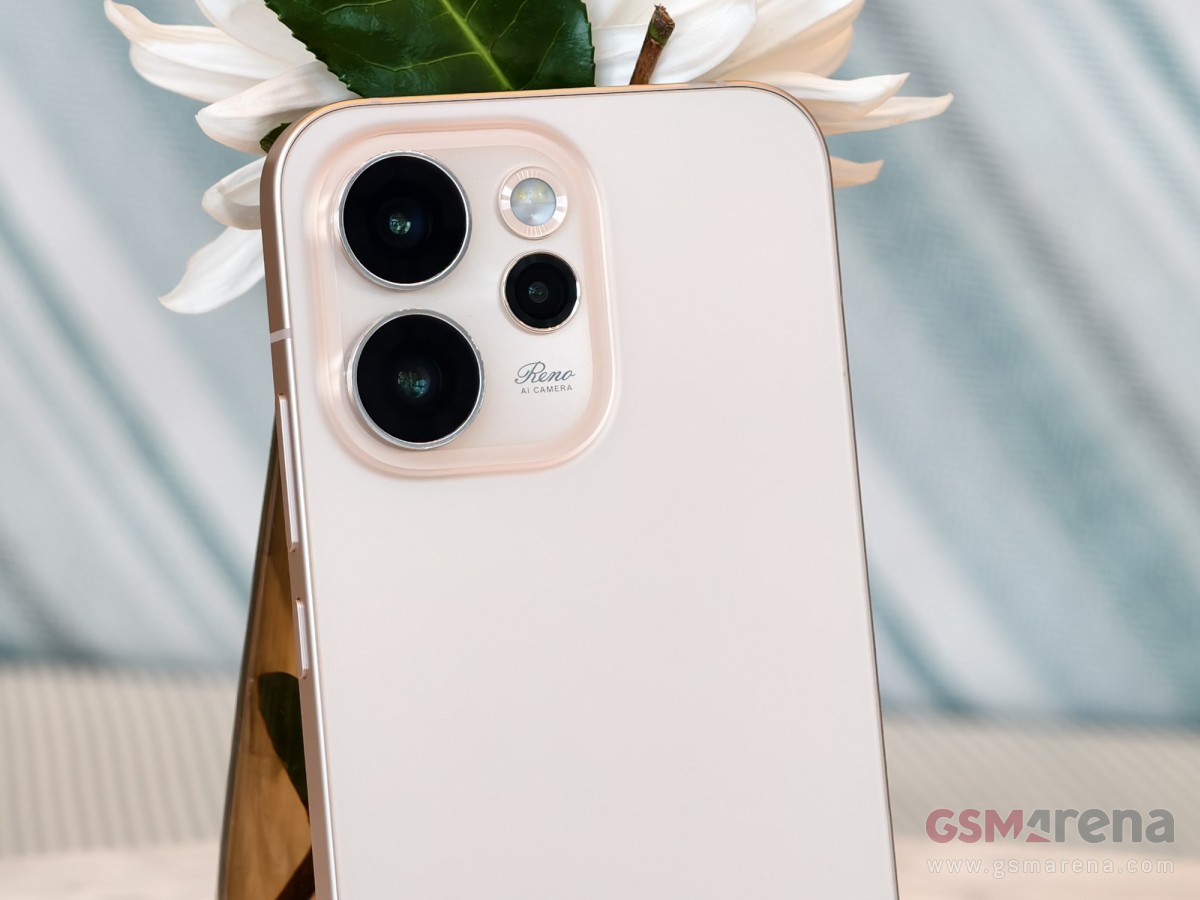
The camera module has a square ring around it. Oppo advertises it as the Dynamic Stellar Ring Design and says it “produces a soft halo-like glow when light hits the surface.”
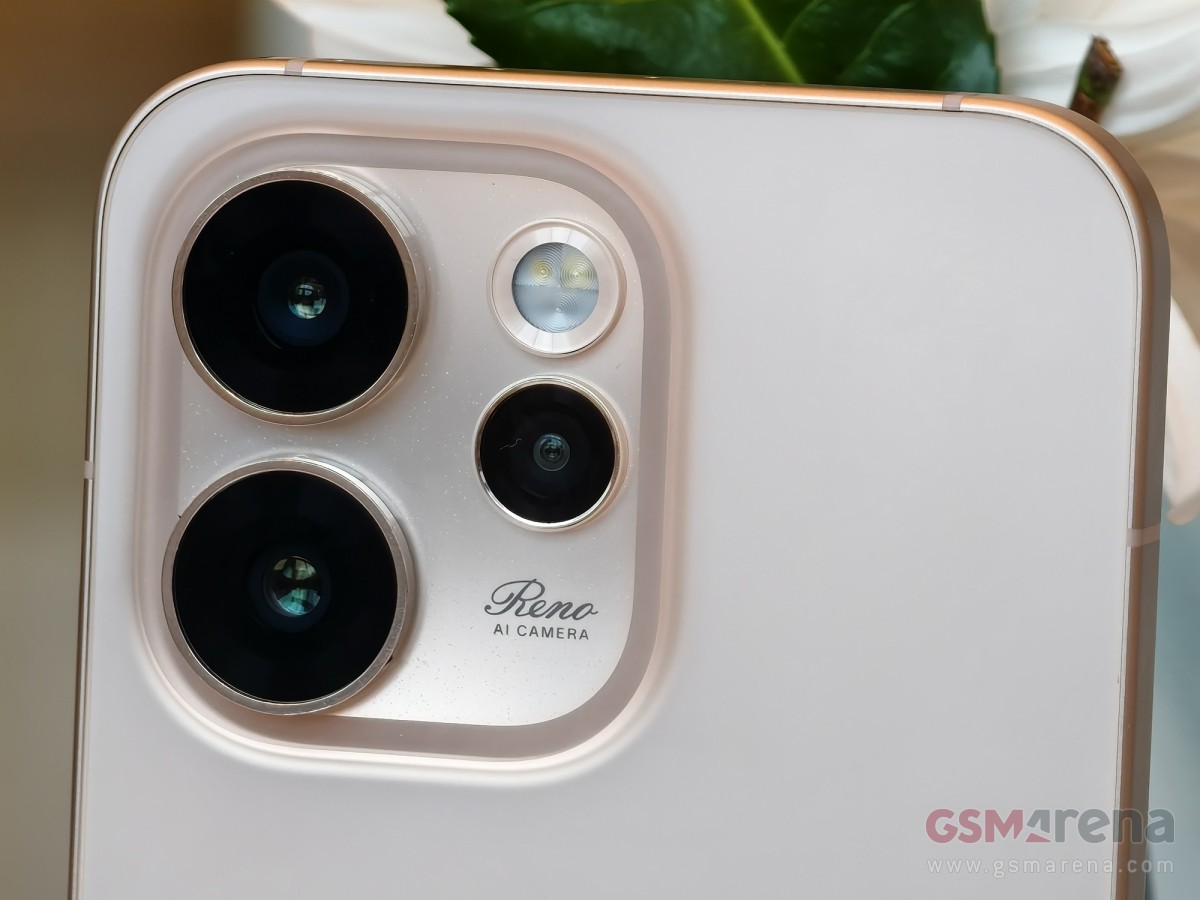
You can see that the area near the cameras has a glittery pattern, which looks nice. It’s not pronounced enough, though, so it goes unnoticed sometimes. Moreover, the camera island on the Reno15 Pro protrudes – like on most other smartphones these days – causing the phone to wobble when used on flat surfaces.
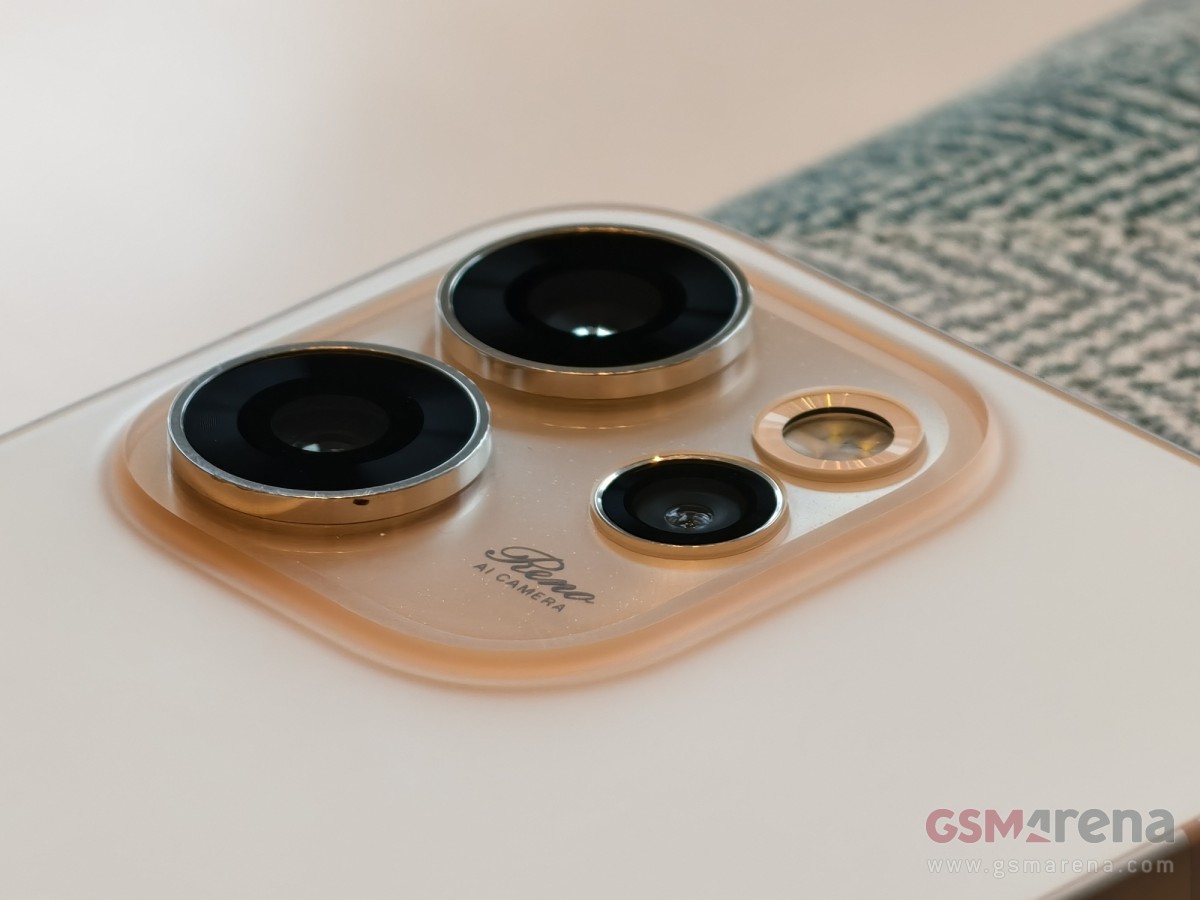
However, it’s worth noting that the camera island and the back panel are made of a single piece of glass – called One-piece Sculpted Glass by Oppo – which results in a seamless, cohesive integration of the camera island with the rest of the panel while also preventing dust accumulation around the camera island. We like it.
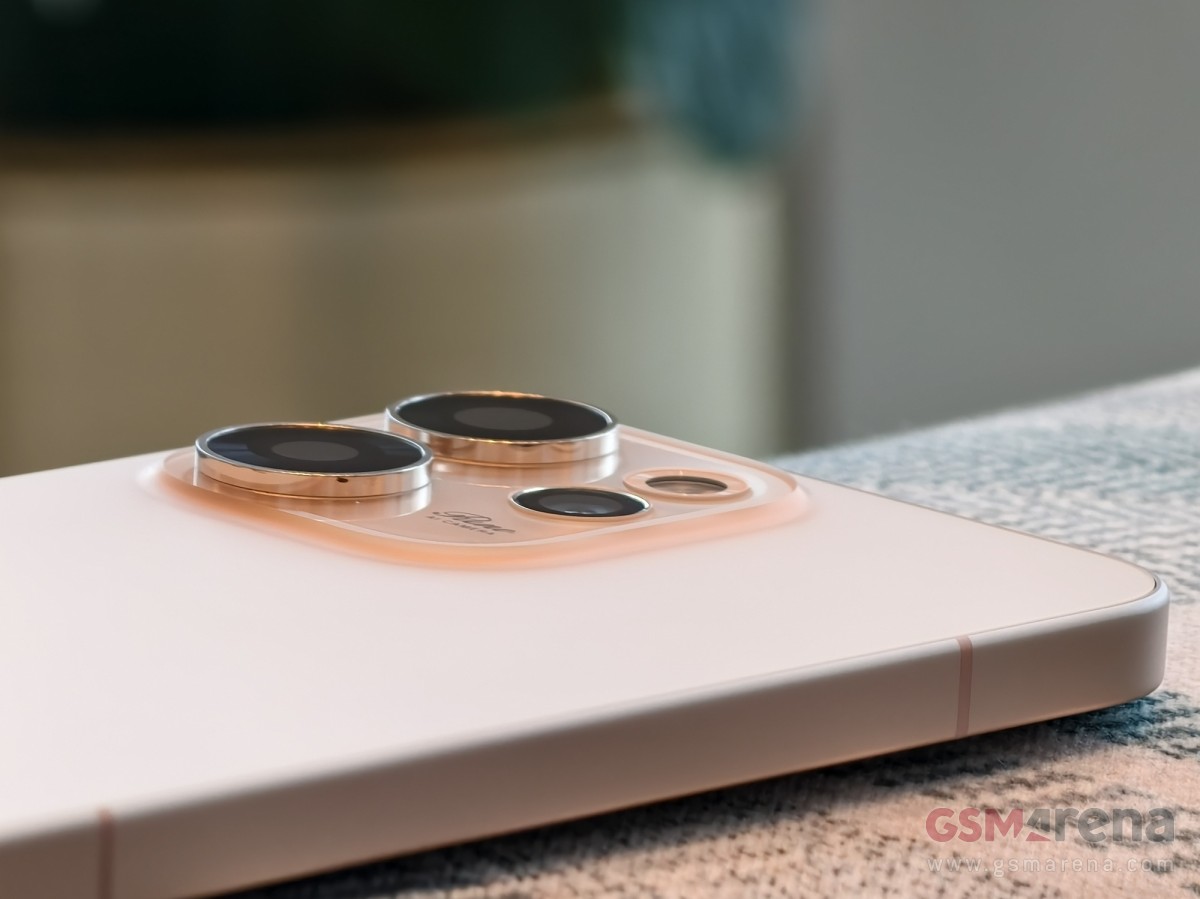
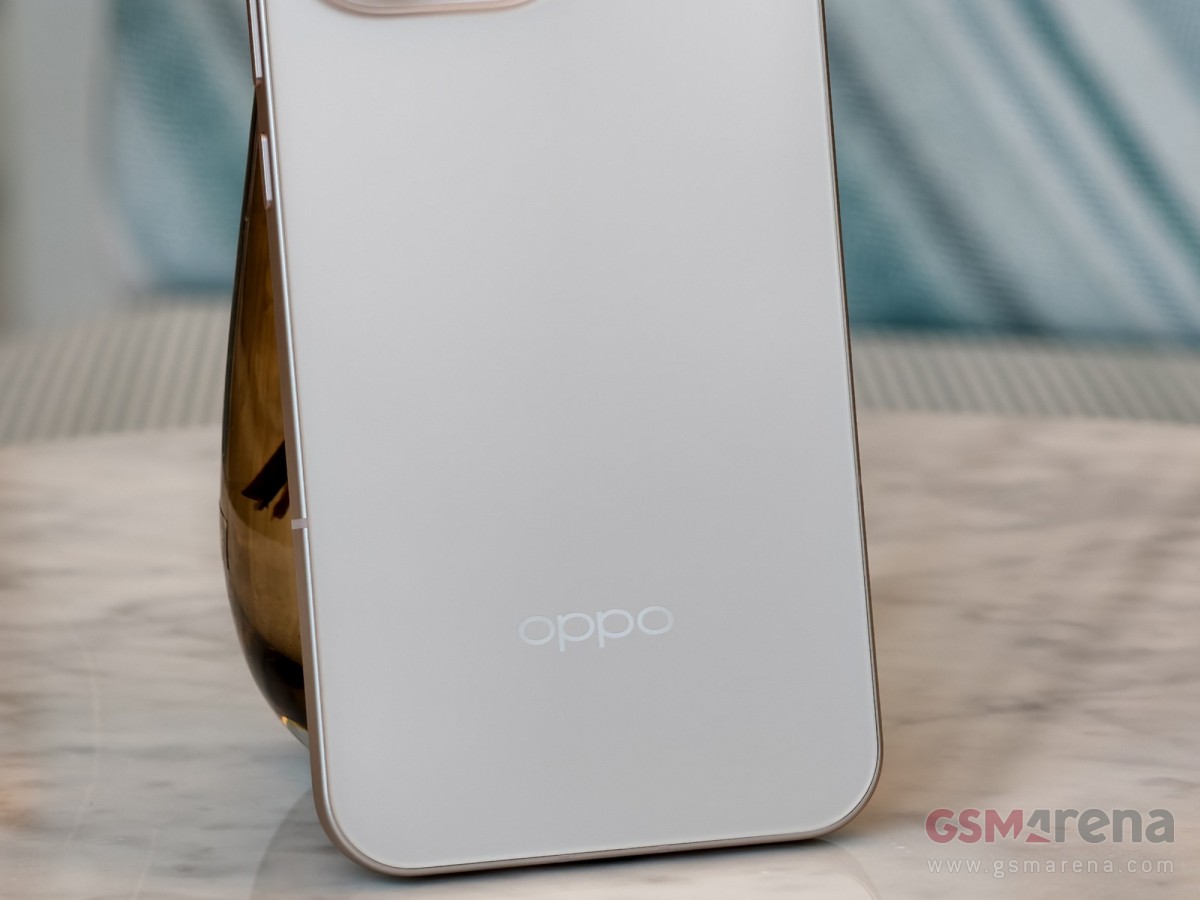
The flat rear panel uses a 1.8mm thick glass with an “AG glossy-matte hybrid finish.” Oppo prefers calling it that as the camera island is glossy, while the rest of the panel has a matte texture.

The Oppo Reno15 Pro comes in Sunset Gold and Cocoa Brown colors. The former is “inspired by the golden hues of Goa’s sunsets beaches that turn the ocean into a sheet of liquid gold,” while the latter is “inspired by the warmth of tea and coffee cultures.”
We received the Sunset Gold model, which is the subject of this review, but we also got to handle the Cocoa Brown version. They both look pretty nice, but their actual color is visible only when light hits their rear panels at the right places.
Oppo Reno15 Pro in Sunset Gold
The matte finish on the rear panels of both models feels nice to the touch, but in our experience, the Sunset Gold did a better job of resisting smudges. In fact, we used the phone without the protective case all the time and rarely had to wipe the panel to remove the smudges.

Oppo Reno15 Pro’s Sunset Gold model (left) with the Cocoa Brown version (right)
Both color models of the Oppo Reno15 Pro are 7.7mm thick and weigh 205 g. Their flat, “aerospace-grade aluminum” frames also have a matte finish that resists smudges.
The color of the frame isn’t the same as the back panel, though.
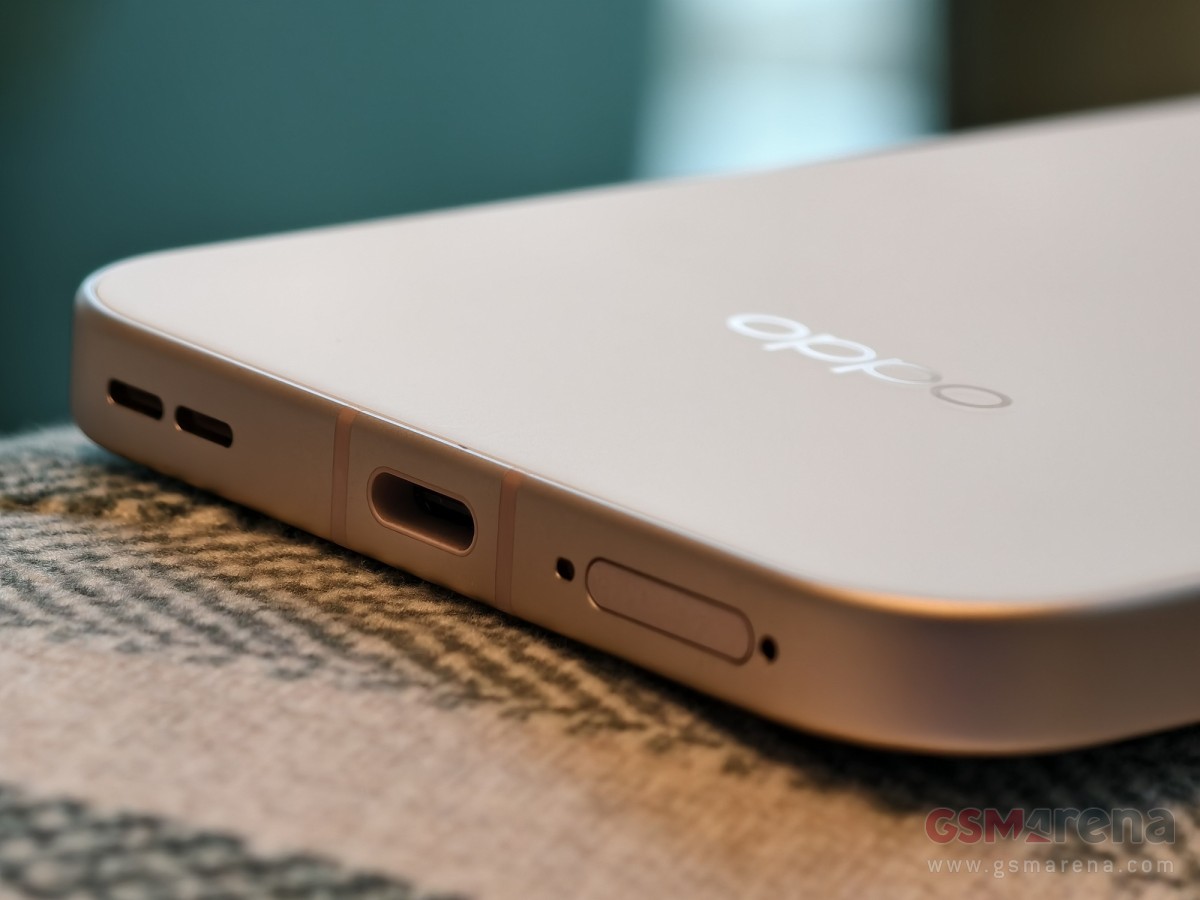
That said, on the right side of the Oppo Reno15 Pro’s frame is the volume rocker and a power button with good feedback. At the bottom is the platinum-plated, corrosion-resistant USB-C port, flanked by a SIM card slot, primary microphone, and a speaker grille. Up top is another speaker outlet, joined by an IR blaster and the secondary mic.



Oppo Reno15 Pro’s ports and controls

Other design features of the Oppo Reno15 Pro include IP66, IP68, and IP69 ratings, and Sponge Bionic Cushioning, which, Oppo says, is “a shock-absorbing internal structure” that “distributes force internally, protecting delicate components and making your device tougher from the inside out.”

The Oppo Reno15 Pro has a solid build with a premium in-hand feel, and we like its overall design. We found the phone light enough for prolonged use, but its size, paired with flat frames and a flat back panel, can make it unwieldy for some, with one-handed use not easy either.
Display
The Oppo Reno15 Pro packs a 6.78″ LTPO AMOLED display of 2,772×1,272-pixel resolution and 450 ppi pixel density. The panel has a 120Hz refresh rate, 240Hz touch sampling rate, and supports 1.07 billion colors. It also supports HDR10, HDR10+, HLG, and Dolby Vision, and the smartphone played HDR and Dolby Vision videos in the YouTube app without any issues. Additionally, the Reno15 Pro comes with the Widevine L1 certification, enabling 1080p video streaming on compatible apps.
The Oppo Reno15 Pro’s display, surrounded by 1.15mm thin bezels on all sides, is protected by Gorilla Glass Victus 2 and supports Splash Touch and Glove Touch, meaning you can operate the phone even with wet hands or wearing gloves.
The panel has a local peak brightness of 3,600 nits. The screen was legible enough outdoors under sunlight, and we faced no issues reading text or watching other content.
Regarding the screen refresh rate, the Oppo Reno15 Pro’s LTPO panel supports 1Hz, 30Hz, 60Hz, 45Hz, 90Hz, and 120Hz refresh rates and has three refresh rate options – Auto-select, Standard (60Hz), and High (120Hz). There’s also an “App-specific refresh rate” option available in the menu when you select the High refresh rate. It lets you select the apps/games you want to run at 120Hz.
With the screen refresh rate set to High and enabled for all apps and games, the refresh rate bumped up from 1Hz to 120Hz for the system menus and apps when interacting with the display. It remained at 1Hz when viewing images in the default Photos app, Google Photos, Facebook, Instagram, and X. When watching 30 or 60 FPS videos in these apps and on YouTube, the refresh rate switched between 30Hz and 60Hz, depending on the video’s frame rate.
The Standard mode was basically the High mode, but with the maximum refresh rate restricted to 60Hz. And with the refresh rate set to Auto-select, the panel was restricted to 90Hz in some apps, including Facebook, Instagram, X, Google Chrome, GSMArena, and Quora, when you interacted with it. On YouTube, it only went up to 60Hz when interacting with the screen.
When playing videos, the refresh rate switched between 30Hz and 60Hz, depending on the video’s frame rate. However, the screen also refreshed at 45Hz while watching videos on Instagram, and it was the only place we saw this refresh rate. In summary, Auto-select was basically the High mode, limited to 90Hz for most apps.
Regarding gaming, Oppo advertises 120FPS support via Pro Gamer Mode, primarily for FPS and MOBA games such as PUBG Mobile and Mobile Legends: Bang Bang. Neither of these is officially available in India through the Google Play Store, and the games we usually play on smartphones during reviews didn’t go beyond 60FPS.
To conclude, you should opt for the High refresh rate mode for the smoothest experience on the Oppo Reno15 Pro.
Software and Performance
The Oppo Reno15 Pro is powered by MediaTek’s Dimensity 8450 SoC, which, like it or not, is the same chip that powered the Reno14 Pro. The smartphone comes with 12GB of LPDDR5X RAM and up to 512GB of UFS 3.1 storage. Ours is the top-end 12GB/512GB model, and regardless of the memory configuration you go for, you get the smartphone with Android 16-based ColorOS 16 out of the box.
Oppo has promised five years of “major ColorOS version updates” and six years of security updates for the Reno15 Pro.
Like its predecessor and many other smartphones, the Oppo Reno15 Pro also comes pre-loaded with third-party apps, which you can uninstall if you wish.
And it’s worth mentioning that the Indian units of some Oppo smartphones – including those in the Reno lineup – we used last year had about 20 third-party apps/games pre-installed, which wasn’t ideal, even though all of them could be uninstalled if the user wished. That’s fortunately not the case with our Indian Reno15 Pro, as it came pre-loaded with just 10 third-party apps. We appreciate Oppo for reducing that number.
The overall software features and experience are similar to those of the global Oppo Reno15 Pro, sold as the Reno15 Pro Mini in India, so you can read its review to learn more about ColorOS 16.
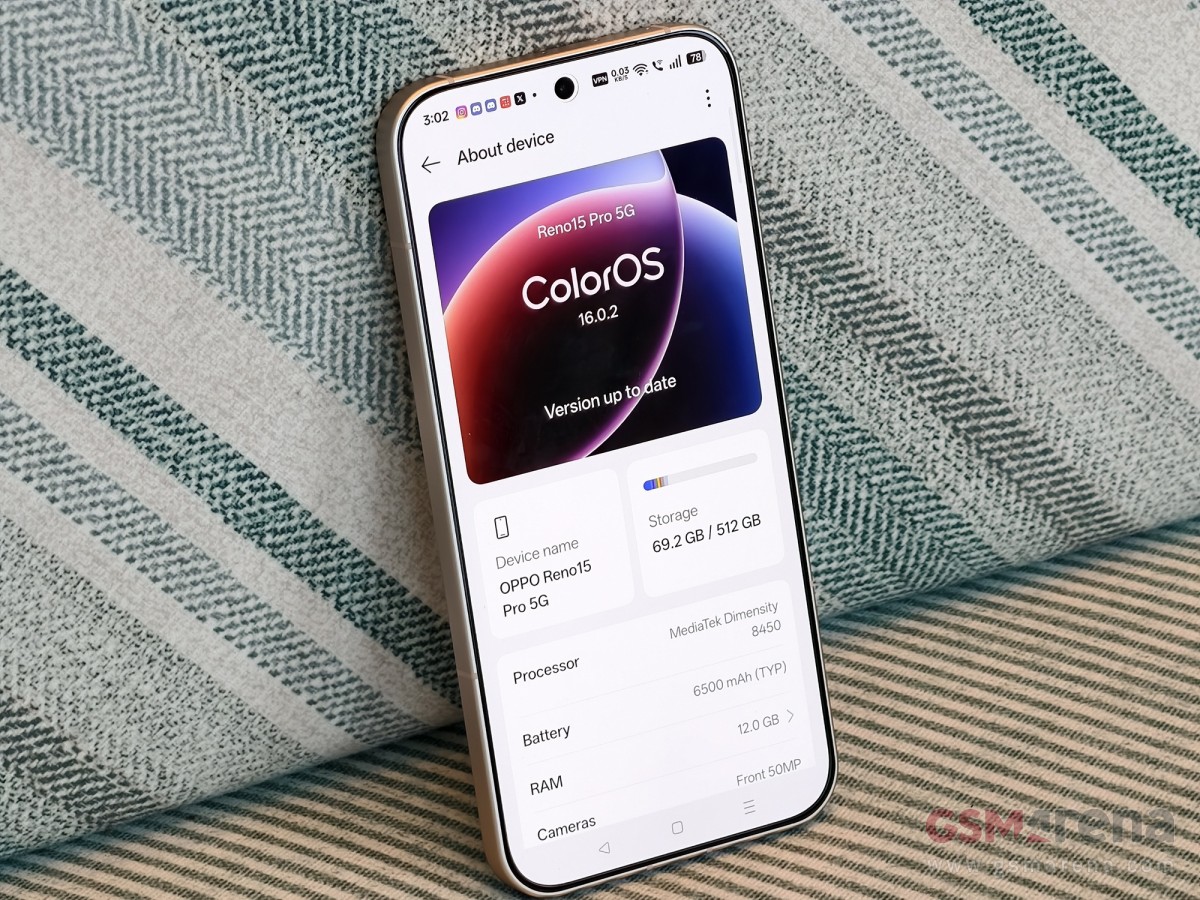
Performance-wise, the Oppo Reno15 Pro was smooth in everyday use, and there were hardly any stutters, even when playing games such as Call of Duty: Mobile for over an hour. The smartphone remained reasonably cool during long gaming sessions. It got warm, yes, but not hot.
Those interested in synthetic benchmarks can check the charts below.
The Oppo Reno15 Pro’s sustained performance wasn’t anything to write home about. But as we said before, in real-world usage, the smartphone performed smoothly in all scenarios, including long gaming sessions.
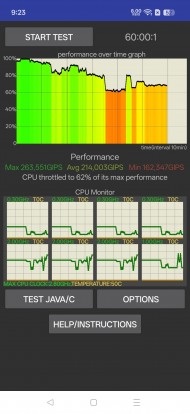

CPU test • GPU test

Camera
The Oppo Reno15 Pro features four cameras – one on the front and three on the rear. The selfie snapper on the front uses a 50MP Samsung ISOCELL JN5 sensor with an f/2.0 aperture and a 100° FOV. It has an 18mm focal length, supports auto-focus, and can record videos in up to 4K resolution at 60 FPS.
Around the back, you get a 200MP primary camera, a 50MP telephoto camera, and a 50MP ultrawide camera with focal lengths equivalent to 24mm, 80mm, and 16mm, respectively. All the rear cameras have auto-focus, and while Oppo says they are all capable of recording 4K@60FPS videos, we found this to be true only with the 200MP camera.

The primary camera uses the Samsung ISOCELL HP5 sensor and has an f/1.8 aperture, 84° FOV, and 2-axis OIS. It can record regular videos in up to 4K resolution at 60 FPS, while underwater recording is limited to 4K resolution at 30 FPS.
The telephoto camera uses the same sensor as the front camera, but it sits behind a lens with an f/2.8 aperture and 3.5x optical zoom (120x digital zoom). The unit has a 30° FOV and 2-axis OIS.
The 50MP ultrawide camera has an f/2.0 aperture and a 116 ° FOV. It uses the GalaxyCore GC50F6 sensor.
All rear cameras captured images quickly, even in High-Res mode. However, it’s worth noting that the primary camera only captured images at 200MP during the day in bright conditions. In low light and at night, it mostly took pictures at 50MP resolution, like the telephoto and ultrawide units. Oppo told us this was intentional to offer the best image quality to the users. The default camera app also says it’s “best for well-lit natural scenery and non-moving subjects.”
While the Reno15 Pro sports a high-resolution 3.5x telephoto camera, it lacks telephoto macro, which is a bummer.
That said, the Indian Oppo Reno15 Pro features the same set of cameras as its global counterpart and offered good results. Since we’ve already talked about their performance in the global Reno15 Pro’s review, we are not getting into the details again. However, we have clicked some pictures with the Indian Reno15 Pro, which you can check below.
Daylight Photos
Let’s take a look at the daylight pictures first, captured with the Oppo Reno15 Pro’s 50MP ultrawide camera, which has an output of 12MP in the default Photo mode. Those shots are followed by photos taken with the 200MP primary camera, having an output of 12MP in the default Photo mode at 1x and 2x magnifications. However, there were times when the primary camera also clicked 26MP pictures at 1x magnification in the default mode during the day.
The 50MP telephoto camera also has an output of 12MP in the Photo mode, and it’s used when you switch to 3.5x or 7x magnification.
Ultrawide camera, 12MP, 0.6x magnification (16mm).





Ultrawide camera, 12MP, 0.6x magnification (16mm)

Ultrawide camera, 50MP (High resolution), 0.6x magnification (16mm).





Ultrawide camera, 50MP (High resolution), 0.6x magnification (16mm)
Primary camera, 12MP, 1x magnification (24mm).


Primary camera, 12MP, 1x magnification (24mm)
Primary camera, 26MP, 1x magnification (24mm).




Primary camera, 26MP, 1x magnification (24mm)
Primary camera, 200MP (High resolution), 1x magnification (24mm).






Primary camera, 200MP (High resolution), 1x magnification (24mm)
Telephoto camera, 12MP, 3.5x magnification (85mm).





Telephoto camera, 12MP, 3.5x magnification (85mm)
Telephoto camera, 50MP (High resolution), 3.5x magnification (80mm).





Telephoto camera, 50MP (High resolution), 3.5x magnification (80mm)
Low-light Photos
Now, let’s take a look at some low-light photos.
Ultrawide camera, 12MP, 0.6x magnification (16mm).


Ultrawide camera, 12MP, 0.6x magnification (16mm)
Ultrawide camera, 50MP (High resolution), 0.6x magnification (16mm).


Ultrawide camera, 50MP (High resolution), 0.6x magnification (16mm)
Primary camera, 12MP, 1x magnification (24mm).







Primary camera, 12MP, 1x magnification (24mm)

Primary camera, 50MP (High resolution), 1x magnification (24mm).





Primary camera, 50MP (High resolution), 1x magnification (24mm)
Primary camera, 200MP (High resolution), 1x magnification (24mm).


Primary camera, 200MP (High resolution), 1x magnification (24mm)
Telephoto camera, 12MP, 3.5x magnification (85mm).




Telephoto camera, 12MP, 3.5x magnification (85mm)
Telephoto camera, 50MP (High resolution), 3.5x magnification (80mm).




Telephoto camera, 50MP (High resolution), 3.5x magnification (80mm)
Next up, we have some 1080p and 4K resolution videos recorded at 30FPS and 60FPS.
https://www.youtube.com/watch?v=videoseries
Battery
The Oppo Reno15 Pro packs a 6,500 mAh battery under the hood with 80W wired and 50W wireless charging support. It also supports 55W PPS and 13.5W PD.
We couldn’t put the Oppo Reno15 Pro through our standard battery tests as those can only be run at our HQ, and we tested this phone in India. But anecdotally speaking, the Oppo Reno15 Pro’s battery easily got us through an entire day and a half on a single charge with moderate usage, a 120Hz screen refresh rate, and the display resolution set to 2,772×1,272 pixels, which is the highest supported by the phone’s display. We also had 5G mobile data and Wi-Fi hotspot turned on for at least half a dozen devices.
Even with heavier usage, which included over an hour of web browsing, YouTube video streaming, playing games like Call of Duty: Mobile each, and about half an hour of voice calls, all with a 120Hz refresh rate and 5G mobile data and Wi-Fi hotspot turned on, the Reno15 Pro’s battery got us through the day with enough juice left for the next day.
Once the Oppo Reno15 Pro’s battery has drained, you can juice it up with the bundled 80W SuperVOOC power adapter, which is advertised to charge the cell to 100% in 51 minutes. That wasn’t the case in our charging tests, though.
In our testing, the Oppo Reno15 Pro charged from 0 to 31% in 15 minutes, 50% in 24 minutes, 60% in 30 minutes, and 100% in 54 minutes. It took another 11 minutes for the battery full status to appear on the screen.
It’s worth noting that we’ve shared the best charging test results here, and we ran all our charging tests with 5G mobile data turned on; hence, your mileage will likely vary depending on your usage and the ambient temperature when charging the phone.
Regarding wireless charging, the press material we received from Oppo says the Reno15 Pro’s battery can go from 0 to 100% in 72 minutes with a 50W AirVOOC Flash Charger, but we didn’t have one with us, so we couldn’t verify that ourselves.
Conclusion
The Indian Reno15 Pro, called Reno15 Pro Max in some countries, is offered in Sunset Gold and Cocoa Brown colors in India with two memory options – 12GB/256GB and 12GB/512GB, priced at INR67,999 ($750/€635) and INR72,999 ($800/€680), respectively.
Oppo Reno15 Pro 5G (India)
If you ignore the pricing for a minute, the Oppo Reno15 Pro is a pretty nice smartphone. You get snappy performance, bright display, solid build, premium design, good cameras, and an impressive battery life. A newer processor under the hood would’ve been nice, though.
The Reno15 Pro’s closest competitor in its price range in India within Oppo is the Find X9, which has a base price of INR74,999 ($825/€700). Then there’s the vivo X300, starting at INR75,999 ($835/€710). We also have the OnePlus 15, iQOO 15, and Realme GT 8 Pro, all starting at INR72,999 ($800/€680). And if you want something priced lower, the vivo X200T, starting at INR59,999 ($660/€560), is one option. Not to forget the Oppo Reno15 Pro Mini, which also has a base price of INR59,999 ($660/€560).
Oppo Find X9 5G
Oppo Reno15 Pro Mini 5G
The Reno15 Pro Mini is basically the Reno15 Pro, but in a more compact form with a smaller screen, a smaller battery, and a non-LTPO display.
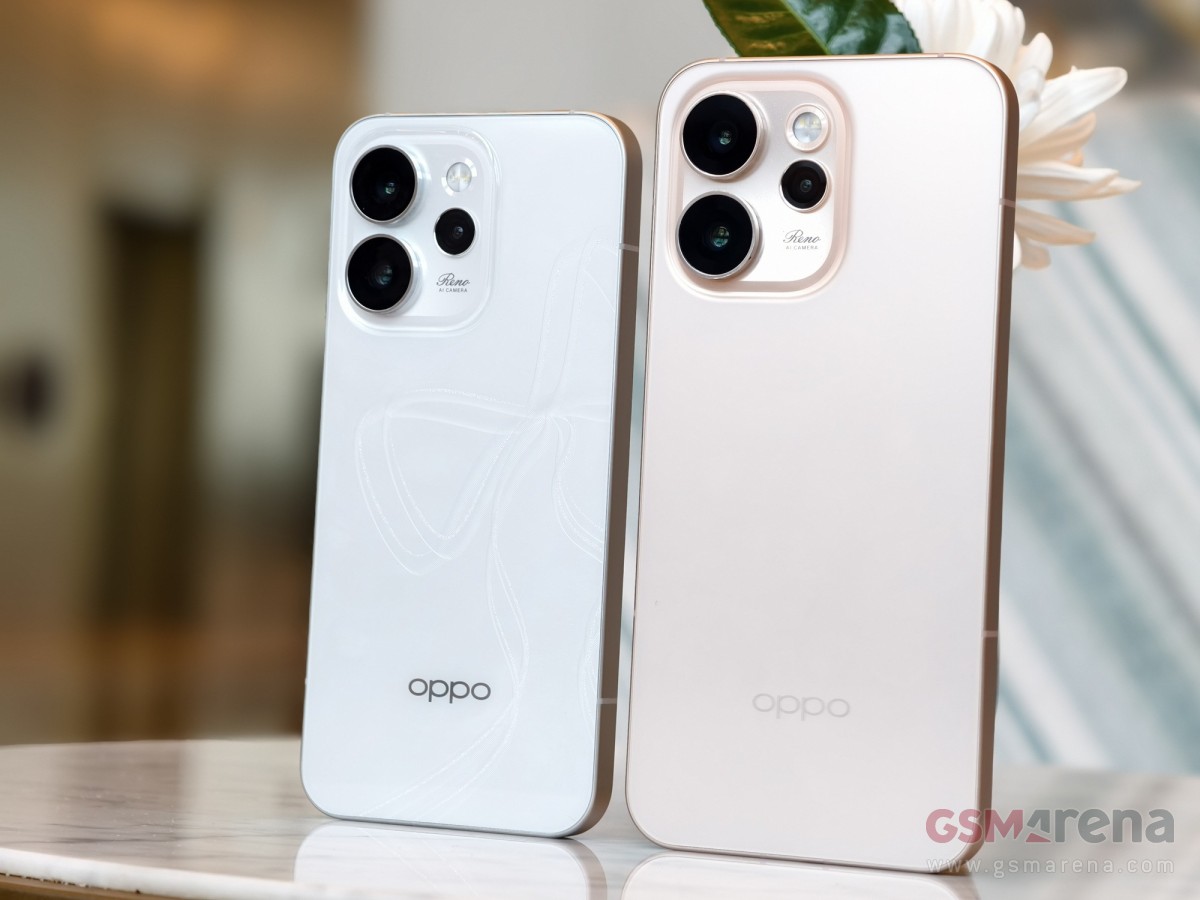
Indian Oppo Reno15 Pro Mini (left) with the Indian Oppo Reno15 Pro (right)
All things considered, if pricing is not an issue, the Indian Oppo Reno15 Pro (aka Reno15 Pro Max) gets our recommendation.