
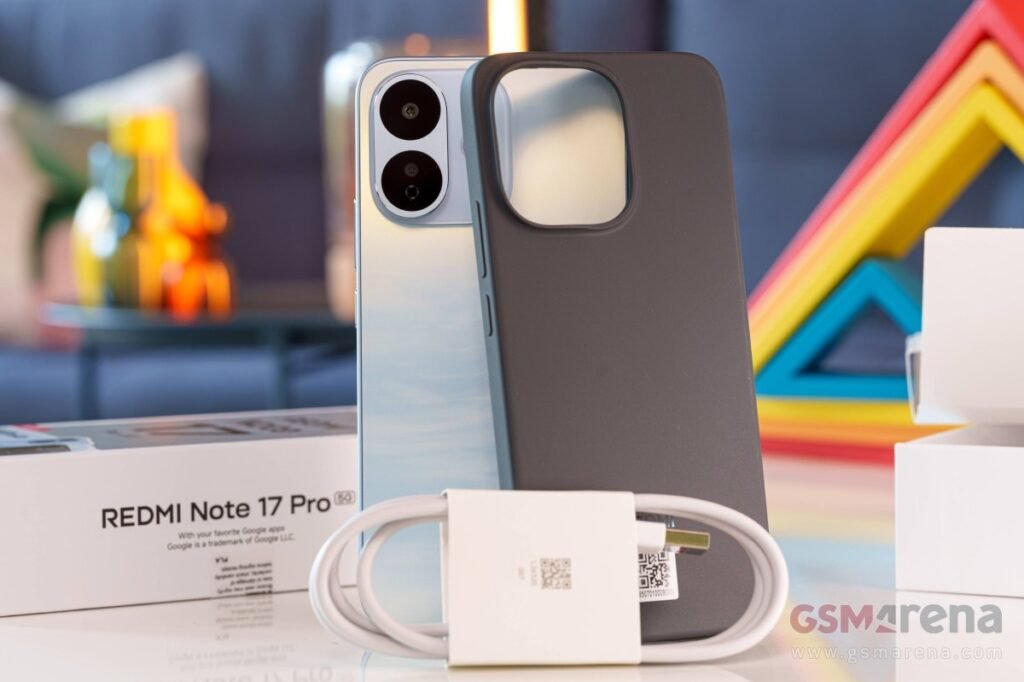
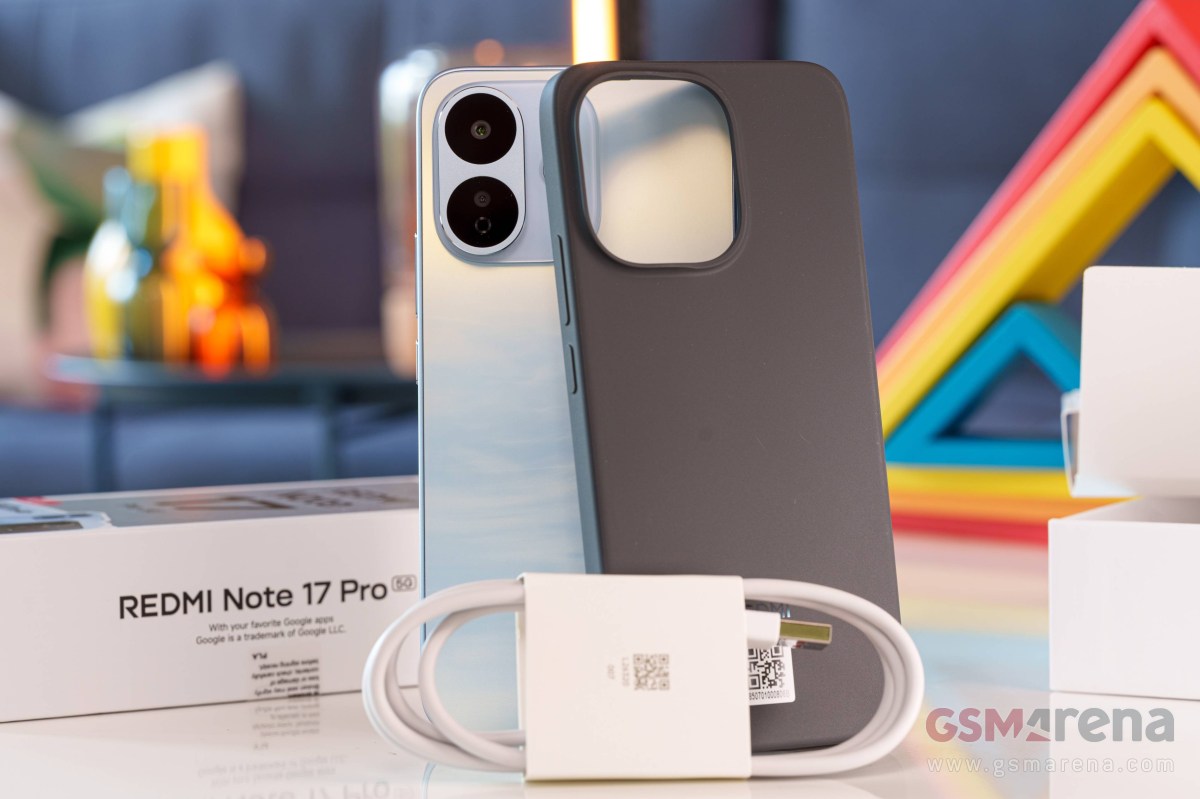
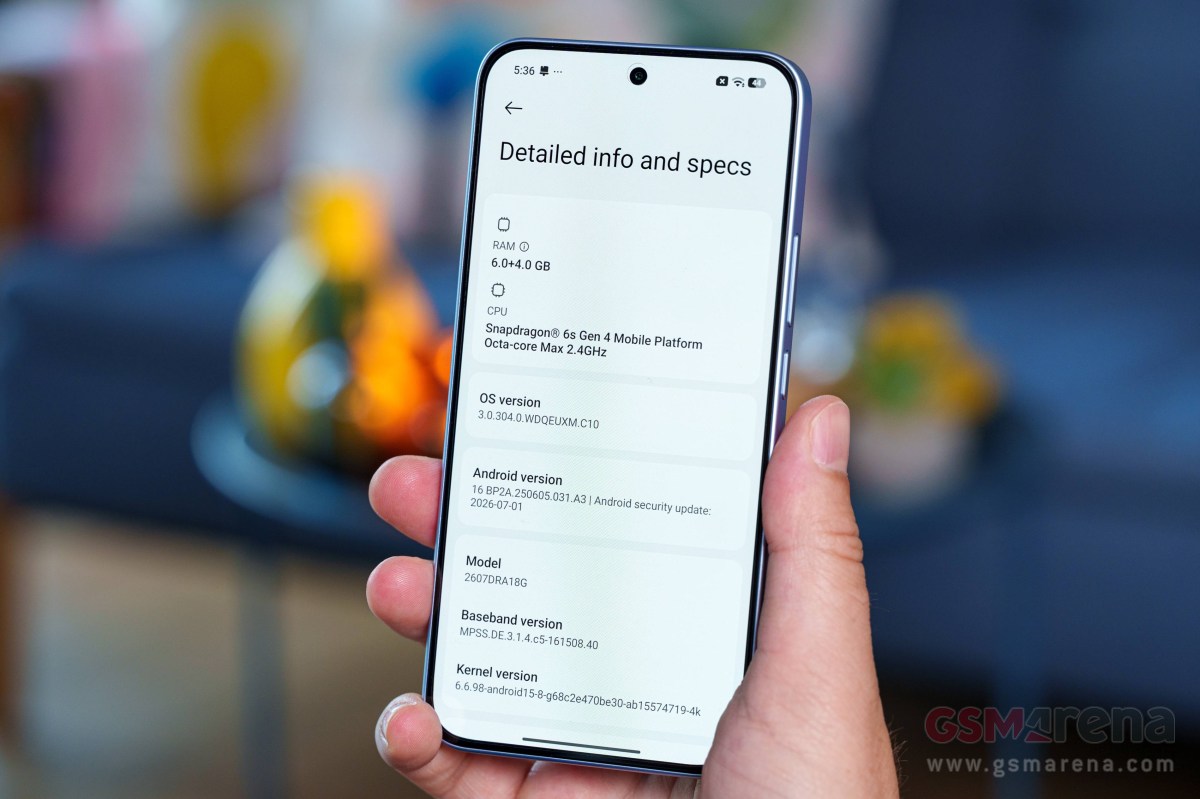
The global Redmi Note 17 Pro uses the same Snapdragon 6s Gen 4 chipset as the Chinese version of the phone. It has a smaller Si/C battery, but the loss is minimal – 8,340mAh instead of 9,000mAh. At this point we’re used to seeing battery capacities cut much deeper than that, especially on models that are available in Europe.
And it’s a huge upgrade over the old Redmi Note 15 Pro, which had a 6,580mAh battery. Xiaomi also boosted the charging hardware and the new model supports 67W HyperCharge, up from 45W. The old Pro model was powered by the Dimensity 7400 Ultra chipset, by the way.

We ran the Redmi Note 17 Pro through our battery gauntlet and got an Active Use Score of 17:31h. This is a solid upgrade over the 15 Pro (15:26h), but we’ve seen Xiaomi do better with similarly-sized batteries – the Poco X8 Pro Max has an 8,500mAh battery and it achieved a hard-to-beat 25:21h. And the Pro Max has to feed a beefy Dimensity 9500s.
The performance of the Snapdragon 6s Gen 4 in the gaming test is dragging things down – the phone has a large 6.83” OLED display, but then so do the Poco X8 Pro Max and the vivo V70 FE.
The vivo V70 FE only has a 7,000mAh battery to work with. Its scores on the individual tests are close enough to the Redmi Note 17 Pro scores, except for the gaming test – 7:50h vs. 10:56h in favor of the vivo is rough. And it’s not like the V70 FE’s Dimensity 7360 Turbo is a performance beast. In fact, it has the same Mali-G615 MC2 GPU as the Redmi chipset.
As a reminder, you can use the sliders in the widget below to adjust things to match your usage patterns – do you game or not? Because moving that slider has a massive effect on the final score for the Redmi. There’s also a reset button to get back to the default mix.
Xiaomi realized that the 45W charging of the old Note Pro isn’t going to cut it with the new battery – if you want a preview of what that would have looked like, check out the Realme 16T – but the Redmi Note 17 Pro could have used more power.
Things are off to a decent start at the 15 minute mark, but the Poco X8 Pro Max is already racing ahead with its 100W HyperCharge – it makes a huge difference compared to the 67W system inside the Redmi. By the 30 minute mark, the Redmi is left trailing most of the pack. Some of the phones ahead of it have smaller batteries, but the limits of the 67W system are obvious.
By the end of it, the Redmi Note 17 Pro took essentially the same amount of time to charge to 100% as its predecessor, the 15 Pro. The Poco X8 Pro Max shows what could have been – the Poco reaches full charge nearly half an hour faster.
In summary, the Redmi Note 17 Pro upgrades the battery to extend endurance with the Active Use Score going up by nearly 2 hours. However, the charging speed test is a wash – the move from 45W to 67W was just enough to offset the larger capacity.