
Samsung’s MX division (which builds its smartphones) may be facing its first-ever annual loss – meanwhile, the folks over at Device Solutions (where the memory business is housed) posted guidance for a record-breaking Q1. You have already figured out that there is a single cause for these two events.
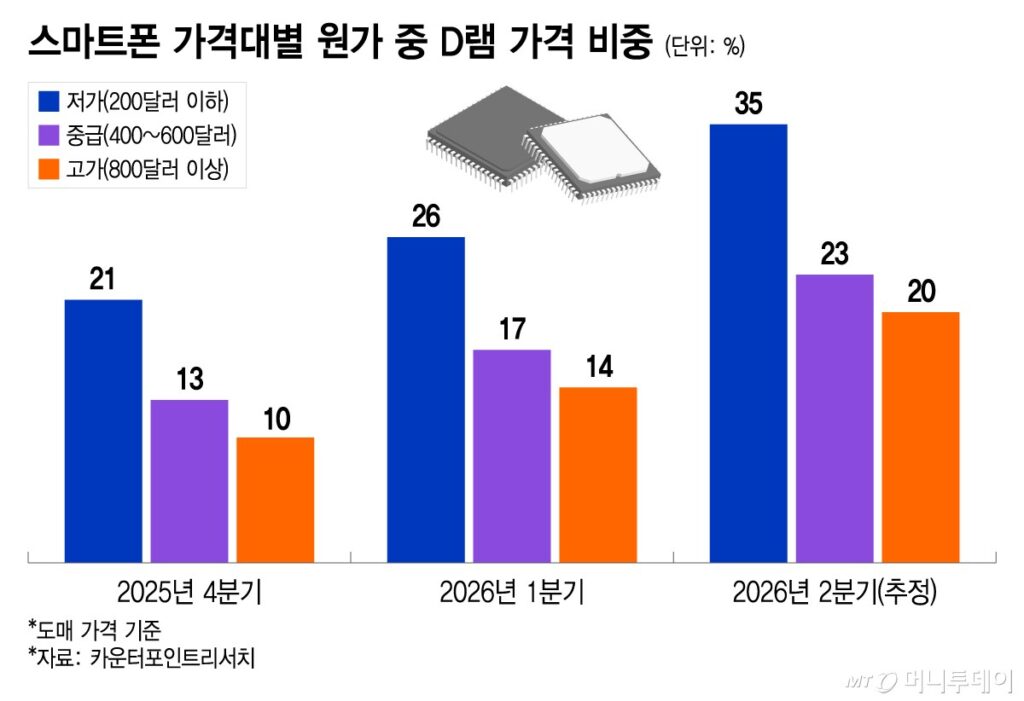
To spell it out, the soaring prices of DRAM and NAND memory are eating into the margins. According to the analysts at Counterpoint, the bill of materials (BoM) for a flagship phone ($800+) is predicted to rise by $100-$150. Memory makes up the most with 23% of the total going towards RAM and 18% towards storage.
According to industry insiders, TM Roh, the head of Samsung’s DX and MX divisions, has warned management that the mobile division may post an annual loss.
Proportion of DRAM Price in Smartphone Costs by Price Range: blue = sub-$200, purple = $400-$600, orange = $800+ (chart by Lee Ji-hye)

The flagship Galaxy S26 series is doing very well – it broke a pre-order record in Korea, it saw 25% higher pre-orders than the S25 series in the US and it saw 20% higher pre-orders in Europe. In all three regions, sales are heavily skewed in favor of the Galaxy S26 Ultra, the priciest of the three flagships.
Also, IDC reported that Samsung was the top smartphone vendor in Q1 this year with 62.8 million units shipped – a 3.6% increase in shipments over Q1 2025, despite the overall market contracting by 4%.
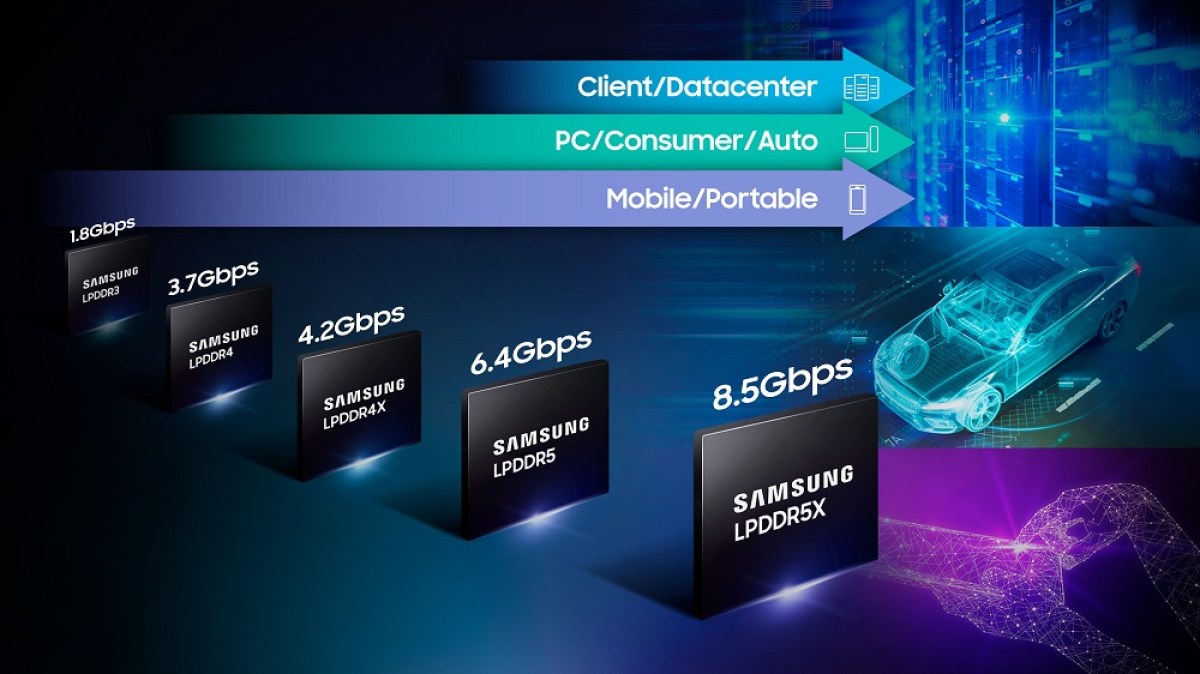
LPDDR5X is twice as fast as LPDDR4X

Any other year, such performance would have been cause for celebration. However, Korean publication Money Today, which broke the news, puts things into perspective. The Galaxy S26 Ultra has 12GB of LPDDR5X RAM in its base configuration. However, a typical AI supercomputer needs as much RAM as it would take to build 4,600 phones.
Low Power DDR was primarily used in smartphones, tablets and laptops. However, electricity and cooling are two of the biggest costs of running AI cloud infrastructure, so servers started using LPDDR too.
This brings us to the problem – or the massive amounts of profit, depending on what you are doing. Samsung is already retiring its LPDDR4 production lines in order to increase LPDDR5 production capacity.

Smartphone Memory Cost Share Estimation in Different Price Segments (source)

To make matters worse, the market is suffering from multiple issues simultaneously – with AI hyperscalers ordering chips en masse, TSMC capacity is limited and the Taiwanese semiconductor giant is raising its prices. This may have pushed Qualcomm towards using Samsung fabs for the upcoming Snapdragon 8 Elite Gen 6. That was another issue that Counterpoint highlighted – the prices of flagship chipsets are going up too, so flagship phones are in double trouble.