

A combination of unusually balmy winter weather across much of the Western United States and one of the worst snow droughts in decades has experts bracing for what could be a particularly intense wildfire season.
The snowpack is well below average for this time of year in nearly all Western states, with little time remaining to add snow cover and depth in the mountains before spring thaws begin. At the same time, higher-than-normal temperatures have made for a warmer and dryer winter than many states are accustomed to, raising concerns about wildfire risk and water supply.
“The snowpack in Colorado’s mountains is the lowest it’s been in over 40 years,” said Russ Schumacher, director of the Colorado Climate Center at Colorado State University and the state climatologist.
The period from October through February in Colorado — a time when the state normally sees a large buildup of snow in the mountains — was the warmest on record “by a large margin,” Schumacher said. Fort Collins, where he is based, nearly doubled its previous record for the number of 60-degree-Fahrenheit days in the winter, jumping from 22 days to 43 so far.

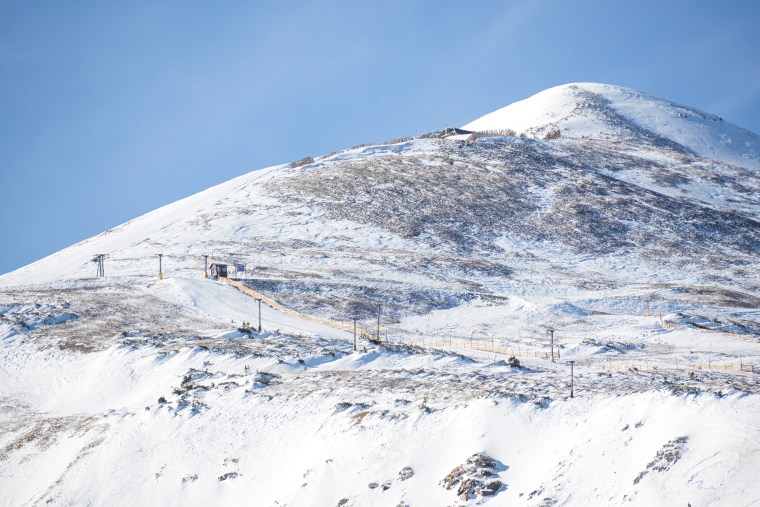
As a result, the state hasn’t seen the types of snowstorms it would normally expect, and when storms have hit, they have often dropped rain instead of snow, particularly at middle and lower elevations.
The problem extends beyond Colorado. Measurements of snow-water equivalent (the amount of water stored in the snowpack) across the Western continental U.S. show most of the region at well below average, with many basins at less than 50% of the average for this time of year. Some even hover around 25% of the average.
“When most places are at 50% of average or less, that means there would be twice the amount of snow or more almost everywhere on the map,” said Noah Molotch, a professor of geography at the University of Colorado Boulder.

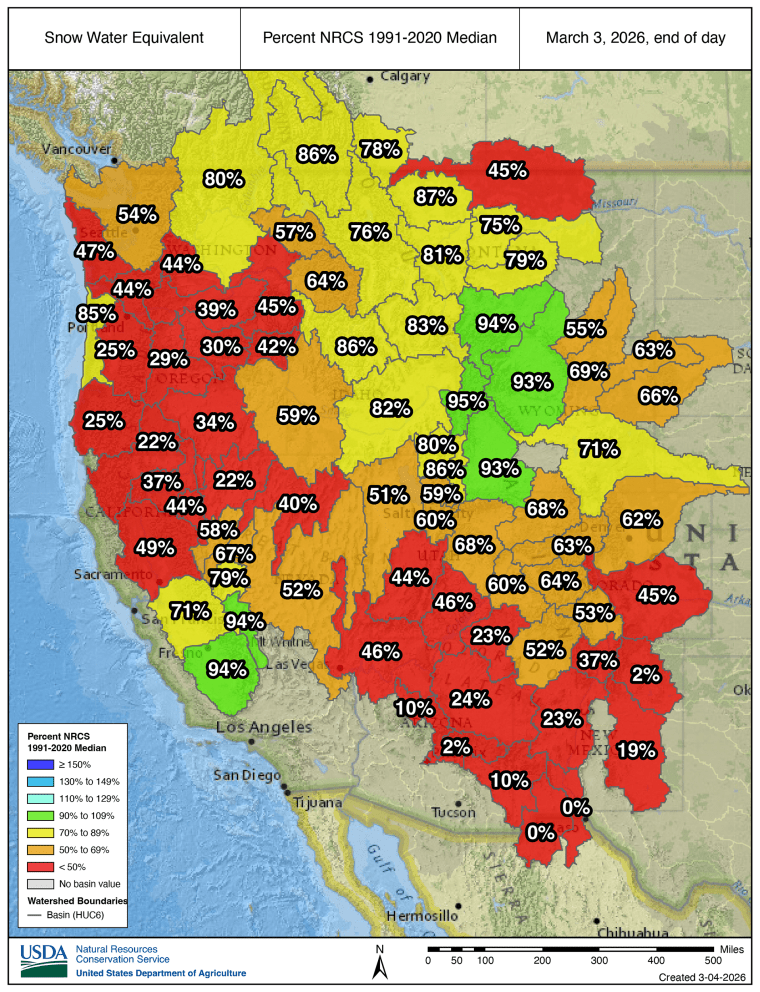
Molotch and his colleagues track snowpack conditions for the Western continental U.S., and he said this is one of the lowest snow years he can remember. The only parts of the West with near-normal snow levels are the southern parts of the Sierra Nevada, a portion of northwestern Wyoming, and small pockets of northern Montana, Idaho and Washington, according to Molotch.
Everywhere else is experiencing “pretty severe snow drought,” he said.
Studies have shown that snow droughts and earlier-than-usual snow melt can contribute to more intense wildfire seasons in the summer. When there is far less snow cover than normal in forests and grasslands, or if snow melts earlier in the year than usual, vegetation has more time to dry out and become fuel for fires.
Already in Colorado, the Bluebell Fire over the weekend in Boulder prompted evacuation warnings and scorched approximately 1.5 acres. The blaze was contained quickly, but it offered a glimpse into how vulnerable the state could be once conditions become warmer, dryer and windier.
“Intense fire weather is not necessarily in short supply these days,” Molotch said. “It’s pretty clear that these kinds of snow drought conditions set us up for potentially very intense wildfire seasons.”

It’s likely that climate change is playing a role in these trends, Schumacher said. Although yearly variations in snowfall can be tricky to link directly with global warming — such attribution often takes years or decades of data to establish — climate change is known to increase the chances of above-average temperatures, including during the winter.
“Precipitation deficits are harder to attribute to climate change, but in terms of really extreme high temperatures, there’s a clear connection with the planet warming,” he said.
Dwindling mountain snowpack has dire implications for the Western water supply. As snow that built up over the winter months melts throughout the spring and summer, it feeds rivers and creeks that provide water for cities, agriculture and hydropower dams.
“It’s the bread and butter of our water supply,” Molotch said.
Without robust snowpack levels, reservoirs across the Western United States won’t get adequately replenished.
“The story is not just about Colorado, although the Colorado River basin is in a pretty dire situation because it’s a river basin that’s already over-allocated, and the federal government is already facing difficult decisions around reducing allocations in the watershed,” Molotch said.
The weeks leading into spring can produce significant snowfall in parts of the West, including Colorado and Utah, but so far, forecasts for the coming weeks don’t look promising.

Schumacher said he starts with an optimistic outlook every winter, but it is shifting to resignation.
“We’re sitting here in early March and there’s not that much time left for things to turn around, unfortunately,” he said. “The hope now is that instead of it being a historically bad year, it ends up going down as just a bad year.”