
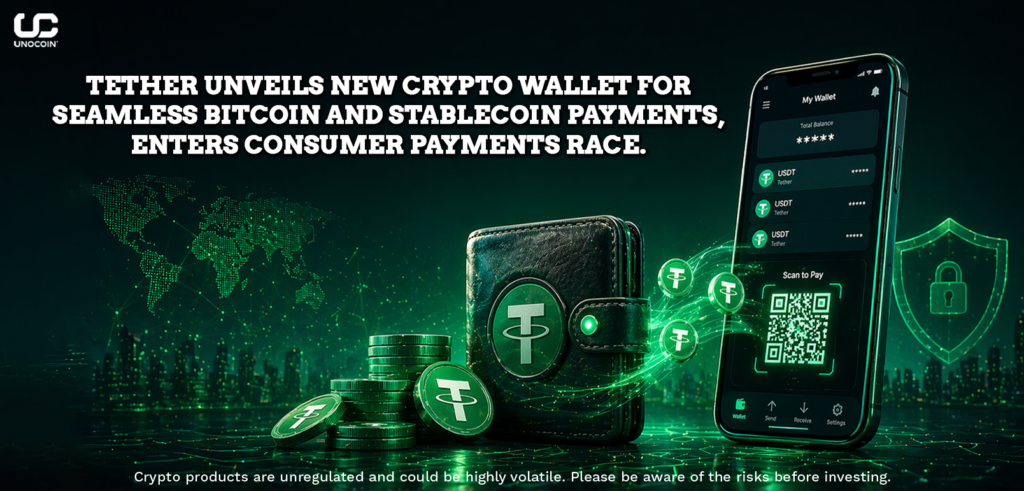
The evolution of crypto is no longer just about trading—it’s about real-world usability. Taking a major step in this direction, Tether has introduced its new mobile application, tether.wallet, designed to bring seamless digital payments directly into the hands of users.
This launch marks a significant transition for Tether—from being a dominant issuer of stablecoins to becoming a consumer-facing payments enabler. And in doing so, it highlights a broader shift happening across the crypto ecosystem: the move from infrastructure to everyday utility.
A Wallet Built for Real-World Usage
At its core, the Tether wallet is a self-custodial mobile wallet, meaning users retain complete control over their digital assets. Unlike centralised exchanges, where funds are held by a third party, this wallet ensures that private keys remain securely stored on the user’s device.
This approach aligns with one of crypto’s foundational principles—ownership without intermediaries.
For users, this means:
- Full control over funds
- Greater security autonomy
- Reduced reliance on centralised platforms
As crypto adoption expands globally, self-custody is increasingly being viewed as a critical component of long-term financial independence.
Multi-Asset and Multi-Chain Capabilities
The wallet is designed to support a wide range of assets within the Tether ecosystem, including:
- Bitcoin (on-chain and Lightning Network)
- Tether
- Tether Gold
- USAT (Tether’s asset-backed token)
This multi-asset functionality ensures that users can seamlessly transact across different use cases—whether it’s payments, transfers, or value storage.
The inclusion of the Lightning Network is particularly important. It enables near-instant, low-cost Bitcoin transactions, making micro-payments and everyday usage more practical than ever before.
Simplifying the Crypto Experience
One of the biggest barriers to crypto adoption has always been complexity. Long wallet addresses, confusing transaction fees, and multi-step processes often discourage new users.
Tether’s new wallet tackles these challenges head-on.
Human-Readable Usernames
Instead of sharing long alphanumeric wallet addresses, users can send and receive funds using simple identifiers like [email protected]. This significantly improves usability and reduces the chances of errors.
Gasless Transactions
Another standout feature is the ability to pay transaction fees directly in the asset being transferred. This eliminates the need to hold separate tokens for gas fees—one of the most common pain points for users.
Together, these features create a smoother, more intuitive experience—closer to traditional digital payment apps.
Designed for Scale: Humans, Machines, and AI
Tether is not just thinking about today’s users—it is building for the future.
The wallet is positioned as a platform that can facilitate transactions not only between people but also between machines and AI agents. As automation and AI-driven economies expand, the need for frictionless, programmable payments will grow significantly.
By enabling seamless, peer-to-peer transfers, the Tether wallet is laying the groundwork for this next phase of digital interaction.
A Strategic Shift for Tether
Historically, Tether has operated as a back-end infrastructure provider, powering liquidity and stability across crypto markets through its flagship stablecoin.
With the tether wallet, the company is making a clear move toward front-end user engagement.
This shift is important for two reasons:
- Direct Relationship with Users
Instead of relying solely on exchanges and platforms, Tether can now interact directly with its global user base—estimated to exceed hundreds of millions. - Expanding Use Cases
By enabling payments, remittances, and peer-to-peer transfers, Tether is broadening the role of stablecoins beyond trading.
What This Means for the Crypto Ecosystem
The launch of tether wallet reflects a larger industry trend—the convergence of crypto and everyday finance.
Key implications include:
1. Acceleration of Payment Adoption
As wallets become easier to use, more people will begin using crypto for daily transactions rather than just investment.
2. Increased Competition
Wallet providers and exchanges will need to innovate rapidly to match improved user experiences and lower friction.
3. Stronger Push Toward Self-Custody
Users are becoming more aware of the importance of controlling their own assets, especially in a maturing regulatory environment.
Relevance for India and Unocoin Users
For Indian users, this development reinforces a growing global narrative: crypto is evolving into a functional financial tool, not just a speculative asset.
Platforms like Unocoin continue to play a crucial role in onboarding users, providing secure access to digital assets, and enabling participation in this expanding ecosystem.
While self-custodial wallets empower users with control, trusted platforms remain essential for:
- Easy onboarding
- Fiat-to-crypto access
- Secure trading environments
Together, they form a balanced ecosystem that supports both accessibility and independence.
The Bigger Picture
Tether’s wallet launch is more than just a product release—it’s a statement about where the industry is heading.
Crypto is steadily moving beyond exchanges and into everyday life. Payments are becoming faster, simpler, and more intuitive. And most importantly, users are gaining greater control over their financial assets.
As innovation continues, one thing is becoming increasingly clear:
The future of finance will be mobile, self-custodial, and powered by seamless digital transactions.
Please find the list of authentic Unocoin accounts for all your queries,
links: linktr.ee/unocoin
Disclaimer: Crypto products are unregulated and could be highly volatile. Please be aware of the risks before investing. To ensure that consumers who deal in crypto products are not misled, they are advised to DYOR (Do Your Own Research)