
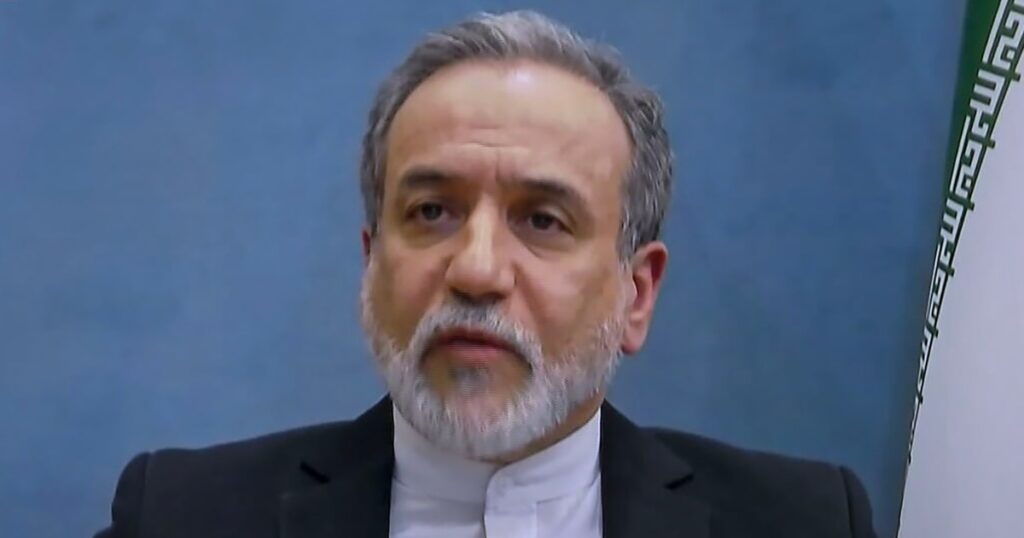
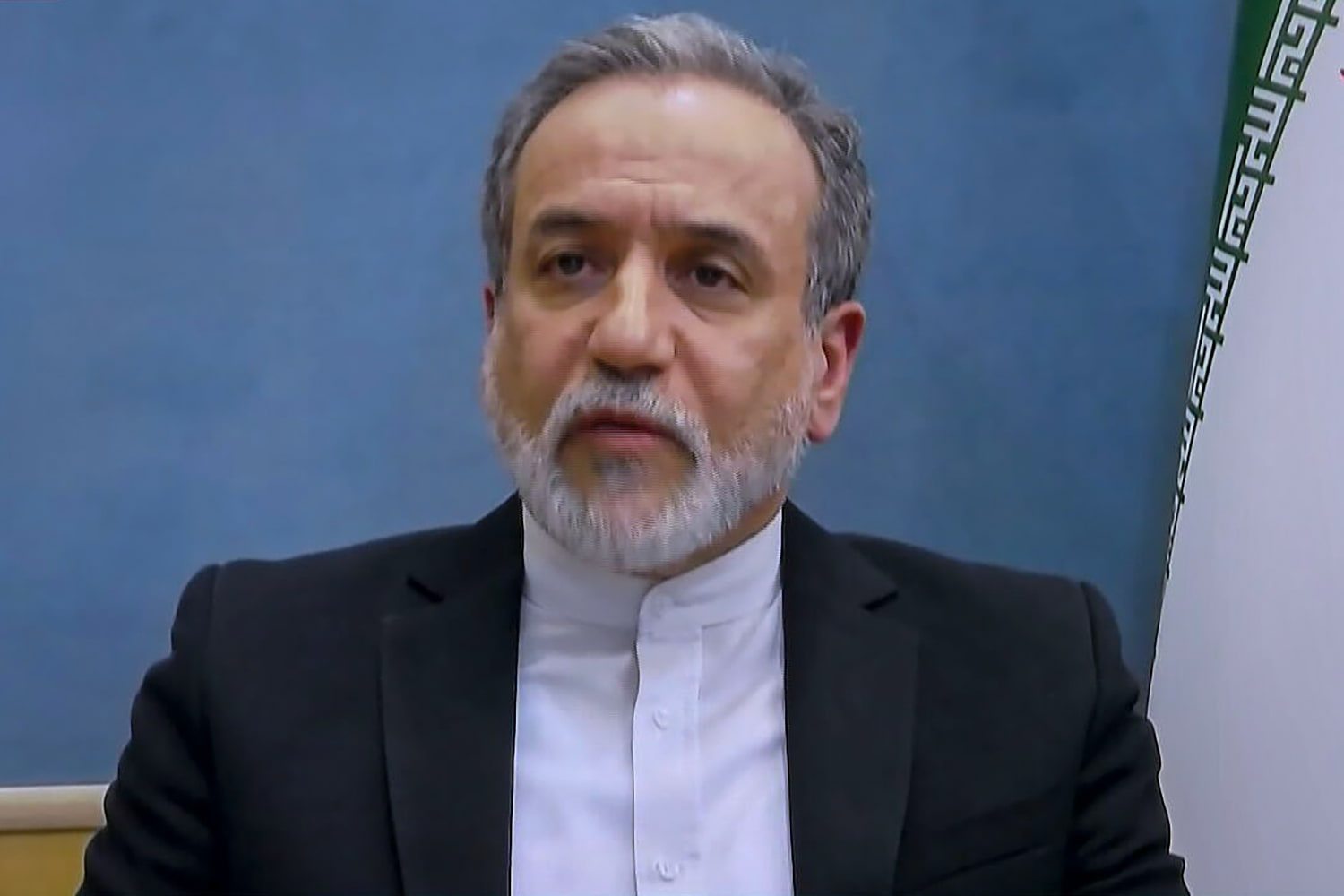

Changing the Iranian regime is “mission impossible,” the country’s foreign minister told NBC News, hours after the U.S. and Israel launched a major attack on the Islamic Republic and President Donald Trump called on its citizens to overthrow their leaders.
“You cannot do regime change while millions of people are supporting the so-called regime,” Abbas Araghchi said in an interview from the capital Tehran.
He said that “as far as I know,” Supreme Leader Ayatollah Ali Khamenei is alive, although the 86-year-old’s whereabouts are unknown after Israel targeted the country’s political leaders.
On Thursday, a team of Iranian negotiators were talking with U.S. special envoys Steve Witkoff and Jared Kushner, Trump’s son-in-law, in Geneva, Switzerland, with the aim of averting a potential military assault, “and a deal was at our reach,” Araghchi said.
“We were able to address serious questions related to Iran’s nuclear program. We obviously have differences, but we resolved some of those differences, and we decided to continue in order to resolve the rest of questions,” he said, adding he didn’t know why while the talks were progressing “they decided to attack us.”
Other senior officials in the regime had survived, Araghchi said, including President Masoud Pezeshkian, the head of the judiciary and the parliament speaker. Two commanders were killed.
The strikes, during the holy Muslim fasting month of Ramadan, came weeks after a U.S. military operation that captured Venezuelan President Nicolás Maduro and his wife, Cilia Flores, and brought them to New York to face federal drug conspiracy charges.
It also marked the second time in eight months that the Trump administration has used military force against the Islamic Republic.
In a video announcing the “major combat operations,” Trump told Iranians to “take over your government” when the U.S. was finished. “It will be yours to take,” he said. “This will be probably your only chance for generations.”
His comments were echoed by Israeli Prime Minister Benjamin Netanyahu, who said the operation would “create the conditions for the brave Iranian people to take their fate into their own hands.”
But Araghchi said it was not possible to spark regime change because Iran‘s government was “supported by the people.”
Unprecedented nationwide unrest last month saw authorities in Iran launch a deadly crackdown.
The U.S.-based Human Rights Activists News Agency has said it confirmed more than 7,000 deaths and that it is investigating thousands more. The group says that it verifies each death with a network of activists on the ground in Iran and that its data goes through “multiple internal checks.”
Iran’s government has acknowledged more than 3,000 people were killed.
“Yes, there are also people who are complaining, but there are strong supporters of the regime,” said Araghchi. “And then we have a very well-established political structure.”
Millions of people came out onto the streets in cities across the country to mark the recent anniversary of the 1979 revolution, Araghchi noted.
He added that the U.S. and others had tried and failed to do this in the past, so if they want to repeat a failed experience, “they won’t get any better result.”
While there was “no communication right now” with the U.S., Araghchi said, Tehran was interested in de-escalation and ready to talk once the joint U.S.-Israeli strikes end.
Iran was “certainly interested for de-escalation,” and American negotiators could contact him if they wanted to resume talks, he said. “This is a war of choice by the United States, and they have to pay for that,” he added. “But as far as we are concerned, we don’t want war.”
Disputing Trump’s claim in his State of the Union address that the Islamic Republic is building missiles capable of hitting the U.S., Araghchi said Iran had no desire to do so and had intentionally restricted the range of its missiles.
“We don’t want to do that because we don’t have any hostility against, you know, the United States people,” he said. Iran, he added, had built weapons “in order to defend ourselves against our enemies.”
American forces were attacking our people in our cities, he said, “but this is not what we are going to do. We are attacking the Americans bases, military bases in the region, and military installations and facilities, and this is only as an act of self-defense.”
He also referenced what Iran says was a deadly strike on a school in the southern city of Minab. Dozens were killed in the incident, local officials have said.
In an earlier post on X, he shared a photo of dozens of people surrounding a heavily damaged building with smoke rising from the facility, which he said was “bombed in broad daylight, when packed with young pupils.”