
The United States and Iran were meeting in Geneva on Thursday for talks aimed at a diplomatic resolution to their long-running nuclear dispute, as President Donald Trump pressures Tehran with the threat of military action.
The talks — a third round of indirect negotiations — had begun as of early Thursday morning, Iran’s semi-official Fars news agency reported.
In his State of the Union address on Tuesday, Trump declared that Iran was working to develop missiles that could “soon” reach the U.S. — his clearest case yet for a possible attack after overseeing a sweeping military buildup in the region.

“The principle is very simple: Iran cannot have a nuclear weapon,” Vice President J.D. Vance said at a news conference Wednesday.
“If they try to rebuild a nuclear weapon, that causes problems for us,” he said, adding that Washington had “seen evidence that they have tried to do exactly that.”
Iran has consistently denied seeking to develop a nuclear weapon, and has warned of an intense response to even a limited attack by the U.S. or Israel.
Tehran dismissed Trump’s claims that it had “sinister nuclear ambitions” as part of a series of “big lies.”
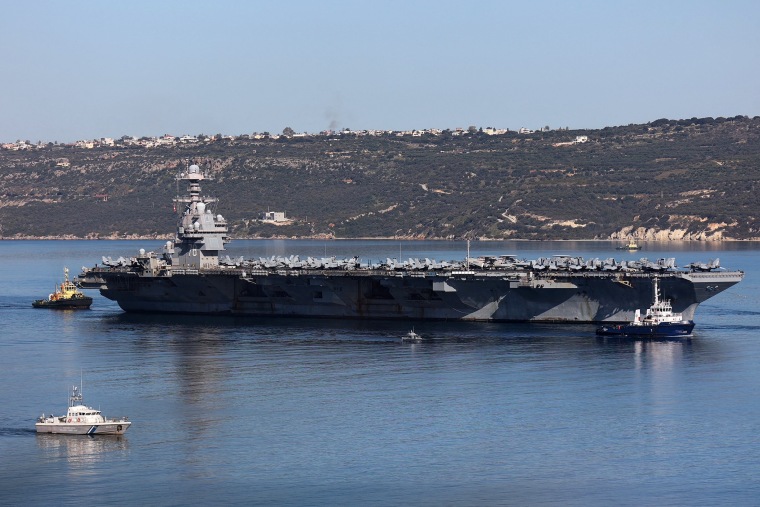
The talks come as the U.S. carries out an intensive military buildup in the Middle East, its biggest in decades, while the president weighs options for possible attacks.
Trump’s assertion that Iran was seeking to build a missile that could reach the U.S. come after weeks of mixed messages from Washington on the reasons for the military buildup.
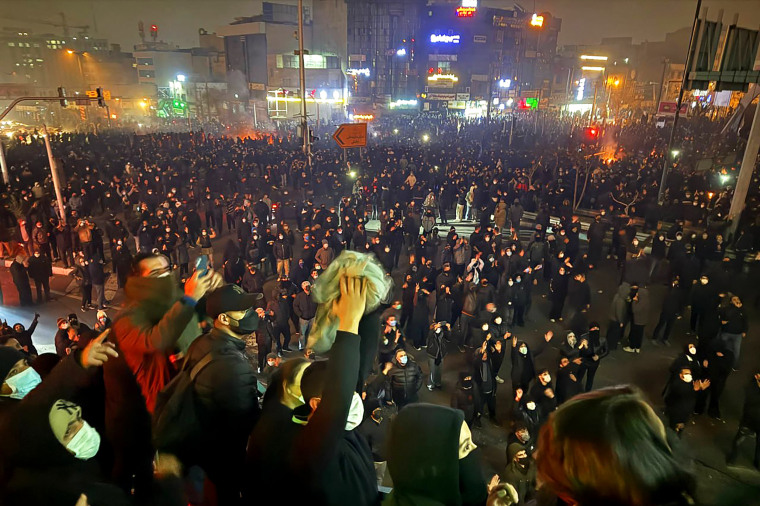
The president had initially threatened to intervene amid a deadly crackdown on nationwide unrest in Iran last month, but his administration’s threats have in recent weeks centered on the Islamic Republic’s nuclear program, which he has simultaneously maintained was “obliterated” in U.S. strikes last June.

Trump said Tuesday that while that operation was successful, Tehran had been “starting all over.”
Secretary of State Marco Rubio elaborated on the subject Wednesday. He told reporters that Iran is “always trying to rebuild elements” of its nuclear program. Tehran is not enriching uranium right now, Rubio said, “but they’re trying to get to the point where they ultimately can.”
In addition to commitments on enrichment, the U.S. has been pushing for Iran to make concessions on its ballistic missile program and its support for militant forces across the Middle East.
Iran has insisted the talks must remain focused on nuclear issues.
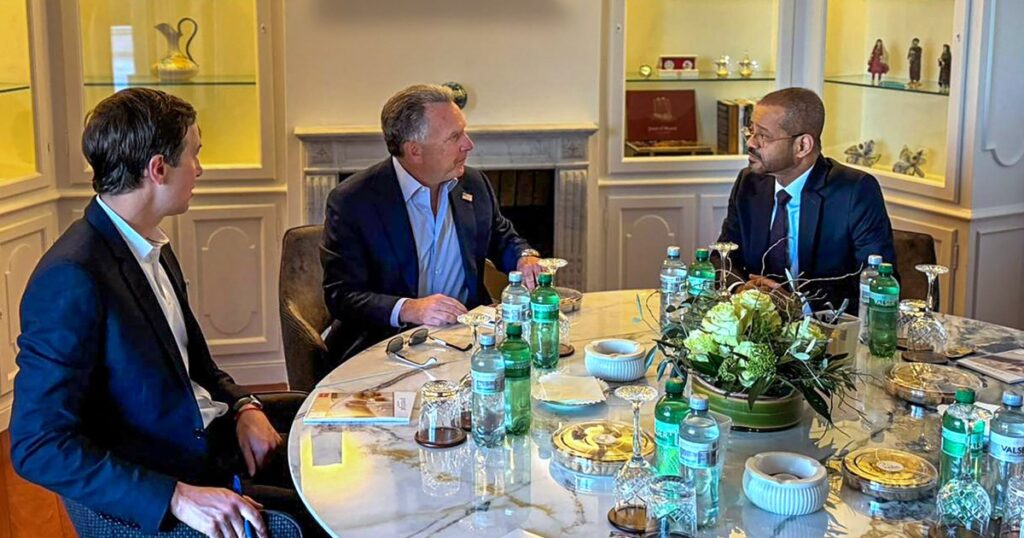
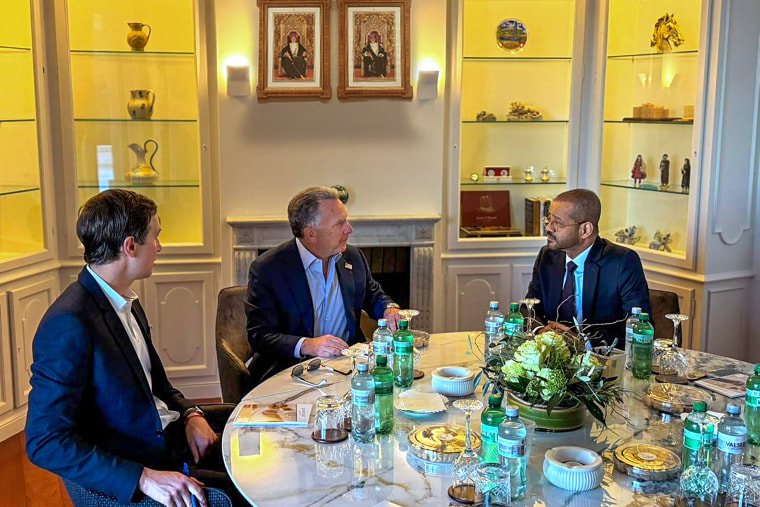
Omani Foreign Minister Badr Albusaidi said the U.S. and Iran had shown “openness to new and creative ideas” after meeting with President Donald Trump’s son-in-law Jared Kushner and special envoy Steve Witkoff, the state-run Oman News Agency reported, sharing photos from the meeting.
Iran’s proposals for Thursday’s negotiations have not been made public, but it has emphasized it expects the lifting of sanctions in return for possible concessions on its nuclear program.
On the eve of the talks, the Trump administration imposed fresh sanctions over the country’s oil exports and ballistic missile production.
Ali Shamkhani, a senior adviser to Iran’s supreme leader, said Tehran’s “commitment not to build nuclear weapons” was “consistent with the Leader’s fatwa and Iran’s defense doctrine,” state-run Nour News agency reported Thursday.
“A quick agreement is within reach,” he added.
Foreign Ministry spokesman Esmail Baghaei told state TV early Thursday that “Iran has entered the negotiations with full preparedness and seriousness.”