








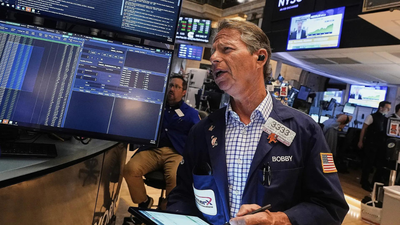
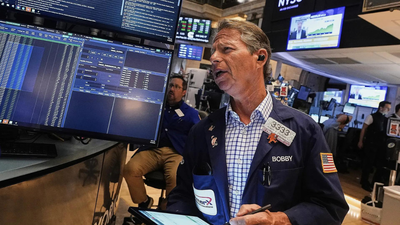
US stocks fell sharply on Friday as surging oil prices and disappointing economic data fuelled concerns about a potential stagflation scenario, where slowing growth combines with rising inflation.The S&P 500 dropped 1.6%, while the Dow Jones Industrial Average fell 909 points, or 1.9%, to 48,338.36 as of 9:35 am Eastern Time, AP reported. The Nasdaq Composite also declined 1.6%, reflecting broad weakness across Wall Street.The selloff followed a report showing that US employers cut more jobs last month than they created, signalling potential weakness in the labour market. At the same time, oil prices surged to their highest levels in nearly two years as the war involving Iran intensified.“You can’t sugarcoat this report,” said Brian Jacobsen, chief economic strategist at Annex Wealth Management. “A negative payrolls number combined with a big jump in oil prices will have traders worrying about stagflation risks.”Stagflation refers to a situation where economic growth stagnates while inflation remains high, making policy responses more difficult.Adding to concerns, a separate report released Friday showed US retailers earned less revenue last month than economists expected, raising questions about the strength of consumer spending, which is a key driver of the US economy.Normally, the Federal Reserve cuts interest rates when economic growth slows to stimulate activity. Lower borrowing costs can make mortgages and business investments cheaper while supporting stock prices. The Fed had already cut rates several times last year and had signalled the possibility of further reductions this year.However, rising inflation driven by higher energy prices could limit the central bank’s room to ease policy.Energy markets remained the key trigger for the volatility. The international benchmark Brent crude jumped 5.7% to $90.25 per barrel, while US benchmark crude surged 8.9% to $88.20 per barrel.Oil prices have climbed sharply from around $70 late last week as the conflict expanded and targeted areas critical to energy production and transportation in the Middle East.Much of the market’s concern centres on the Strait of Hormuz, a narrow shipping corridor near Iran through which roughly one-fifth of the world’s oil supply passes.The conflict has also halted Iranian gas exports to parts of Asia, which could intensify competition for alternative energy supplies.“If that stoppage is drawn out, it will likely lead to a bidding war between Europe and Asia that would send energy prices even higher,” said Fatih Birol, executive director of the International Energy Agency.Some analysts warn that if oil prices climb towards $100 per barrel and remain elevated, the global economy could face significant pressure.Despite the current turmoil, markets have historically recovered relatively quickly after geopolitical conflicts, provided that oil prices do not remain elevated for an extended period.President Donald Trump has recently said that he wants “unconditional surrender” from Iran, signalling a hardline stance and reducing expectations for negotiations in the near term.In the bond market, Treasury yields rose further as higher oil prices increased inflation expectations. The 10-year US Treasury yield climbed to 4.17% from 4.13% late Thursday and from 3.97% before the Iran conflict began.According to CME Group data, traders are increasingly betting that the Federal Reserve may cut interest rates only once this year, instead of the earlier expectation of at least two reductions.Global markets showed mixed performance. In Europe, France’s CAC 40 fell 1.6% and Germany’s DAX declined 1.8%, while Asian markets ended mostly higher, with Hong Kong’s Hang Seng rising 1.7% and Japan’s Nikkei 225 gaining 0.6%.