
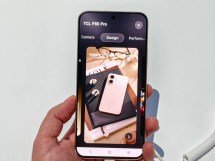
TCL made a big jump with the P80 series of phones – these are the first to have NxtPaper displays based on OLED panels instead of LCD. The key benefits are the usual – higher brightness, greater contrast, punchier colors – but the company made sure that these advantages didn’t come at the cost of a reduced NxtPaper experience.
The NxtPaper brand has been around for a few years now – it aims to give the display a paper-like feel and comfort when reading. Yes, e-ink displays exist and there are even some e-ink phones out there. However, despite years of improving frame rates and colors, e-ink is still better-suited for e-book readers than for smartphones. Speaking of which, the P80 models make for fine e-book readers themselves.
The TCL P80 Pro has a 6.83” OLED display with 3,200 nits peak brightness. Compare that to the TCL NxtPaper 70 Pro, for example, whose LCD only manages 900 nits in High Brightness Mode. The difference is tangible – yes, NxtPaper technology includes a Nano Crystal Shield Glass, which reduces glare, but both the LCD and the OLED displays get the same advantage. And the extra brightness of the OLED panel makes for much better outdoor viewing.
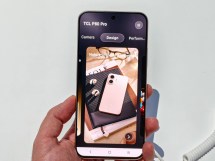
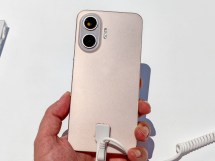
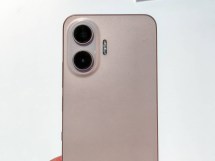
TCL P80 Pro
The display has a matte surface, unlike most smartphones out there, which leave their front glass with a glossy finish. You can barely see it indoors, but once you go out in the sun, the difference is quite obvious – you don’t get the annoying reflection hot spot that you do with a glossy display. Instead, the display remains fully legible. At glancing angles, the matte finish gets overwhelmed, but when looking at it head-on it really does conjure up associations with reading a piece of paper.
The P80 Pro (along with the Ultra) has the NxtPaper Key – a toggle on the side of the phone. This can enable Max Ink or Paper Mode (both are customizable). Paper Mode turns the display monochrome – black text on a white-to-yellow background (you can adjust the color temperature in the settings). This high-contrast view reduces distractions and makes text easier to read. Max Ink mode uses the same visuals, but it also enables a sort of Do Not Disturb mode. Background apps are put to sleep and while you can still receive calls and texts, most notifications will be muted (again, no background apps).
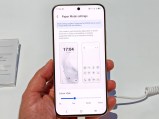
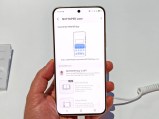
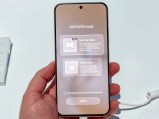
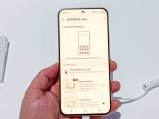
The NxtPaper settings and the NxtPaper key customizations

This also extends battery life – the P80 Pro is equipped with a 5,800mAh battery with 45W charging. With Max Ink enabled, the P80 Pro should last you up to 7 days of reading.
Speaking of which, there is an e-book reader app simply called “Book”. This app comes pre-loaded with some free books to get you started and you can load your own too. It has all the usual adjustments like font size, but it also has some interesting AI features. For example, the AI can summarize chapters for you, if you pick a book back up after a break and need a reminder. There’s even an ebook Q&A, so you can ask questions about the plot. Additionally, there is an AI-based text-to-speech system that can turn an ordinary ebook into an audiobook.
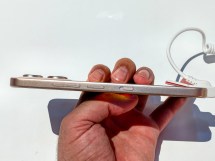
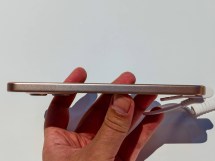
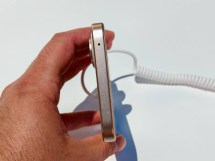
The NxtPaper slider is below the volume rocker and the power key (which is also the fingerprint reader)
Moving past the NxtPaper technology, the TCL P80 Pro is a solidly built mid-ranger. It has a metal frame with an IP68 rating (immersible up to 1.5m for 30 minutes) and is MIL-STD-810H compliant. The phone measures 8.3mm thick and weighs 192g.
The 6.83” display has slim, symmetrical bezels. The fingerprint is built into the Power button on the side, which is a bit unusual on an OLED phone, but we’re not complaining.
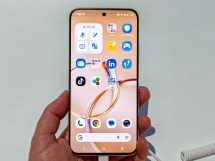
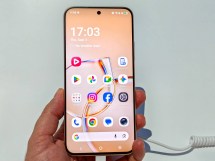
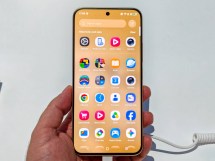
TCL P80 Pro
We also handled the TCL P80 Ultra, which we will explore in a separate post. However, we wanted to highlight the big difference between the Pro and the Ultra is all about the camera – specifically, the 50MP 3x periscope on the Ultra. The Pro model only has a 50MP main (1/1.56” sensor, f/1.9 lens with OIS) and an 8MP ultra-wide, plus a 32MP selfie camera.
The P80 Pro and Ultra are both powered by the Dimensity 7400 Elite, which is a proven mid-range chip. It is paired with 8GB of RAM and 256/512GB of storage (UFS 2.2). The phone launches with Android 16 out of the box and will receive Android 20 as its final OS update. Security patches will be issued until December 2032.
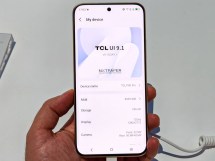
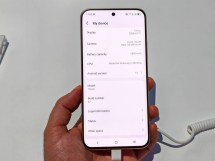
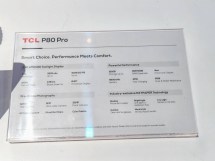
TCL P80 Pro
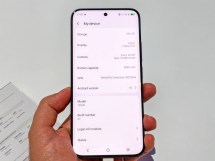
The TCL P80 uses the same 6.83” OLED display as the Pro and the Ultra – a 1,280 x 2,772px panel with 120Hz refresh rate and 10-bit colors with HDR support. However, to keep costs down, the vanilla model skips the NxtPaper technology and has an ordinary glossy glass instead. This also means no NxtPaper slider.
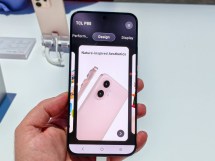
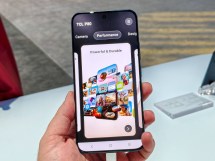
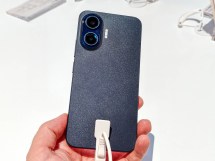
No NxtPaper tech on the TCL P80
Technically, the P80 also uses the older Dimensity 7300 chipset, but there’s barely any difference between it and the 7400. A more tangible difference is the storage, which drops to 128/256GB (UFS 2.2), while RAM capacity remains at 8GB. Also, this model will receive one fewer OS update and will end its life on Android 19 – it will still receive security patches until 2032, though.
Another price cut comes in the form of a smaller 5,000mAh battery. It has the same 45W charging support, but endurance will be lower.
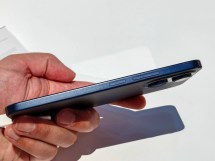
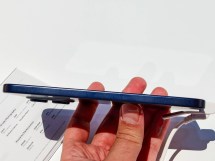
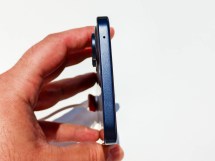
No NxtPaper toggle either
To put things into concrete numbers, the base 8/128GB TCL P80 is €350 and the 256GB upgrade is €380. The base 8/256GB TCL P80 Pro starts at €430 and the 512GB upgrade is €500. For the sake of completeness, the 8/256GB Ultra model starts at €550 – that periscope camera costs €120 more.
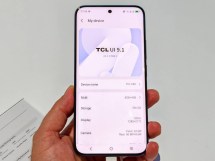
TCL P80
On the flip side, losing the NxtPaper technology only saves you €50 (looking at the 256GB P80 and P80 Pro). That is not worth it as it is what makes this phone unique.