

This can’t be a coincidence – Apple picked the week of the MWC to drop a number of major announcements. And since most of the developments from the MWC are unlikely to come to the US, let’s look at what Apple has to offer.
The new iPhone 17e fixes several major annoyances of the 16e – it has proper MagSafe support now, you get good base storage (256GB), the improved Ceramic Shield 2 has an anti-reflective coating and the chipset was bumped up to an Apple A19. That’s a lot of power for $600! Okay, the 6.1” 60Hz display with a chunky notch isn’t ideal and neither is the single 48MP camera with a small sensor. But this is the cheapest new iPhone available and you can be sure that Samsung and Google are paying attention.


Speaking of, we’re seeing leaks about the Galaxy A57, but that is still a ways out. The Google Pixel 10a, however, is here and comes with a $100 gift card. It has a bigger display (6.3” vs. 6.1”) with 120Hz refresh rate at that, but only regular Gorilla Glass 7i for protection. And let’s not even waste time comparing the Tensor G4 to the A19 chip.
More importantly, the Pixel 10a matches the 17e with a small 48MP sensor in its main camera and then it adds a 13MP ultra-wide. Both phones have satellite SOS. But again, Apple bumped the base storage to 256GB, so you should be looking at the $600 10a – only the $100 gift card gives the Pixel an edge in pricing.

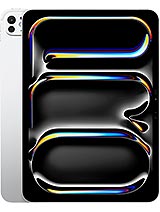
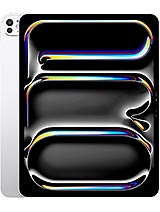
Also this week, Apple upgraded the iPad Air to the M4 chipset – up from the M3. This way it keeps the Air models trailing the Pro models by a generation. Notably, it also increased the RAM to 12GB, which is 50% more than the old model. The only other improvements worth mentioning are Wi-Fi 7 and Bluetooth 6.0 support (up from Wi-Fi 6E and Bluetooth 5.3). The 11” and 13” displays are still 60Hz IPS LCDs.

The iPad Pros moved to the latest Apple M5 chip last year. They have 12GB of RAM on the 256GB and 512GB versions and 16GB on the 1TB and 2TB models. They also have tandem OLED displays running at 120Hz. Both the Air and the Pro tablets can output to an external monitor over USB-C and support Stage Manager for multitasking.
Apple also shook up the MacBook market – the new MacBook Neo runs on an iPhone 16 Pro chipset and starts at just $600. That drops to $500 with an education discount. It’s a threat to Chromebooks, Surface laptops and even iPads.
You get a 13” IPS LCD (3:2, 60Hz), two USB-C ports (one USB 3, one USB 2), a 3.5mm headphone jack and a smallish 36.5Wh battery. The A18 Pro is a smartphone chip, so it’s super efficient by laptop standards. The laptop promises to last 16 hours of video playback or 11 hours of web browsing. At 2.7lbs, this is on the heavier side of 13” MacBooks, but it’s not too heavy. And note that the 512GB model is the only one to offer Touch ID. The 8GB of RAM is the biggest limitation here, but that was what was possible with a smartphone chip.
Now go and compare all this to a $350 iPad (2025) – $450, actually, if you want 256GB storage. The iPad has a smaller screen (11”), older chipset (A16 non-Pro) with less RAM (6GB), one USB-C port and a similar 28.93Wh battery. There’s no keyboard included, but you can buy a Magic Keyboard Folio for the low, low price of $250. Unless you just want a Facebook and YouTube machine, the MacBook Neo is a lot more useful than the vanilla iPad. Don’t forget that Macs can run iPadOS apps.

Apple also refreshed its MacBook Air and Pro lineups. The Air got the latest M5 chip and now features 256GB base storage. It also supports Wi-Fi 7 and Bluetooth 6.0, similar to its iPad counterpart. The MacBook Air is available in 13.6” and 15.3” sizes.


The Pros have to stay a generation ahead of the Airs, that’s the rule. Previously, Apple had M5-powered Pros and M4-powered Airs. The new M5 Air challenges the old Pro, so here come new Pros with Apple M5 Pro and M5 Max chips. Note that the 14.2” model offers a selection of all three chips, while the 16.2” model only has M5 Pro and Max options.


We looked at the Galaxy S26 series and let’s have another peek at them before we wrap up. They are still on pre-order – the official launch is scheduled for March 11 – so you can still score the free storage upgrade from a 256GB model to a 512GB model.



We may get a commission from qualifying sales.