
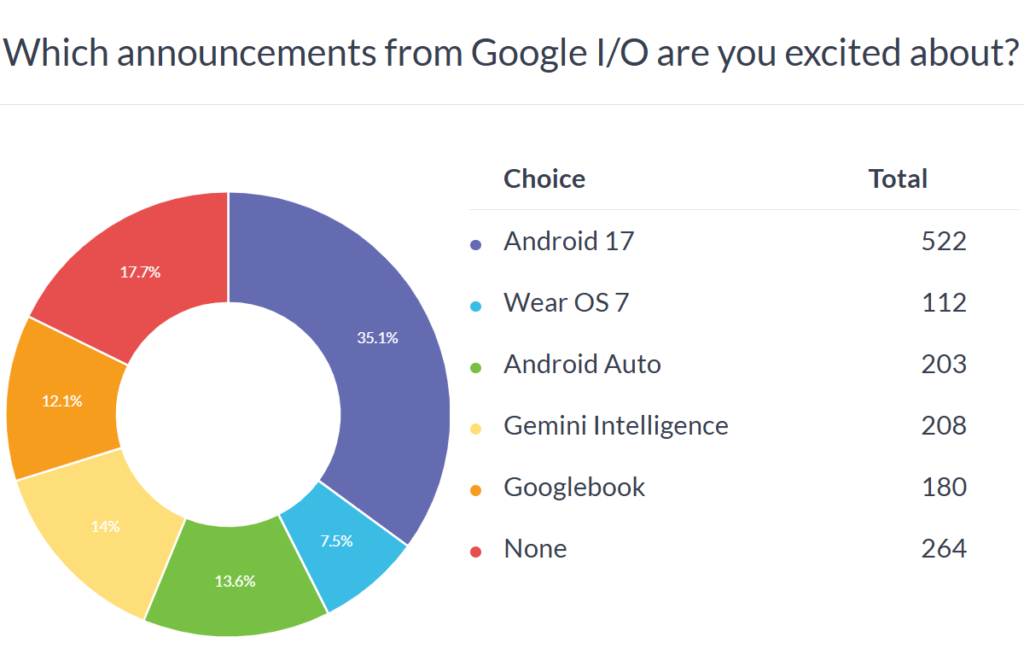
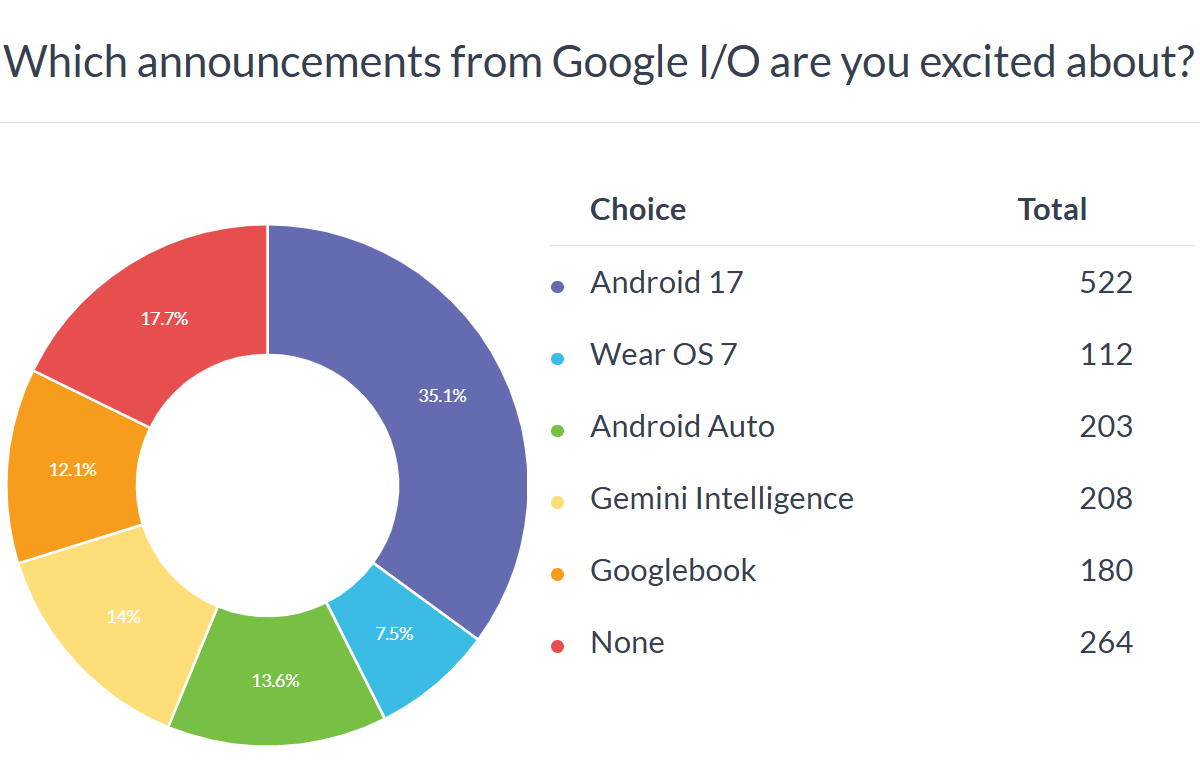
Last week, we asked you about which announcements coming out of Google I/O had you buzzing with excitement – in general, but also specifically for the upcoming Android 17 update.
Starting with the top-level question, Android 17 was by far the best thing demoed at I/O 2026. Not surprising, given our audience. But the ranking of the other options did surprise us – barely anyone cared about Wear OS 7. The smartwatches lost to Gemini Intelligence and Android Auto (which were essentially tied) and even the new Googlebook design (the Android-powered laptops) sparked more interest.
Some expressed hope that Googlebooks will push Android app developers to put more effort into desktop-friendly UIs. This will pair well with Android 17’s improving but still “not quite there yet” desktop mode for phones with video-capable USB-C ports.

Alright, let’s dig into Android 17 – what is it that has people so excited? “Extra security features” was the top-voted option. To an extent, the customized Android versions that each phone maker uses add plenty of features already, but security threats are a major issue considering how much of our lives now goes through our phones.
Next up was the announced compatibility with AirDrop, Apple’s local wireless file sharing feature that Android makers have been trying to match for years. This was similar to the “green bubble” issue, though with fewer arguments about it.
While there were plenty of negative opinions, Gemini Intelligence got a fairly warm reception both here and in the poll above. Making it easier to switch phones was a popular improvement too.
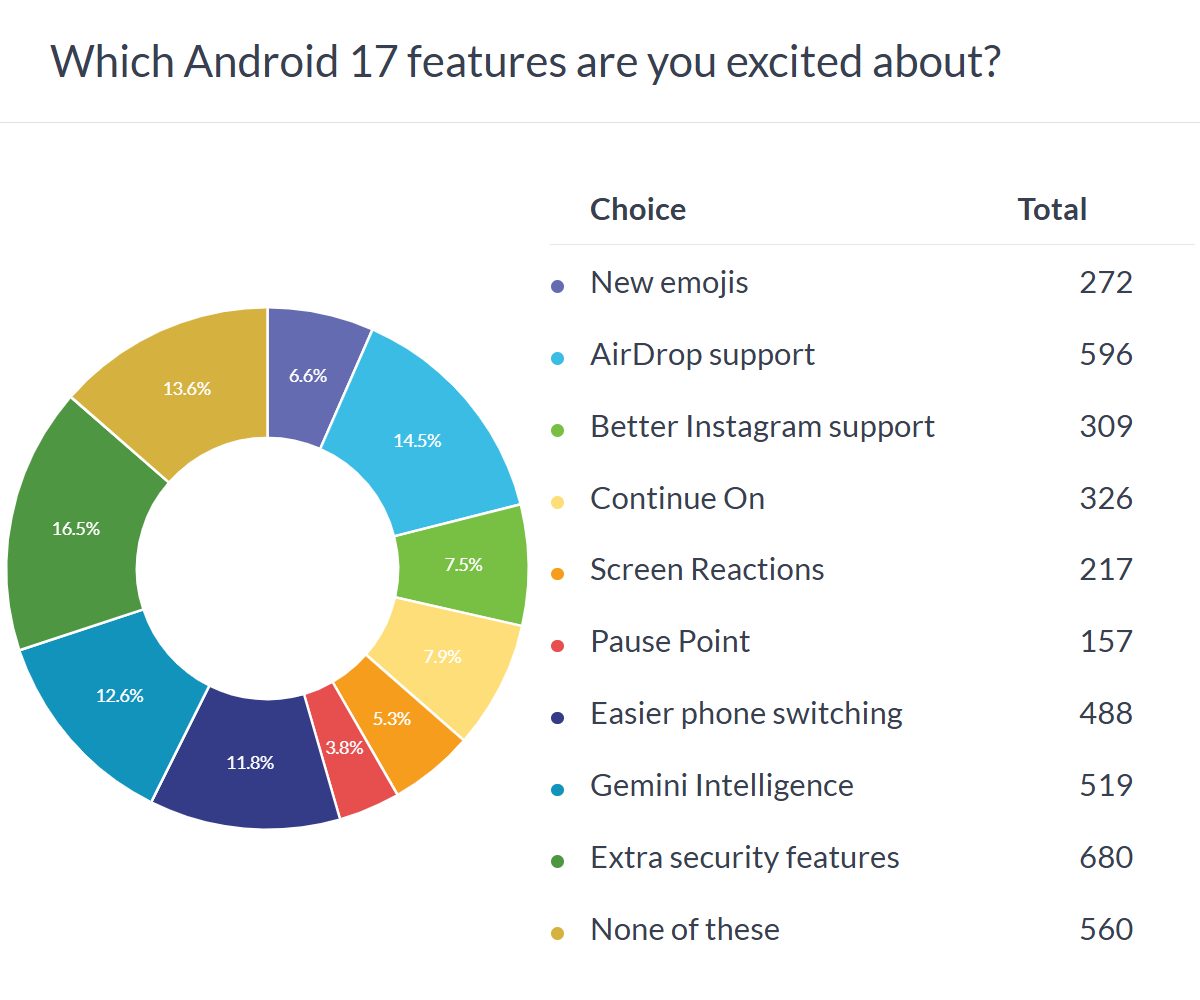

The new features that got the least attention were things like new emojis, the picture-in-picture Screen Reactions and Pause Point (a way to break your app addiction).
In both polls, there was a pretty strong sentiment that this was an underwhelming I/O and that Google didn’t have anything particularly interesting to add to its core OSes. Wear OS in particular needs more attention next year.
Another issue that people brought up in the comments was Google’s new rules for sideloaded apps, though that wasn’t tied to I/O specifically.