






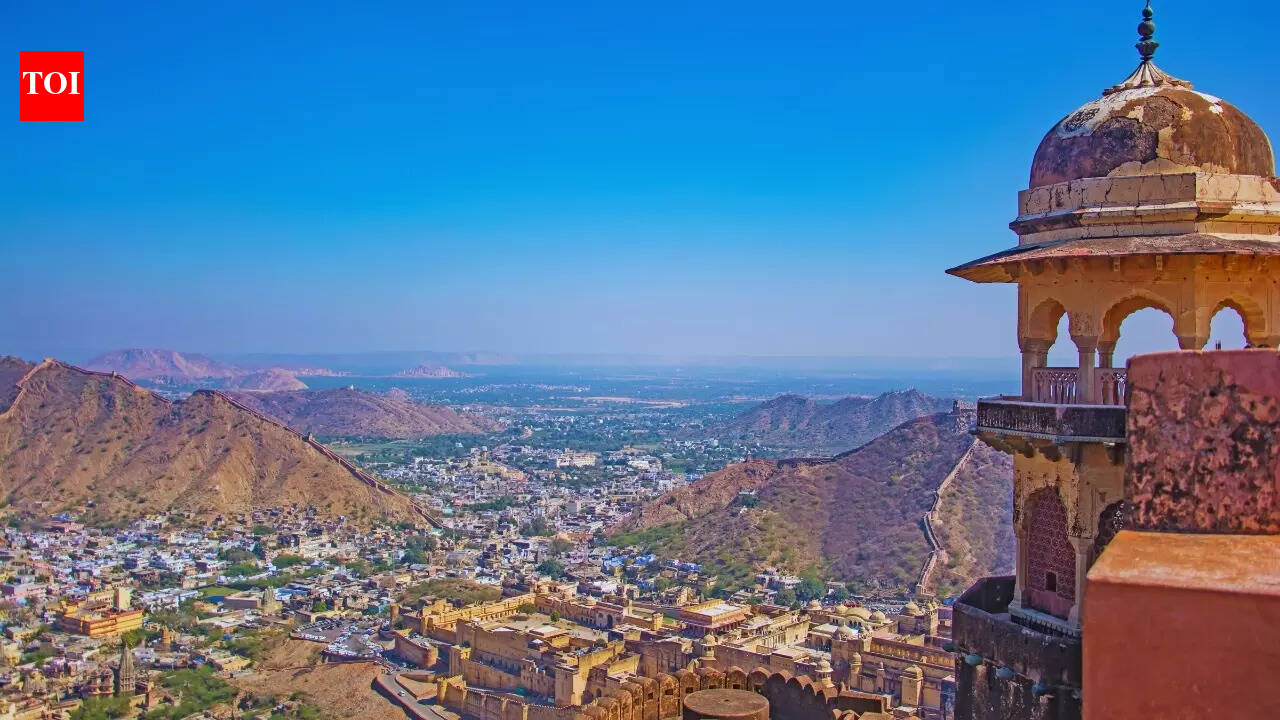
Jaipur’s historic Walled City, inscribed as a UNESCO World Heritage Site in 2019, is facing growing pressure that could threaten its prestigious status if corrective action is not taken. International heritage authorities have expressed serious concerns about conservation and management issues that could put the city’s World Heritage designation at risk.The Walled City of Jaipur was founded in 1727 by Maharaja Sawai Jai Singh II. The site is one of the most remarkable planned cities in India, which was developed according to the grid plan based on traditional Vedic town planning. The pink façade, street frontage, and town planning are the epitome of cultural, architectural, and social heritage, which has earned the city a place on the UNESCO World Heritage list.This has brought Jaipur into the spotlight for the entire world, realizing the importance of the city, not only for the country but for the whole of humanity. It has added to the tourism potential of the city.
UNESCO’s growing concern
UNESCO’s World Heritage Committee has repeatedly flagged serious concerns about how the Walled City is being preserved and managed. The areas of problems identified are:
Encroachment and heritage violations:
Unauthorized constructions and encroachments along the historical city wall have come up as one of the areas of problems. The violation of the heritage bylaws, which are brought into place for the conservation of the integrity of the historical site, is posing one of the problems.
Lack of enforcement of preservation rules:
Despite the directives and court orders by the Rajasthan High Court, which have directed the authorities to seal unauthorized constructions and stop work on sites which are posing a threat to the heritage structures, the enforcement is slow. The officials of UNESCO have expressed their concern about the ongoing development works without proper Heritage Impact Assessments.
Call for action
As per the report published by The Times of India, dated November 27, 2025, in its latest move, the World Heritage Committee asked the Rajasthan government to submit a detailed status report by December 1, 2026, with details of the measures taken to correct the issues. The committee also asked for the drafting and implementation of a Special Area Heritage Development Plan (SAHDP) to address the planning and regulatory issues. The failure to comply with these issues may force UNESCO to reconsider the heritage status of the city.
Why it matters
The heritage status of the city is not just an honor; it is an acknowledgment of the fact that the site has universal value and should be preserved for the upcoming generations. The loss of heritage status may affect the prestige of the city, and it is to be noted that tourism is one of the main pillars of the economy of the Jaipur region. Experts have pointed out that many sites, like the Dresden Elbe Valley in Germany and the Maritime Mercantile City in the UK, have lost their UNESCO heritage status due to poor maintenance and preservation. The case of Jaipur is no different.
What comes next
Now, it is the time for local authorities and heritage organizations to improve their practices in conserving heritage sites, enforcing legal provisions, and ensuring that modern developments are in line with the philosophy of heritage preservation. Coming months are critical to judge whether Jaipur deserves to retain the highest accolade in the heritage sphere.