For four decades,
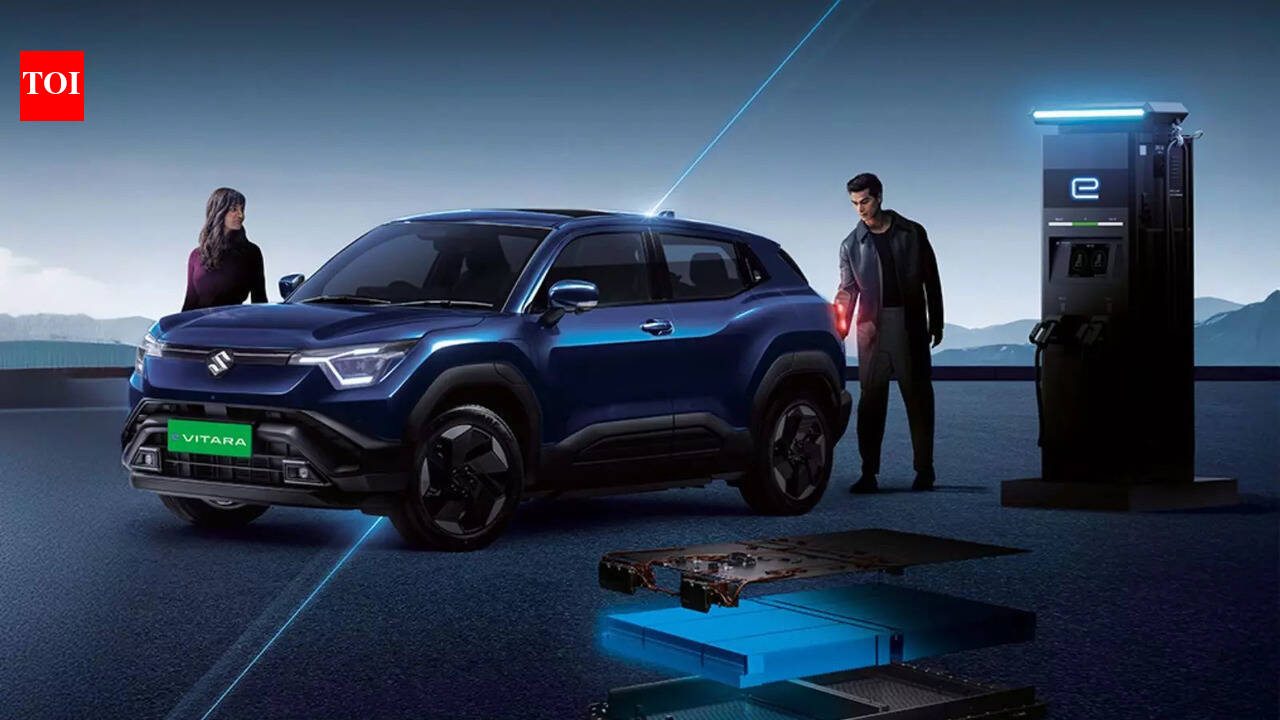
Maruti Suzuki built its empire on a simple creed: localise deeply, control costs, and engineer relentlessly for India. But its electric future is being powered by a radical break from that philosophy. In a move that reshapes India’s EV supply chain, Maruti has chosen to import BYD’s full Blade battery pack from China — a strategic gamble that trades localisation for speed, safety, and global-grade technology.
Battery strategy: Gains and compromises
Maruti Suzuki India Limited’s decision to source the entire battery pack from BYD marks a clear strategic departure from rivals such as
Tata Motors and Mahindra & Mahindra, which import cells but assemble battery packs locally.
To understand why Suzuki turned to BYD, it helps to revisit its broader technology alliances. Suzuki entered a partnership enabling access to Toyota Motor Corporation’s hybrid, EV, and connected-car technologies. Toyota, in turn, partnered with BYD and has been producing EVs for China and Southeast Asia using BYD batteries since 2020, a collaboration that has already resulted in two model launches. Since 2022, Suzuki has worked with Toyota to develop the EV platform and the eVitara. For a mature, safe, and cost-efficient battery solution, Suzuki appears to have relied on BYD’s proven Blade battery technology.
It is worth recalling that in August 2022, the foundation stone was laid for an EV battery plant at Suzuki Motor Gujarat. At the time, Maruti was expected to manufacture batteries locally through a technical tie-up. Given China’s dominance in low-cost LFP chemistry — well suited to Indian conditions it was widely assumed Suzuki would partner with a Chinese player, possibly BYD. However, the project did not progress as envisaged. Geopolitical tensions and tighter regulatory controls from China over EV technology exports complicated the plan.
As a result, localisation levels for the eVitara may be lower than originally planned, raising questions about eligibility under India’s production-linked incentive (PLI) scheme. Importing the full battery pack could make it harder to meet localisation thresholds. Maruti’s earlier battery manufacturing ambitions have yet to materialise.
Why the Blade battery mattersThe Blade battery, deployed in millions of vehicles globally, is regarded as efficient, safe, and reliable across operating conditions. Maruti is likely to position this as a competitive advantage at a time when customers remain sensitive to battery durability and real-world performance. However, this approach involves trade-offs.
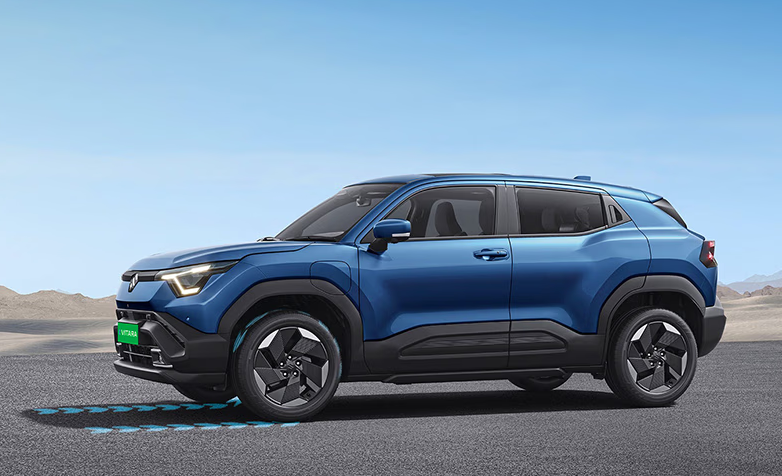
The eVitara, developed to Maruti Suzuki’s specifications, is optimised for both India and export markets. The project reportedly involved collaboration among Suzuki Motor Corporation, Maruti Suzuki, Toyota Motor Corporation and BYD, with Suzuki’s traditionally conservative engineering philosophy shaping the product’s development.
Industry sources suggest Maruti’s engineering team undertook extensive validation and calibration for Indian and export conditions. Drawing parallels with how Maruti fine-tuned Fiat-sourced diesel engines more effectively than several peers in the past, insiders say similar attention to integration, validation and calibration has been applied to the eVitara’s battery and powertrain systems.
According to Deepesh Rathore, founder of Insight EV, developing an effective Battery Management System (BMS) for LFP batteries is technically challenging, with Chinese manufacturers closely guarding their intellectual property. In that context, if Maruti is sourcing the battery pack along with the BMS from BYD it could enhance reliability and performance consistency.
A detailed questionnaire was sent to Maruti Suzuki. The response is still awaited.
Tackling two big EV fears: Range and resaleRaj Narayan, CEO of Popular Maruti, a large dealership in South India, says there are two key hurdles to EV adoption:
1) Range anxiety; and
2) Resales value
Maruti Suzuki has tried to address both the issues on priority.
By having the largest charging infra and giving 540 kms of range with the 61 kwh models, Maruti wants to address range anxiety. Popular Maruti has installed around 10 DC fast chargers in front of its Nexa showrooms. These are typically on prominent and main roads. They have also installed around 75 AC chargers in their service centres, and hope this will also be used to charge the e-vehicles that come for service.
Ankit Srivastav, dealer principal at Saraswati Motors in UP, says that Maruti’s main objective was that chargers must be installed in all dealer locations-showrooms (62 kwh DC) and service centres (10 kwh AC). The launch, which was earlier planned in Diwali 2025, was postponed among other things to ensure that enough chargers have gone live.
Srivastav claims that Maruti is offering 7.2kwh home chargers for free while competitors in this segment charge for this separately. This will ensure that even the bigger battery can be fully charged in 9 hours and the smaller battery in 7 hours which means they will be fully charged overnight. Maruti has also made it a policy that after booking, installation of the chargers must be completed before delivery to ensure there are no negative surprises while installing the home charger. This can only be waived if the customers give a written undertaking otherwise.
However, Srivastav sees the main USP will be the 60% buyback assurance as people are not trusting the resale value and range of EVs. Raj Narayan adds that customers can buy an insurance policy for around INR25,000 to ensure they get 60% of the ex-showroom price as their resale price in the third year.
Arun Malhotra, former MD of Nissan India, says that all things being equal, a company that offers the 3 Rs — Reassurance, Resale and Reliability — would do well in the marketplace.
Who is buying EVs?Srivastav also says that there is big buzz, even in UP, around EVs but people are still waiting and exploring.According to him, in smaller cities, people who already own 2-3 cars in their households, will buy EVs first. Unlike in larger cities where there are employees with over 1.5 lakhs salaries, here customers are likely to be doctors and advocates.Real-world range vs. claimsRange anxiety remains a key concern for Indian EV buyers. Unlike internal combustion engine vehicles, EVs typically deliver higher efficiency in city driving and lower range at sustained highway speeds.In a recent long-distance test, automotive journalist Vikram Gour of Motorscribes drove the eVitara 375 km between Nexa dealerships in Bhopal and Nagpur at average speeds of 80–110 km/h without recharging. The vehicle reportedly arrived with 14% battery charge remaining and an indicated 63 km of range. Given that many drivers prefer maintaining a 20% buffer, this implies a practical highway range of around 350 km. In city conditions, the larger 61 kWh battery pack could potentially deliver over 400 km.The claimed ARAI-certified range stands at 543 km for the 61 kWh battery and 440 km for the smaller pack. In mixed real-world use, EVs typically deliver around 75% of certified range, and closer to 80% in predominantly urban driving. For buyers planning occasional long highway journeys, the larger battery pack may offer greater peace of mind.How is the launch placed?Puneet Gupta, director at S&P Global, says that as a late entrant, Maruti Suzuki benefits from being able to adopt industry best practices from the outset. Even while retailing through the Nexa channel, the company can address a wider customer base, given its strong brand presence in tier II cities and beyond. In these markets, the “Trust of Maruti” stamp matters and help in EV adoption.Maruti has consciously positioned these cars in the INR16 lakh – INR20 lakh bracket, resisting the temptation to stretch the product upwards with larger dimensions or additional features in entry and mid variants. The idea is to remain within price bands that its core customers are comfortable with.Narayan says that the vehicle is extremely powerful and has great stability while taking sharp turns at high speed. The charging speed and pricing is very competitive. He expects around 2% of his sales to come from the eVitara.Niranjan N Prabhu from Bengaluru, who test drove the eVitara, says: “Compared to my top-end Creta 1.4 DCT turbo petrol SUV, it has a fantastic pick-up and drive. My existing powerful 1.4 Creta is no comparison.”Early feedback suggests the sunroof or moonroof feels underwhelming, with Niranjan remarking that it may have been better not to offer it at all. Boot space is relatively small, he adds.Niranjan highlighted several positives, including UV-cut dark green tinted glass all around and a 10-way powered seat adjustment with lumbar support, a first in the mass market, though available only in the top variant. He also praised the strong acceleration and overall drive feel.On the downside, he noted a slightly bumpy ride, heavy reliance on touchscreen controls that reduces convenience, limited luggage capacity and a disappointing sunroof.Yet his conclusion is telling: “I trust the LFP BYD blade battery pack, Maruti’s reliability, it is priced well, and I am considering buying it.”Looking aheadTata Motors adopted a portfolio approach early, spanning entry hatchbacks like Punch EV and Tiago EV, the compact Nexon EV, the mid-size Curvv EV, and the upcoming Sierra EV.Mahindra & Mahindra positioned its EVs as lifestyle vehicles, with large batteries, sharp designs, strong performance and feature rich. At the same time, it has acknowledged that the Indian market prefers practical family vehicles, and the upcoming 9S is very close to the 7XO.Maruti, in contrast, is launching with just one EV for now. While it believes in a portfolio strategy over the long term, it plans to move cautiously, learn from its first product, and then gradually expand its EV lineup.“Looking ahead, tighter regulations such as CAFE III and BS7 will require Maruti to expand its portfolio of battery electric vehicles and strong hybrids. By 2030, the company is expected to have three to four BEV models in the market, effectively introducing one new model each year. These launches will help spread the high costs of a dedicated BEV platform across multiple products while enabling Maruti to tap into additional segments,” says Gupta.