
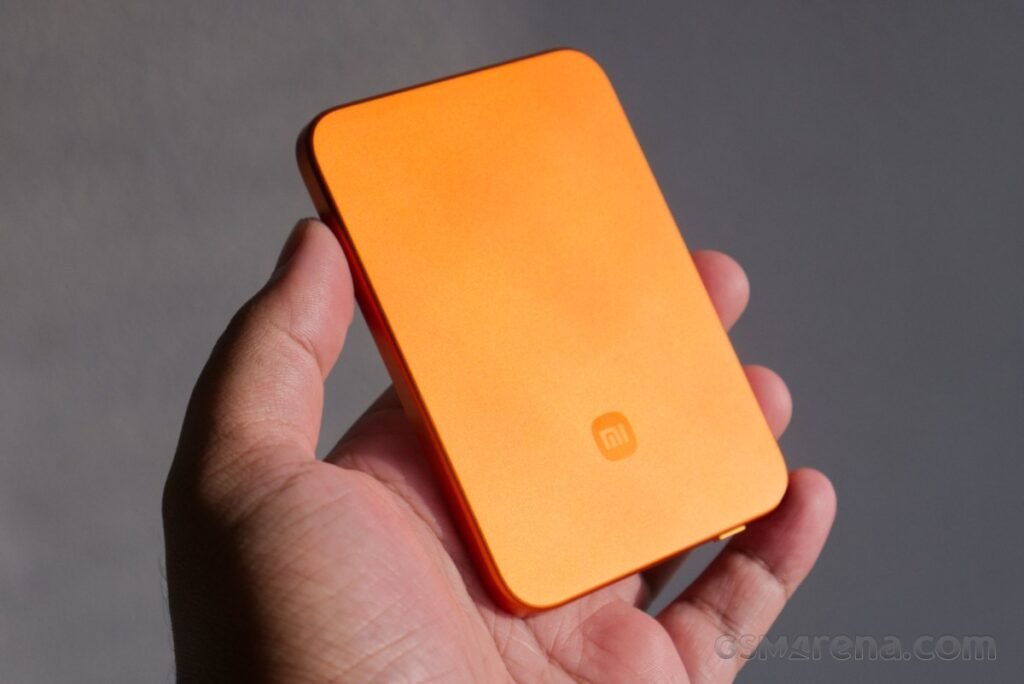
The Xiaomi MDY-20-EB, commonly known by its product name Xiaomi UltraThin Magnetic Power Bank 5000 15W, is exactly what its overly long title suggests. It’s an ultra-thin power bank that attaches magnetically to your phone, has a 5000mAh capacity, and can provide up to 15W of power wirelessly. The product was globally announced back in February and has been available in select markets, but was recently also launched in India, along with a couple of other models, like the Xiaomi Magnetic Power Bank 10000 45W.
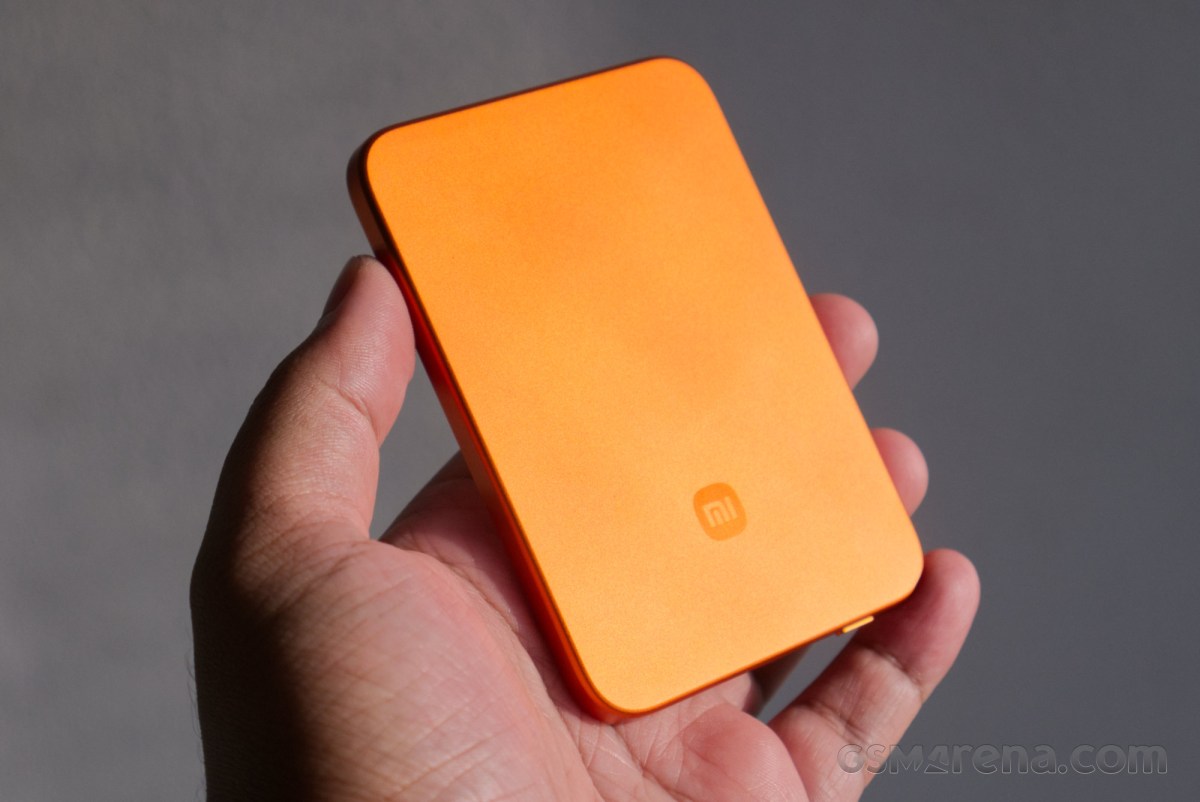

The Xiaomi UltraThin Magnetic Power Bank 5000 15W is priced in India at INR 5,999, which is higher than the INR 3,999 for the 10000 45W model, and even the INR 5,499 for the 20000 165W model. Clearly, you will be expected to pay a premium for the size and convenience. But is that premium justified? Let’s find out.
Design and specifications
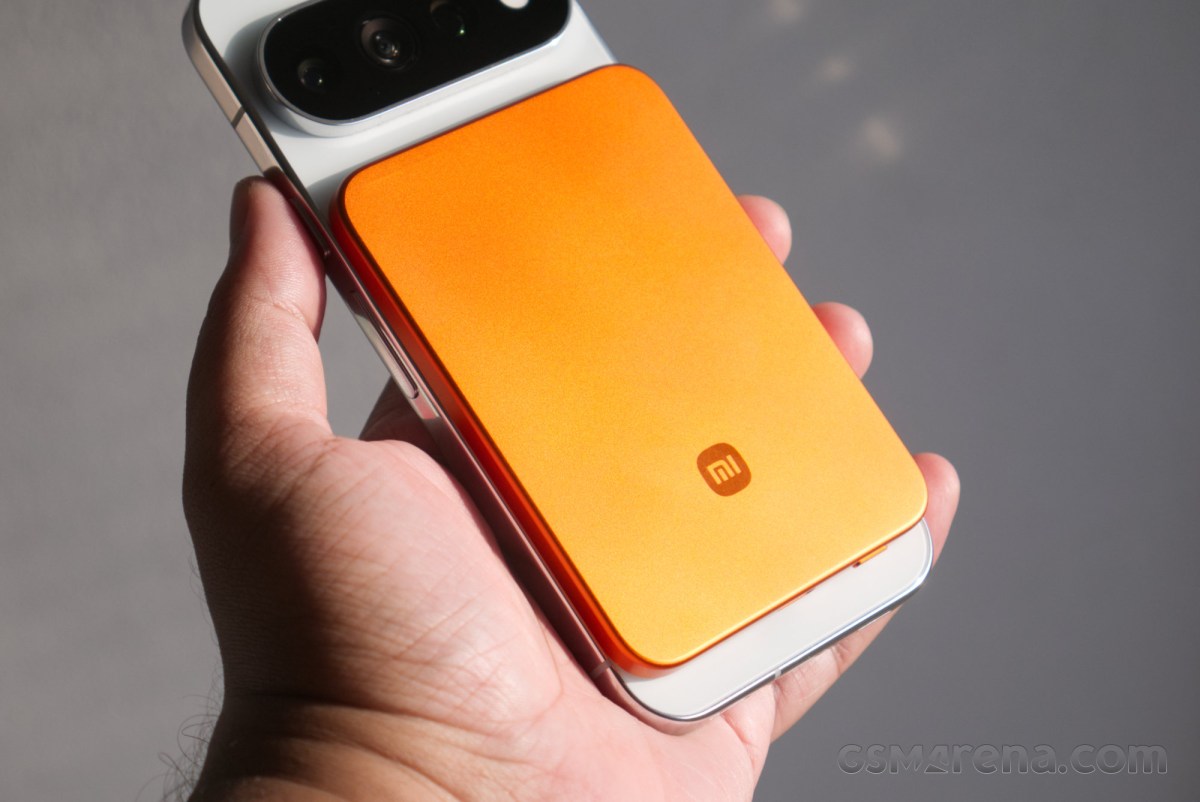
The Xiaomi UltraThin Magnetic Power Bank 5000 15W, henceforth referred to as just the Xiaomi 5000 15W, is incredibly compact. It’s 98.5mm tall and 71.5mm wide, about the size of a playing card. The width is right up there with the width of most non-Max/Ultra models of flagship phones, so you don’t feel the power bank sticking out the sides.
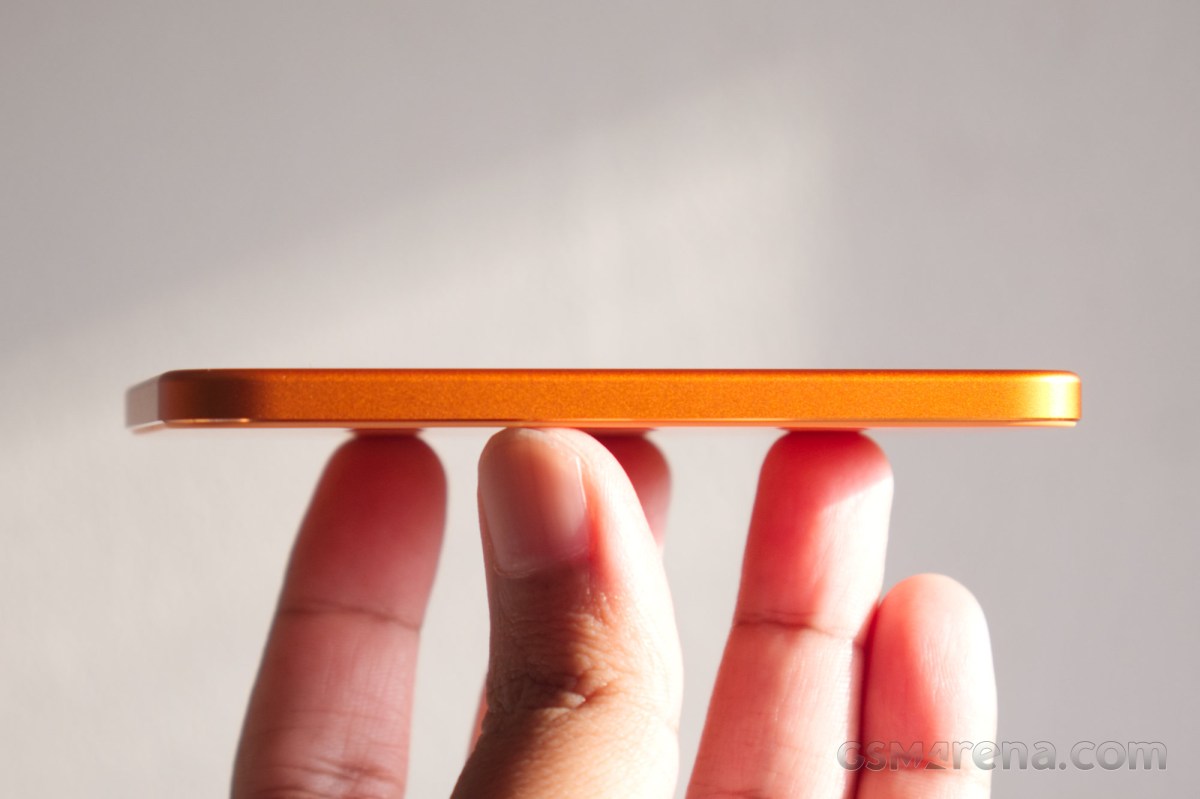
Then there’s the thickness. At just 6mm thick, the Xiaomi 5000 15W is ridiculously thin. It’s even thinner than the iPhone Air MagSafe Battery, which is about 7.7mm thick, as per third-party data, and also has a smaller battery inside (3,149mAh). The Xiaomi 5000 15W also weighs just 98g, while Apple’s model is over 126g.
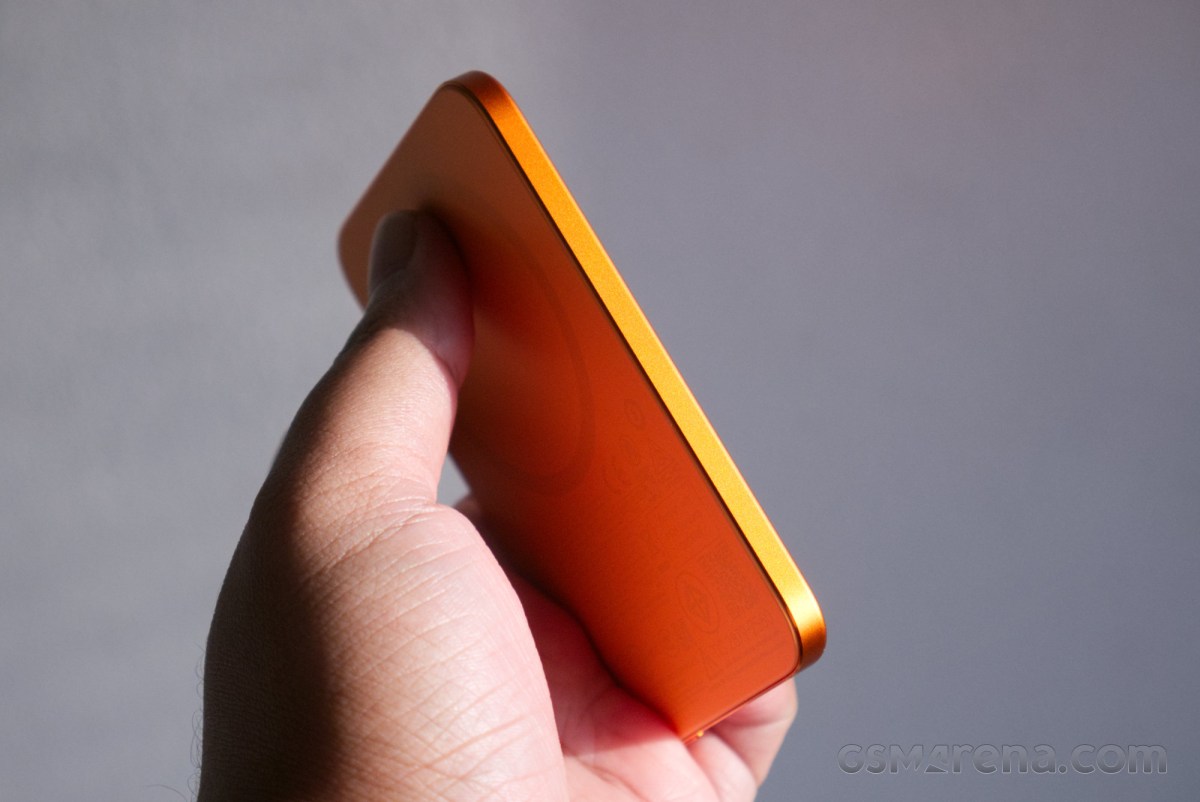
The outer surface of the Xiaomi 5000 15W is made out of anodized aluminum while the underside is a soft-touch plastic that would be transparent to the inductive charging process. A circle tells you where the coil and the magnets are located, and if you squint, you can just about make out the regulatory markings that are borderline impossible to capture on camera.
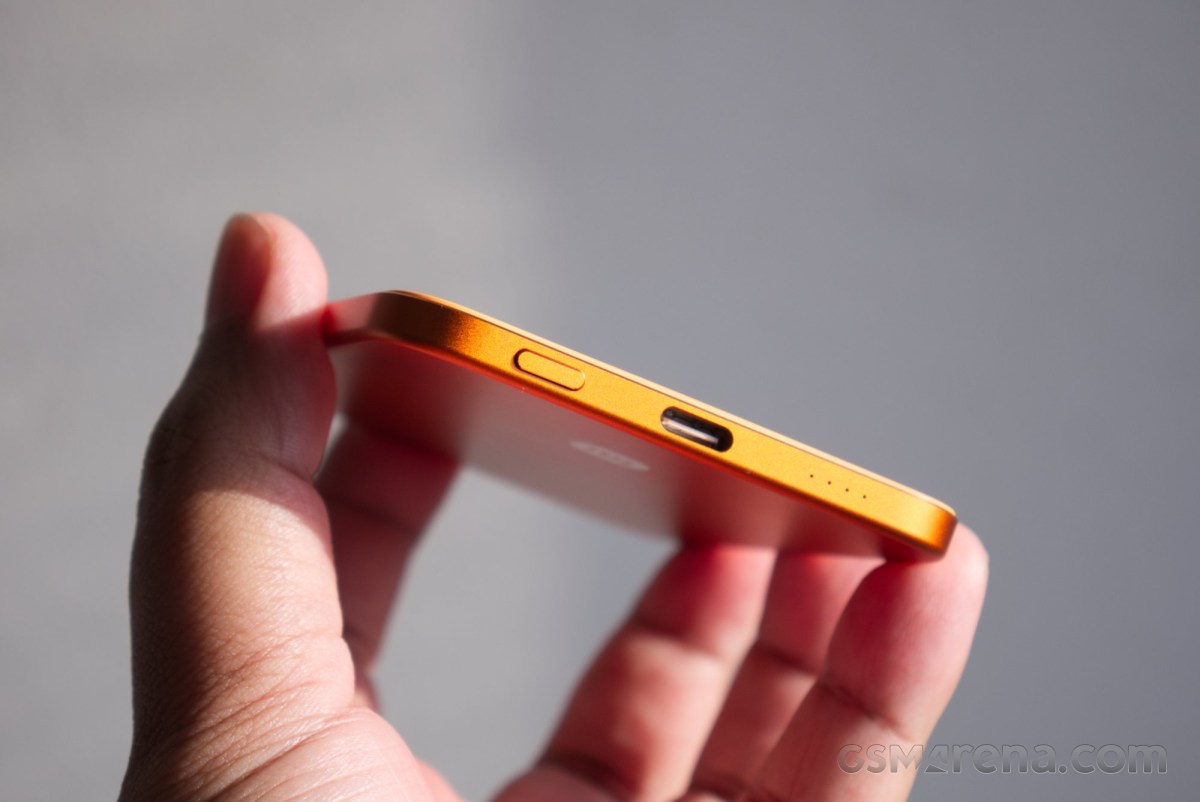
On the bottom edge of the power bank is a USB-C port that acts as an input and an output, a row of four LEDs that denote charging status, and a button that shows charging status and can be double-pressed to engage low-current charging for things like Bluetooth headsets and such that draw very little power, and could cause the standard mode to switch off.
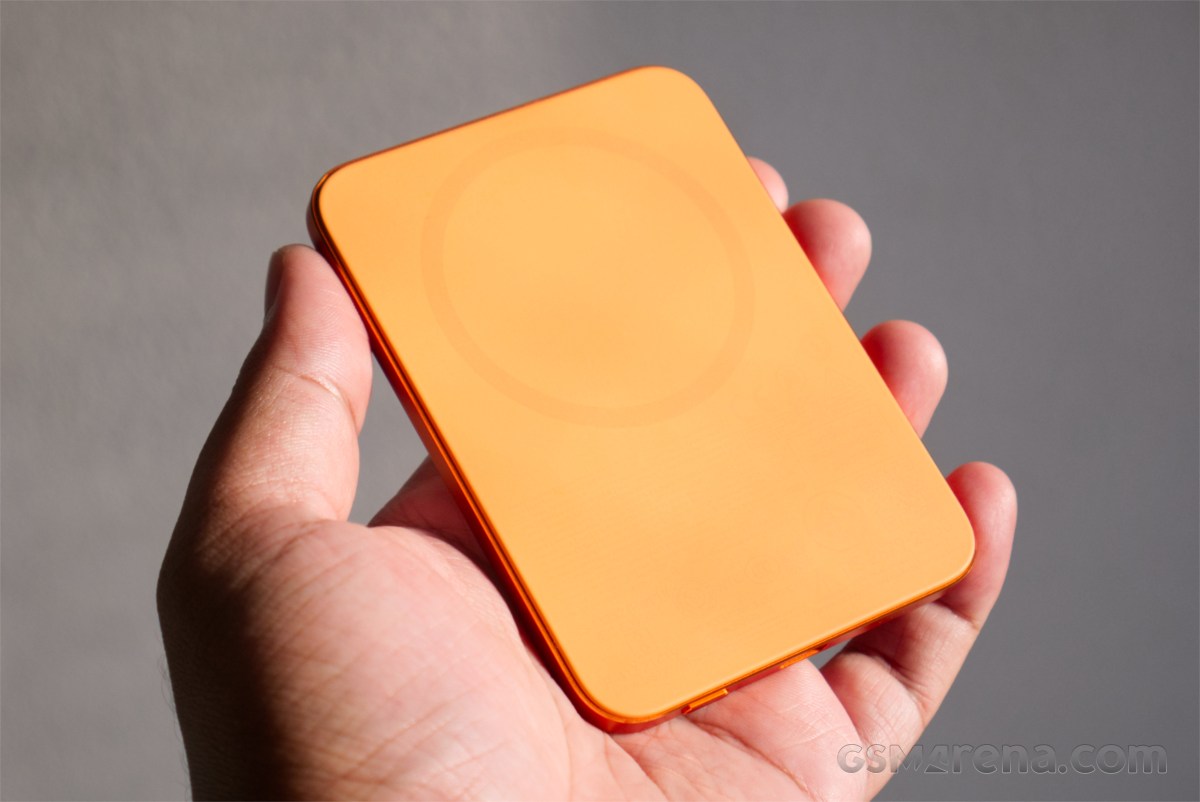
The Xiaomi 5000 15W comes in three colors, Radiant Orange (as seen here), Glacier Silver, and Graphite Black.
The Xiaomi 5000 15W battery is rated at 18.95Wh or 5,000mAh at 3.79V. However, for typical 5V use cases, the rated capacity is 3,000mAh, which is to say, you can expect around 3,000mAh worth of power delivery to your connected device.
The wireless charging protocol supports up to 15W. However, herein lies the catch. You see, the Xiaomi 5000 15W can only send 15W of power wirelessly to Xiaomi phones, that too, Xiaomi 17 series phones, to be precise. All other devices are limited to a maximum of 7.5W. Now, 15W isn’t exactly blistering fast to begin with, but knowing it’s only available on a handful of devices, and the vast majority of phones will be limited to 7.5W or lower, doesn’t feel great.
The issue is that the Xiaomi 5000 15W is neither MagSafe nor Qi certified. If it supported either or both of those technologies, it would have been able to send its maximum 15W to even non-Xiaomi devices, as long as they supported MagSafe or Qi 2.0 and above. It’s not clear why this model doesn’t support those standards, considering the cheaper 10000 45W model does support Qi 2.2 at the full 25W speeds.
The Xiaomi 5000 15W is also able to charge over its USB-C cable and can deliver up to 22.5W. You can also charge wired and wirelessly simultaneously; you can get up to 7.5W max out of the USB and an additional 5W from the wireless charger.
Performance
The Xiaomi 5000 15W was tested with the devices available at hand, which included an iPhone 15 Pro and a Pixel 11 Pro. The iPhone supports up to 15W over MagSafe and Qi 2, while the Pixel supports up to 25W over Qi 2.2. Of course, none of that really matters since the Xiaomi 5000 15W is neither Qi nor MagSafe certified. Unfortunately, a Xiaomi 17 device was not available to test the full wireless charging speeds.
Starting with the iPhone, after 30 minutes of wireless charging from 1%, the phone had reached 27%. After 60 minutes, we were at 46%. In two hours, the phone had reached 75%, and finally, the power bank died approximately 2.5 hours after starting the charging, with the phone now at 91%. While far from fast, these speeds are still okay at just 7.5W, and based on this data, you can imagine the full 15W charging speeds with Xiaomi 17 series devices to be fairly brisk.
However, that’s not going to be the case with other Android phones, as testing on the Pixel 11 Pro didn’t go as well. On Android, we have tools that show how well the charging is going, and the Xiaomi 5000 15W never went above 5W. As such, the charging was groan-inducingly slow. After 30 minutes, the phone had gone from 1% to just 11%, then 21% after an hour, and then 39% after two hours. The power bank finally died after three full hours, and the Pixel 11 Pro battery had reached 55%. The fact that the power bank took another 30 minutes to drain completely on the Pixel compared to the iPhone shows how much slower it was discharging.
I also tried wired charging with the Pixel 11 Pro, and the results here were impressive. The phone charged to 23% in 15 minutes, 41% in 30 minutes, and by the 51-minute mark, the power bank had depleted, having charged the phone to 61%.
The wired charging speeds are good, but you’re obviously not buying this model for that, as there are cheaper and more capacious models available that can do it better. Unfortunately, the wireless charging speeds leave a lot to be desired if you’re not using a Xiaomi 17 phone or at least an iPhone.
That aside, there were no issues with using the Xiaomi 5000 15W. It clung securely to both the iPhone and the Pixel, whether it was stuck directly to the back of those phones or through their respective first-party magnetic cases. You can also just place something like the AirPods case right on top of the magnetic coil, but the AirPods case only loosely attaches to the magnets, and isn’t as secure as the phones. Non-magnetic phones also charge wirelessly but you have to obviously have to make sure the alignment manually remains in place.
Verdict
The Xiaomi UltraThin Magnetic Power Bank 5000 15W is a really compact, lightweight, and great-looking power bank despite its rated capacity. It has good wired fast charging speeds and reasonable wireless speeds should you have a Xiaomi 17 series device. However, the iPhone charging speeds are on the slower side, while typical Android charging speeds outside of Xiaomi’s own phones are practically glacial.

Clearly, then, what you gain in terms of size and portability, you lose in terms of sheer performance and price. Depending on the requirement and the use case, that’s not such a bad deal. If you just want something that you can slap on to the back of your phone and toss it into your pocket without having to fiddle with cumbersome cables, then the Xiaomi 5000 15W is still a great option. Hopefully, Xiaomi is able to come up with a successor in the future that supports fast charging universally.