







It was MWC week, but the newly unveiled devices will not be available for a while – certainly not this weekend, anyway. What is available now is the Galaxy S26 series. Also, Apple launched several new devices this week, which can be pre-ordered now (and will be available from March 11).
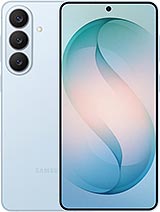
We published our Samsung Galaxy S26 Ultra review a couple of days ago. While it’s not the most exciting upgrade, it does bring meaningful improvements. Right now, the Privacy Display is unique in its capabilities and the upgraded charging had a significant impact on charge times.
The S26 Ultra doesn’t get a simple storage upgrade – the 512GB model is indeed available at the MSRP of the 256GB model, but the top-specced 1TB version (which is the only one with 16GB of RAM) ends up costing €100 more than the 512GB model’s MSRP.

The Samsung Galaxy S26 and S26+ only have 256GB and 512GB models, so you can treat this as a free storage upgrade. Note that you can get a €50 discount on all three S26 phones, while Prime Student members can get an additional €30 off. We have a Galaxy S26 in for review as well as an S26+, so stay tuned for more details.

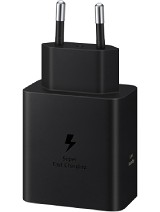
Samsung released a new 60W Super Fast Charging 3.0 charger for the Galaxy S26 Ultra. Using it, we saw the phone reach 84% charge in 30 minutes, compared to 72% for the Galaxy S25 Ultra (which has the same 5,000mAh battery capacity but tops out at 45W). A full charge takes 43 minutes on the new Ultra, which is 16 minutes faster than the old one. By the way, if you are on the lookout for a new charger, check out our extensive charger article.
The new iPhone 17e fixes several major annoyances of the 16e – it has proper MagSafe support now, you get good base storage (256GB), the improved Ceramic Shield 2 has an anti-reflective coating and the chipset was bumped up to an Apple A19. Okay, the 6.1” 60Hz display with a chunky notch isn’t ideal and neither is the single 48MP camera with a small sensor. The €700 base price certainly stings, but you can be sure that Samsung and Google are paying attention.

The older iPhone 16e is still available, but unless you are willing to slum it with a 128GB model, it’s not really worth it as the 256GB variant is only a bit cheaper than the 17e.
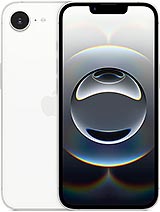
You could consider the iPhone 16 instead. It has the same notched 6.1” 60Hz display but offers better cameras – 48MP main with a larger sensor (1/1.56” vs. 1/2.55”) and a 12MP ultra-wide. However, a new 256GB unit is pretty pricey at the moment, despite being a year old. Maybe you can consider going with a second-hand unit if you want the iPhone 16.

Or check out the iPhone Air – the 256GB model is actually €10 cheaper than a 256GB iPhone 16. It’s taller and wider than the iPhone 17e, but it is thinner and lighter too (156.2 x 74.7 x 5.6mm, 165g for the Air, 146.7 x 71.5 x 7.8mm, 169g for the 17e). This is due to the larger 6.5” display, an LTPO panel with a Dynamic Island. There is a single 48MP camera on the back, the version with the larger sensor (1/1.56”). The battery is small, though, 3,149mAh vs. 4,005mAh on the 17e.

Apple also launched a cheap MacBook dubbed the Neo. It uses the iPhone 16 Pro chipset (A18 Pro) with 8GB of RAM. It’s a 13” model without a backlit keyboard and only the 512GB variant has Touch ID. Still, this is the cheapest MacBook and has the same starting price as the iPhone 17e, €700.
Let’s compare it to an iPad (2025). A 128GB slate costs €380, but getting the same 256GB storage as the Mac will cost you €510. There is an optional folio keyboard available, but that is completely unreasonable as it costs €300. The iPad has a smaller display (11”), slower chipset (A16 non-Pro) with less RAM (6GB), just one USB 2.0 port and a similar battery (28.93Wh vs. 36.5Wh on the Neo). And remember that macOS can run iPadOS apps.

Also this week, Apple upgraded the iPad Air to the M4 chipset – up from the M3. This way it keeps the Air models trailing the Pro models by a generation. Notably, the new models have 12GB of RAM, which is 50% more than the old model. The only other improvements worth mentioning are Wi-Fi 7 and Bluetooth 6.0 support (up from Wi-Fi 6E and Bluetooth 5.3). The 11” and 13” displays are still 60Hz IPS LCDs.


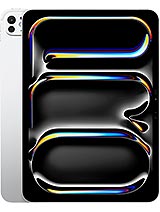
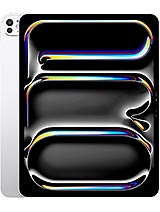
The iPad Pros moved to the latest Apple M5 chip last year. They have 12GB of RAM on the 256GB and 512GB versions and 16GB on the 1TB and 2TB models. They also have tandem OLED displays running at 120Hz. Both the Air and the Pro tablets can output to an external monitor over USB-C and support Stage Manager for multitasking. The Pros are more expensive, but they have okay discounts at the moment, which helps close the gap.
We may get a commission from qualifying sales.