









What began as an effort to bolster kids’ safety online has morphed in recent months into a broader debate over privacy and anonymity on the internet.
Subscribe to read this story ad-free
Get unlimited access to ad-free articles and exclusive content.

Mandatory age verification, which requires websites and apps to confirm or estimate users’ ages before they grant access to certain content, has continued to gain traction nationwide, as more states pass laws mandating some form of it.
Supporters argue the rules are necessary to protect children from harmful content, including pornography. Critics counter that age verification could backfire — and undermine privacy and free expression online.
“Every single time an age authentication mandate goes into effect, the internet shrinks some,” said Eric Goldman, a professor at Santa Clara University School of Law who focuses on internet law, adding that as mandates are implemented across the board, they could determine whether people have “conversations online that we find socially valuable.”
In the U.S., the bipartisan Kids Internet and Digital Safety Act, introduced in March, would require platforms to deploy age verification measures to identify minors in some cases. The Federal Trade Commission also recently declared its support for social media companies to collect limited personal information for age verification to protect kids.
“Age verification technologies are some of the most child-protective technologies to emerge in decades,” Christopher Mufarrige, director of the FTC’s Bureau of Consumer Protection, said in a statement.
A wave of litigation targeting social platforms — including the recent bellwether verdict in Los Angeles, which held Meta and Google liable for social media addiction, and the ongoing child safety lawsuits against Roblox — has also put increasing pressure on companies to age-gate their products.
But digital rights and free speech advocates suggest there are better ways to make children’s online experiences safer that wouldn’t involve mandating age assurance.

FORSUBSCRIBERS
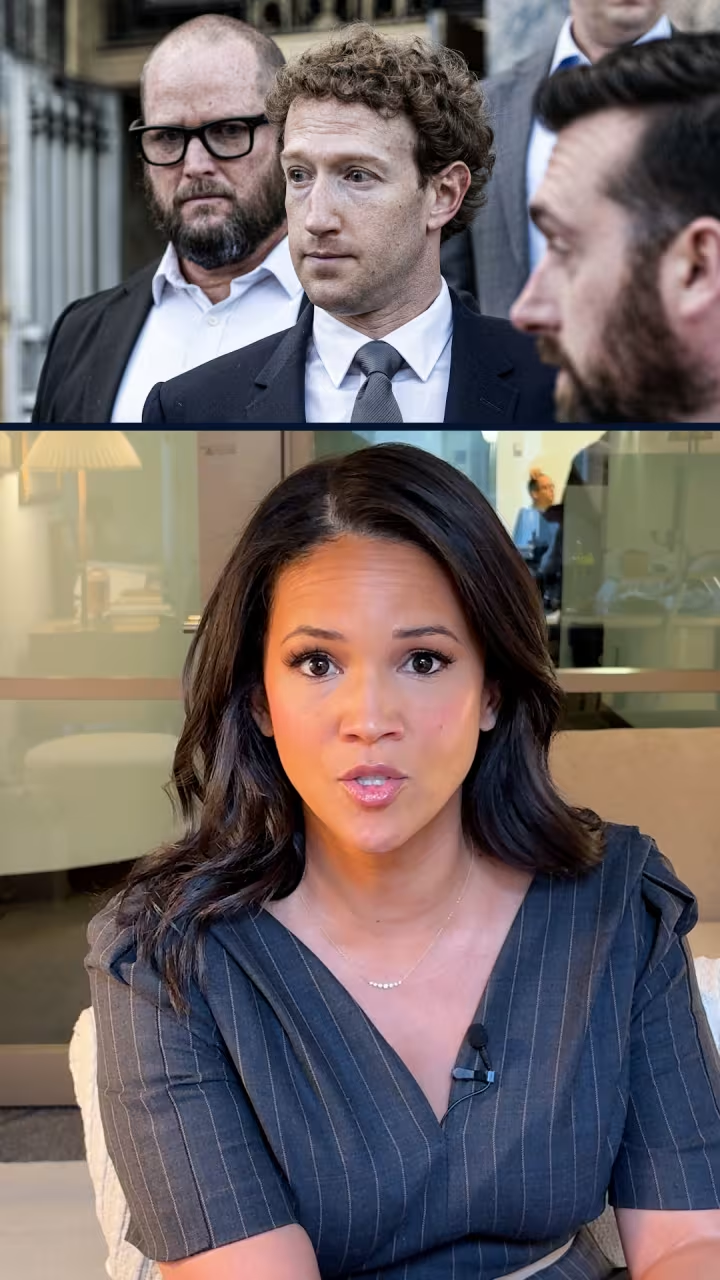
Social media companies on trial over claims of teen addiction
04:17
“We already know that the online ecosystem is porous, insecure and routinely subject to data breaches,” said Aaron Mackey, deputy legal director of the nonprofit Electronic Frontier Foundation. “So why would we, then, in the name of protecting people, create a whole other legal mandate that requires the collection and storage of even more personally identifying information that would be subject to either data thieves or data breaches?”
Several online platforms have been experimenting with age verification measures, including AI-powered age estimation systems.
“Understanding the age of people online is an industry-wide challenge,” Instagram wrote in a blog post announcing expanded policies for teen accounts last year. “We’ll continue our efforts to help ensure teens are placed in age-appropriate online experiences, like Teen Accounts, but the most effective way to understand age is by obtaining parental approval and verifying age on the app store.”
Google-owned YouTube issued a similar statement last year about extending its built-in protections for teens.
But some platforms that have implemented age verification guardrails have been met with complaints from users.
In January, after Roblox began requiring biometric age checks to access chat, some users reported inaccurate age estimates, while others found ways to bypass the system.
And in Australia, many continue to get around the country’s social media ban for users under 16, which was implemented this year.
Beyond concerns that the verification measures don’t actually work, some digital rights advocacy groups also worry that such restrictions could chill certain types of speech, including whistleblower reports, employment experiences and reports of sexual abuse.
“It requires the disclosure of immutable information that’s personal and private, and it requires the party that takes it to make sure that they don’t use it for any other purpose than for the verification, and then maybe they keep some record of it,” said Mackey, of the Electronic Frontier Foundation. “And so all of that creates both privacy and data security risks, but it also fundamentally undermines your ability under the First Amendment to engage in anonymous speech online.”
Implementing effective age restrictions also requires users to trust tech companies to handle their data safely, a feat that’s difficult in light of frequent breaches.
In February, Discord delayed the rollout of its own age assurance system after there was backlash from users, many of whom pointed to a data breach of a third-party customer service support company that exposed 70,000 users’ government IDs.
Wisconsin Gov. Tony Evers shut down a bill this month that would have required users to submit government ID to access porn sites in the state, objecting to its “intrusion into the personal privacy of Wisconsin residents.”
“While I agree that we should protect children from harmful material, this bill imposes an intrusive burden on adults who are trying to access constitutionally protected materials,” Evers wrote in a letter to State Assembly members, adding that he is “concerned about data security and the potential for misuse of personally identifiable information.”
“We can and should work to prevent minors from accessing adult content,” he wrote, “but there are better solutions than the one offered by this bill.”
The Age Verification Providers Association, which lobbies on behalf of age assurance technology developers, said companies shouldn’t use providers that retain personal data after age checks are complete.
Executive Director Iain Corby said there are also ways to ensure privacy in age checking. Some countries require double-blind age assurance, which means the websites don’t get any user data from the age checks and the age verification companies don’t know which websites users are visiting.
He said he rejects critics’ claims that age assurance means the end of anonymity on the internet.
“I’m a gay man, and I’ve had LGBT groups in different states up in arms, and I’ve had to go and see them and say, ‘Look, I wouldn’t be supporting this if I thought it’s a problem for us,’” Corby said. “Now, that doesn’t mean to say that you can’t do age verification badly and you can’t design it maliciously. That’s why we want lots of regulation, audits, certifications, checking against standards, that sort of thing, in the same way as your bank is regulated.”