







The Galaxy Z Fold8 and Z Flip8 are around one-third off this week – these are massive discounts for cutting-edge foldables that only launched last month. The big Z Fold8 Ultra along with the Pixel 11 series has smaller discounts that are still worth a look.
The Samsung Galaxy Z Fold8 is down to €1,430 for the base 12/256GB unit. The upgrade to 512GB storage is quite pricey at the moment despite a fairly decent discount on it. As a reminder, the 256GB iPhone Duo will start at €2,300 and Apple devices aren’t as fast with the price cuts. We haven’t tested the Duo yet, but here’s an overview of how it compares against the Z Fold8.

The larger Galaxy Z Fold8 Ultra, the successor to the Z Fold7 from last year, is around €250 off. You can check out our Galaxy Z Fold8 vs. Z Fold8 Ultra article for a detailed comparison – the different form factors make these better-suited for different use-cases.
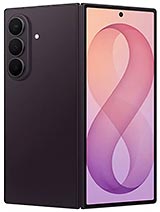
The Samsung Galaxy Z Flip8 is a third off. With both Google and now Apple focusing on horizontal foldables, there aren’t many flips even in Europe (the Chinese makers are pretty lukewarm on flips too). Compared to its predecessor, the 2026 Flip brings a new chipset (Exynos 2600 vs. 2500), but not much else. It has a Si/C battery, but it has the same capacity as before, 4,300mAh, and is rated at the same 25W charging. Official numbers aside, in our review we found that the new model lasts longer on a charge and then charges faster. Samsung didn’t do much to fix the thermal throttling, though.

The Google Pixel 11 series has discounts ranging from €100 to €180. We start with the base model, the Pixel 11, which shares a lot of similarities with the 11 Pro. However, the Pro model has several key advantages to justify its higher price – our Pixel 11 vs. Pixel 11 Pro article goes into details to help you decide which model is better value for money.

The Pixel 11 Pro improves on the 10 Pro from last year, but there are no massive upgrades. Even the Tensor G6 turned out to be underwhelming. For a detailed look at what’s new and what’s actually better, head over to our Pixel 10 Pro vs. Pixel 11 Pro article.

The Pixel 11 Pro XL is what its name suggests – a 6.8” version of the 11 Pro (which has a 6.3” display). This comes with a bigger battery too, which did result in an Active Use Score that is an hour over the 11 Pro score. The battery life improvement compared to last year’s 10 Pro XL is pretty sizable, though.

The Pixel 11 Pro Fold has a similar discount to its siblings, but its high base price makes it tough to recommend. The Z Fold8 Ultra is cheaper, thinner (8.9mm vs. 10.1mm), lighter (215g vs. 239g), it has a better chipset (Snapdragon 8 Elite Gen 5 vs. Tensor G6) and a bigger battery. We haven’t tested the cameras on the Pixel yet, but here’s the Galaxy vs. Pixel hardware comparison – 200MP 1/1.3” main on the Galaxy and 48MP 1/1.56” on the Pixel, 10MP 3x/67mm vs. 10.8MP 5x/112mm and 50MP 120° vs. 10.5MP 127°.

Last week’s poll was about the Redmi Note 17 series – you told us both in the poll and in that week’s deal post that you’re not impressed with the value for money that those phones offer. And we agree – but we’ll keep an eye out for meaningful price cuts.
Meanwhile, phones like the Poco X8 Pro and X8 Pro Max offer better deals. They have 6.59” and 6.83” displays, respectively. They also have 6,500mAh and 8,500mAh batteries (both with 100W fast charging). The Max has the better chipset (Dimensity 9500s vs. 8500 Ultra), but their cameras are largely the same. For the pros and cons of each model, check out our Poco X8 Pro vs. Poco X8 Pro Max post.

Compared to the Redmi Note 17 Pro Max, the Poco X8 Pro Max has the better chipset (the Redmi is equipped with only a Snapdragon 6 Gen 5). The cameras are the same and the battery is only slightly smaller – 8,500mAh for the Poco and 9,210mAh for the Redmi (both with 100W charging). The Redmi is 0.4mm thicker and 11g heavier somehow, despite having mostly the same hardware and the same water resistance (IP69K).

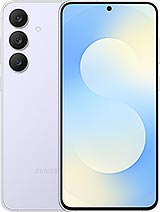
We were recently reminded that the Samsung Galaxy S26 FE exists – and immediately after checking its price, we forgot about it again. €800 for a phone with 8GB of RAM and 128GB of storage is a no-go.
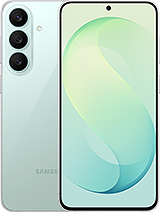
You could get the Galaxy S25 FE for a lot less – Samsung didn’t change much, so you’re mostly paying for the newer chipset. That newer chipset does improve efficiency, so battery life is noticeably longer (14:49h Active Use Score vs. 11:57h). So, the S26 FE is better, but it’s certainly not €300 better.
We may get a commission from qualifying sales.