








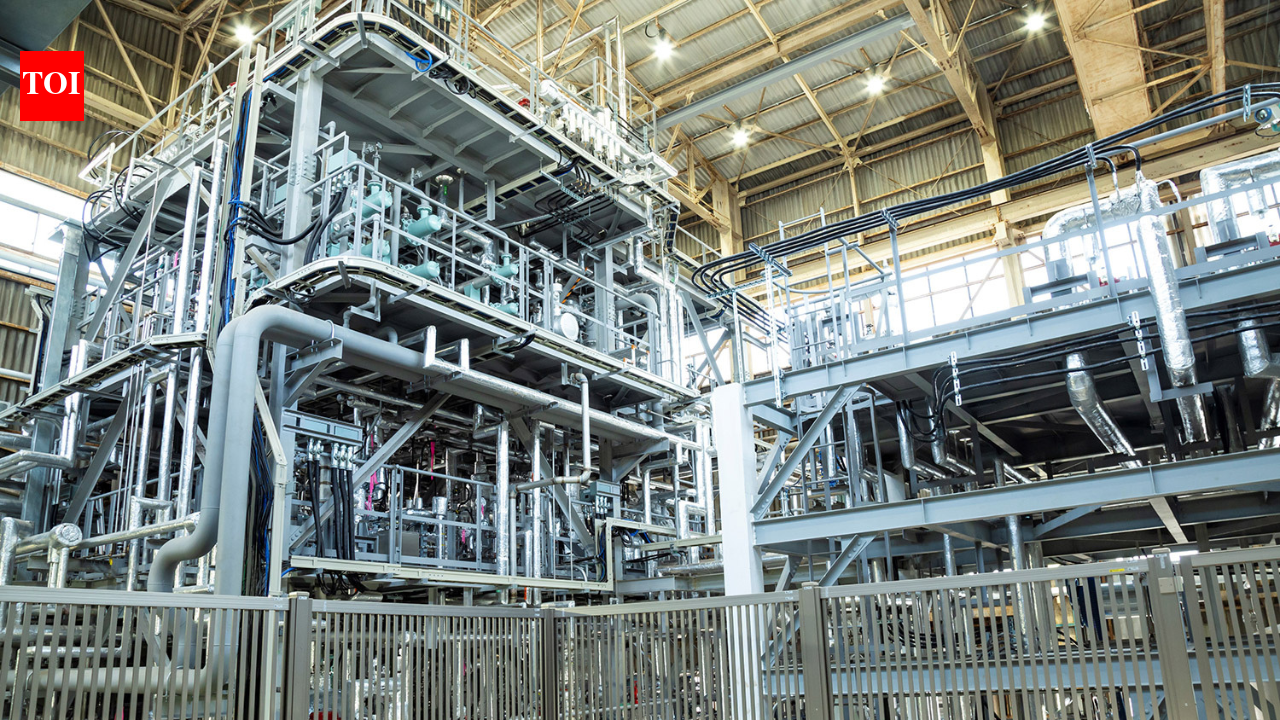
What if fuel could be made not from oil wells, but from the air around us? That idea moved closer to reality when Japan’s energy giant ENEOS Corporation successfully produced synthetic fuel using captured carbon dioxide and hydrogen at its Yokohama demonstration plant. The project showed that it is possible to create a liquid fuel compatible with existing engines while recycling atmospheric carbon. It marked a significant step toward low-carbon energy systems, especially for sectors where electrification remains difficult. Yet, just as the technology proved it could work outside the lab, the project was unexpectedly paused, raising deeper questions about the future of such fuels.
How Japan made fuel from air
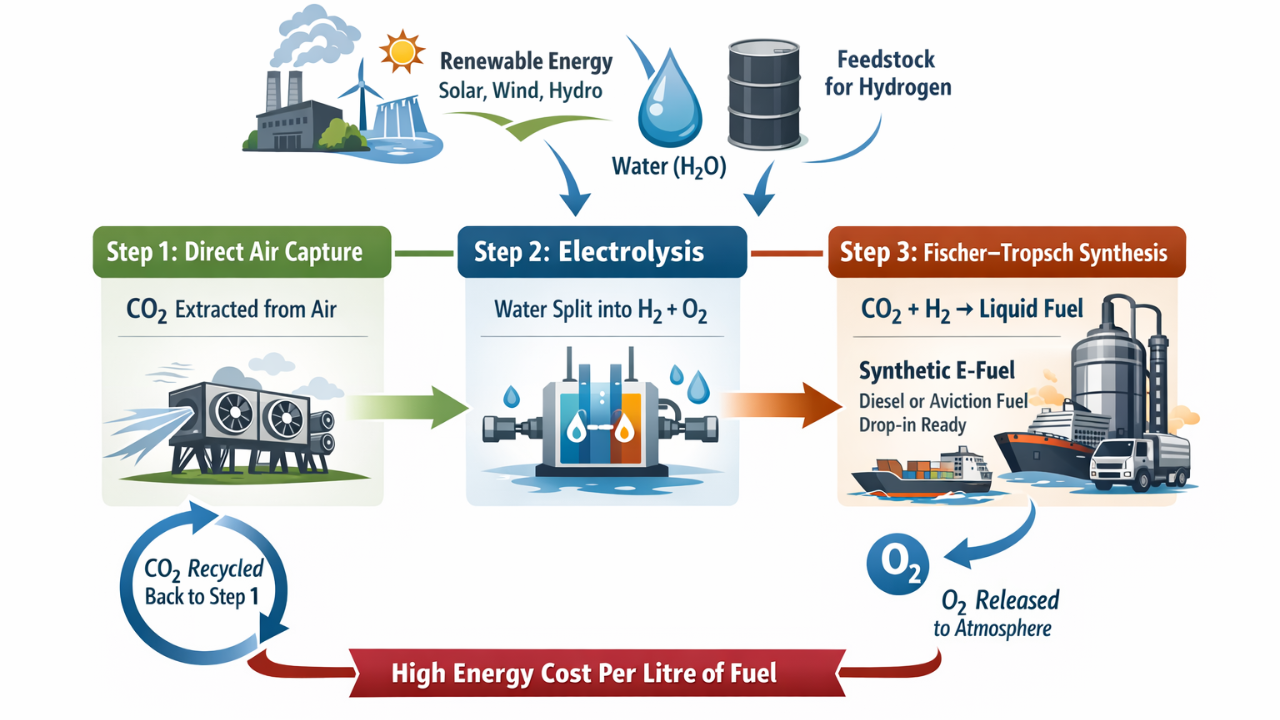
At the core of the process is a simple but powerful idea: rebuild fuel using carbon that already exists in the atmosphere instead of extracting new carbon from the ground.The system begins with Direct Air Capture, where CO₂ is extracted either directly from ambient air or industrial emissions. This carbon is then combined with hydrogen produced by splitting water through electrolysis using renewable electricity.The final step uses Fischer–Tropsch synthesis, a well-established chemical process that converts these inputs into liquid hydrocarbons. The result is synthetic diesel or aviation fuel that behaves like conventional fossil fuels. What makes this significant is that the fuel is “drop-in ready,” meaning it can be used in existing engines, pipelines, and infrastructure without major modifications.
Why this breakthrough matters
The appeal of synthetic e-fuels lies in their potential to solve a problem that renewable electricity alone cannot fully address.While electric vehicles are rapidly transforming passenger transport, sectors like aviation, shipping, and heavy industry remain difficult to electrify due to energy density requirements. Liquid fuels still offer unmatched convenience for long-distance travel and heavy loads.E-fuels offer a pathway to decarbonise these sectors without replacing existing systems entirely. By recycling CO₂, they aim to create a closed carbon loop, where emissions are offset by the carbon used during production. This makes them particularly attractive for countries like Japan, which lack domestic fossil fuel resources and are heavily dependent on energy imports.
The scale problem: From one barrel to thousands
Despite the promise, the current reality is far from industrial scale.The Yokohama facility produces roughly one barrel of fuel per day, a level designed to validate the technology rather than supply markets. ENEOS had outlined ambitions to scale production to 10,000 barrels per day by 2040, a level that could begin to make a measurable impact.However, scaling is not just a matter of building bigger plants. It requires vast amounts of renewable electricity, large-scale hydrogen production infrastructure, and efficient and affordable carbon capture systems. Each of these components presents its own technical and economic challenges.
The hidden cost of carbon-neutral fuel
The biggest obstacle is not whether the technology works, but whether it can be made affordable.Producing hydrogen through electrolysis is highly energy-intensive. When combined with the energy required for carbon capture and fuel synthesis, the overall process becomes significantly less efficient than directly using electricity.According to assessments by organisations like the International Energy Agency, e-fuels can require several times more renewable energy compared to battery-electric alternatives for the same output. This translates into higher costs, and at present, synthetic fuels remain substantially more expensive than fossil fuels and even other low-carbon alternatives such as biofuels.
Why was the project paused
In 2025, ENEOS made the decision to halt further development of CO₂-based synthetic fuels at this stage.The reasons were largely economic. Rising costs of green hydrogen production, expensive infrastructure requirements, and uncertain returns on large-scale investment made scaling difficult. Instead, the company shifted focus toward biofuels and sustainable aviation fuels, which are currently closer to commercial viability.The pause does not signal failure, but rather a strategic recalibration in response to market realities.
A global pattern, not an isolated case
Japan’s experience reflects a broader trend across the global energy sector.Companies and governments in Europe, the US, and elsewhere are also investing in synthetic fuels, but most projects remain in pilot or demonstration phases. While the science is widely proven, the economics continue to limit deployment. Even major energy firms are balancing investments across multiple pathways, including hydrogen, biofuels, and electrification, rather than betting entirely on e-fuels.
The future of e-fuels
E-fuels are unlikely to become a universal replacement for fossil fuels in the near term. Instead, they are increasingly seen as a targeted solution for specific sectors, particularly aviation and shipping.Their future will depend on falling costs of renewable energy, advances in hydrogen production, improvements in carbon capture efficiency, and policy support and carbon pricing mechanisms. If these factors align, synthetic fuels could still play a meaningful role in the global energy transition.
Beyond the pause: What this moment represents
The ENEOS project represents a critical phase in the evolution of clean energy technologies. It demonstrates that the transition away from fossil fuels is not just about discovering new ideas, but about making them economically viable.The ability to create fuel from air is no longer theoretical. The challenge now lies in turning that possibility into a scalable, affordable reality. In that sense, the pause is not an end, but a reflection of where the world currently stands, caught between technological capability and economic constraint.