








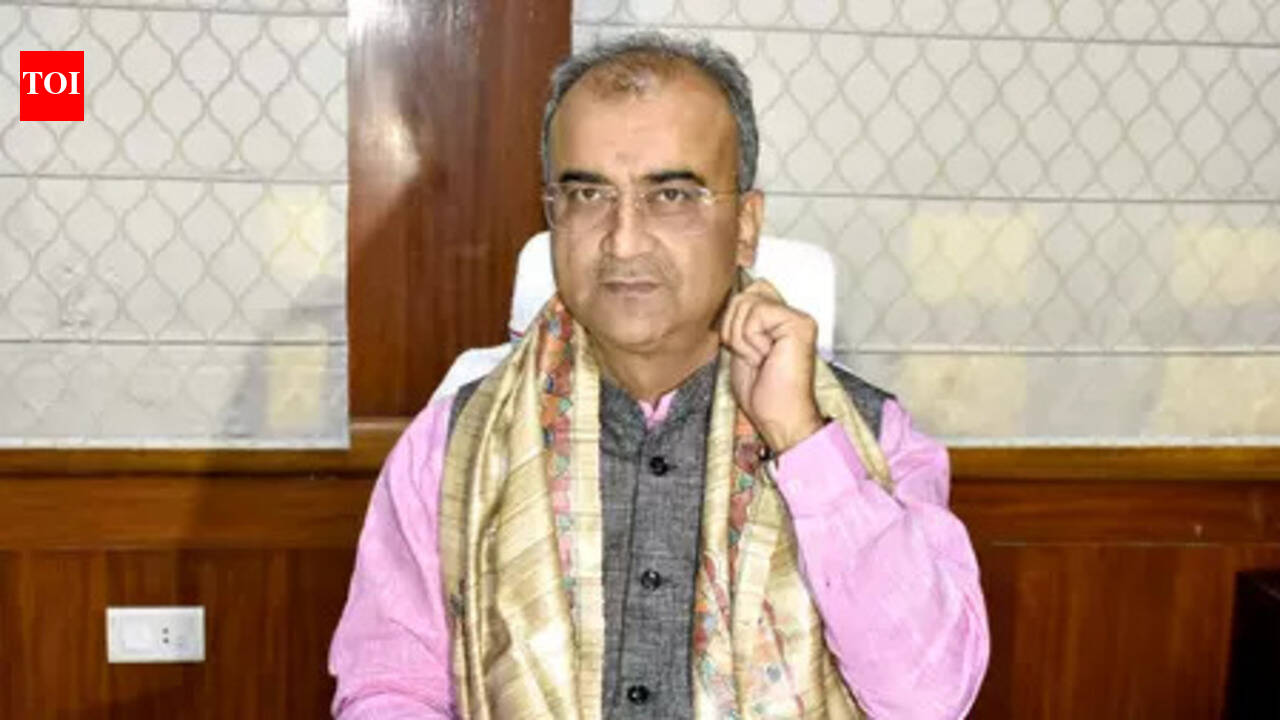

Patna: The state govt is set to induct 124 new Basic Life Support (BLS) ambulances into its fleet, increasing the total number to 2,065 from 1,941, as part of an expanded push to strengthen emergency medical response during the “golden hour.”Health minister Mangal Pandey said the initiative, being implemented under the NDA govt, aims to modernise and reinforce emergency health services by ensuring the availability of both BLS and Advanced Life Support (ALS) ambulances across all districts. He described ALS ambulances as mobile ICUs designed to deliver rapid and effective care to critically ill or injured patients, including those suffering from heart attacks, breathing difficulties and other serious conditions.He said patients in rural areas and smaller districts often struggle due to limited access to advanced facilities, prompting the government to deploy ALS ambulances at district and block levels to ensure safe transport of critical patients to higher-level hospitals.The state provides free referral transport to emergency and govt hospitals through the toll-free number 102 for illness, accidents and other emergencies. Pandey said 14,30,373 patients used the free ambulance service in 2024-25, while 15,94,220 patients availed it in 2025-26 up to January.Officials said the state currently has 1,941 BLS ambulances, while the number of ALS ambulances stands at 576. “We have surpassed the requirement for ALS ambulances. The criterion is one ambulance per 5 lakh population, and we have more than that,” an official said.ALS ambulances are equipped with ventilators, cardiac monitors, defibrillators and life-saving medicines, and are operated by trained paramedics and doctors, enabling continuous treatment during transit until patients reach hospital.