








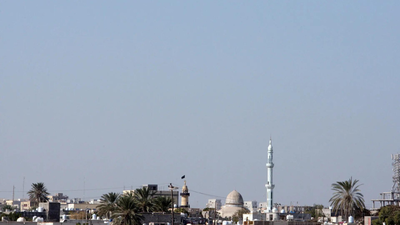
As the US-Israel war escalates, once tourist-dominated Qeshm Island in the Strait of Hormuz has now become an ‘underground missile city’.Beneath its salt caves and emerald mangrove forests lies a network of military installations that have transformed the island from a free-trade and tourist hub into a strategic fortress.Qeshm once attracted visitors for its surreal rock formations and coral reefs. Today, the world’s attention is now focused on the Iranian forces stationed there, according to Al-Jazeera.
The island’s size, approximately 1,445 sq km (558 sq miles) allows it to control the entrance to the Strait of Hormuz, a vital route for global oil and gas transport.The island has a population of 148,000 residents, who are primarily Sunni Muslims speaking the Bandari dialect. However, military escalation has placed their daily routines under growing pressure.
Strategic importance of Qeshm
Qeshm’s free trade-industrial zone comprises vast underground silos, missile facilities and fast-attack boats intended to dominate the Gulf.The island is located 22 km south of Bandar Abbas. The island is central to Iran’s “asymmetric” naval strategy, enabling Tehran to threaten or halt shipping through the strait.Retired Lebanese Brigadier-General Hassan Jouni described Qeshm as housing “striking Iranian capabilities” designed for the sole purpose of controlling the Strait of Hormuz. Shipping traffic was effectively halted last week after Iran threatened to strike vessels attempting to pass, forcing countries to negotiate safe passage for oil and gas tankers while the US plans a naval convoy to reopen the route.The escalation has already had civilian consequences. On March 7, US airstrikes targeted a desalination plant on the island, cutting off freshwater to 30 surrounding villages. In retaliation, the Islamic Revolutionary Guard Corps (IRGC) struck US forces at Bahrain’s Juffair base.
Historical significance of Qeshm island
The island, known in Arabic as Jazira-al-Ṭawila (‘the Long Island’), has a layered history of strategic importance. Greek explorer Nearchus called it Oaracta. By the ninth century, Islamic geographers referred to it as Abarkawan, later called Jazira-ye Gavan or “Cow Island.”In 1301, Hormuz rulers relocated their court to Qeshm to escape Tartar attacks. The Ottomans raided it in 1552, Portuguese built a fort in 1621 and a year later, Persian and English forces expelled them. The British later maintained a naval base at Basidu until 1863, demonstrating the island’s enduring military significance.Despite militarisation, Qeshm remains ecologically vital. Its Hara mangrove forest is a breeding ground for migratory birds, while the Qeshm Geopark, UNESCO-recognised in 2006 preserves the island’s geological treasures