





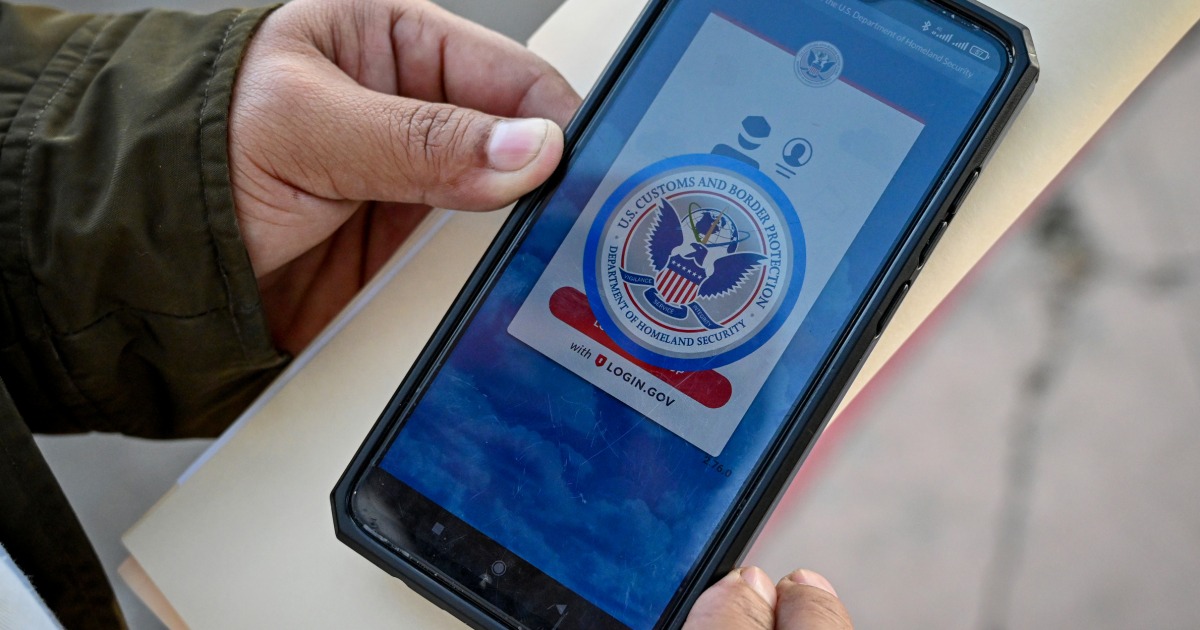
A federal judge in Massachusetts on Tuesday blocked a Trump administration policy that terminated temporary parole status for hundreds of thousands of migrants who were granted the benefit after entering the United States lawfully through a Biden-era mobile app.
Subscribe to read this story ad-free
Get unlimited access to ad-free articles and exclusive content.

The ruling called for reinstating the temporary protection migrants obtained after entering through the CBP One app, according to the order from Federal Judge Allison Burroughs, with the U.S. District Court for the District of Massachusetts.
More than 900,000 people legally entered the U.S. through the CBP One application that scheduled appointments for migrants at ports of entry beginning in January 2023. Many received parole that allowed them to remain in the U.S. for two years and receive work authorization.
It was not immediately clear how many migrants whose parole was terminated have already been deported.
A Department of Homeland Security spokesperson said the agency disagrees with the decision, calling it “blatant judicial activism.”
“Under federal law, DHS had full authority to revoke parole. Canceling these paroles is a promise kept to the American people to secure our borders and protect our national security,” DHS said in a statement.
The judge’s order follows a class-action lawsuit brought last year by immigrants whose parole was terminated and by immigration advocacy organizations. The lawsuit argued that taking away the protection en masse was “patently unlawful.”
The Trump administration sent an email in April 2025 to the parole recipients that their status had been terminated and urged them to leave the United States “immediately.”
“The parole terminations exceeded the agency’s statutory authority and contradicted the procedures set forth in its own regulations,” Burroughs wrote in her order.
“Today’s ruling is a clear rejection of an administration that has tried to erase lawful status for hundreds of thousands of people with the click of a button,” Skye Perryman, President and CEO of Democracy Forward, said in a statement announcing the order.
“Our clients followed the law: they waited, registered, were inspected, and were granted parole under the law. The Trump-Vance administration’s effort to tear that status away overnight was unlawful and cruel — and today, the court rejected that harmful and destabilizing policy,” Perryman said.
The organization, along with the Massachusetts Law Reform Institute, are representing migrants from Venezuela, Cuba and Haiti who had been granted parole after entering through the CBP One application. They are also representing the advocacy group Venezuelan Association of Massachusetts.
Attorneys in the lawsuit said the plaintiffs began receiving mass emails beginning in April 2025 that were “not addressed to any specific recipient, was not signed by any government official, and provided no explanation for the termination.”
“It is time for you to leave the United States,” the email began, according to the lawsuit, saying that DHS was exercising its right to terminate the recipient’s parole status in seven days.
The email said if the parole recipients did not leave the United States “immediately” they would be “subject to potential law enforcement actions that will result in your removal from the United States — unless you have otherwise obtained a lawful basis to remain here,” according to the lawsuit.
The judge’s order on Monday “brings long-awaited relief after months of fear and uncertainty” for many Venezuelan families, Carlina Velásquez, the president of the Venezuelan Association of Massachusetts, said in a statement. “These are individuals who followed every step required of them, trusted the system, and built their lives here only to be told they had to leave everything behind.”
Shortly after taking office, President Donald Trump shut down the CBP One app and canceled all pending appointments.
In early March 2025, the administration announced the CBP Home app to encourage migrants to self-deport and receive “cost-free travel” back to their home countries.