







The index sank 3.5% to hit the day’s low at 1,61,638 on Monday. The index had sharply surged on Wednesday last week, jumping over 12,000 points to record its biggest intraday gain in absolute terms, after news of a temporary ceasefire between the US and Iran eased geopolitical tensions and boosted investor confidence across the region. However, the index overall declined more than 1% last week.
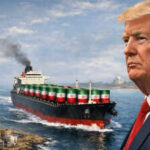
US President Donald Trump during the weekend ordered US military forces to begin blockading the Strait of Hormuz and clearing suspected sea mines, escalating tensions in the Middle East, after the peace talks brokered by Pakistan in Islamabad during the weekend failed to result in an agreement.
“So, there you have it, the meeting went well, most points were agreed to, but the only point that really mattered, NUCLEAR, was not. Effective immediately, the United States Navy, the Finest in the World, will begin the process of BLOCKADING any and all Ships trying to enter, or leave, the Strait of Hormuz…We will also begin destroying the mines the Iranians laid in the Straits. Any Iranian who fires at us, or at peaceful vessels, will be BLOWN TO HELL!” he wrote in a post on his social media platform Truth Social.
After Trump’s blockade threats, Iran’s Revolutionary Guards responded by warning that military vessels approaching the Strait will be considered a ceasefire breach and dealt with harshly and decisively.

The tug of war over the Strait of Hormuz, the critical waterway for the transport of oil and other shipments, has retriggered the skyrocketing rally in oil prices, pushing them above $100 per barrel.
Today’s sharp decline in Pakistan’s stock markets comes amid an overall bearish sentiment in Asian markets. Back home, Sensex and Nifty declined more than 2% in the morning. Japan’s Nikkei, China’s Shanghai Composite, South Korea’s Kospi and others were also in the deep red.Notably, Jefferies’ top global equity strategist Christopher Wood, who is known as an India bull, recently said that he sees Pakistan as a high‑beta opportunity around IMF support, while staying marginally positive on India for the long term. He argues that while India has vastly outperformed Pakistan over decades, Pakistan’s equity market can deliver outsized returns when IMF bailout programmes restore macro stability.
(Disclaimer: Recommendations, suggestions, views and opinions given by the experts are their own. These do not represent the views of The Economic Times)