








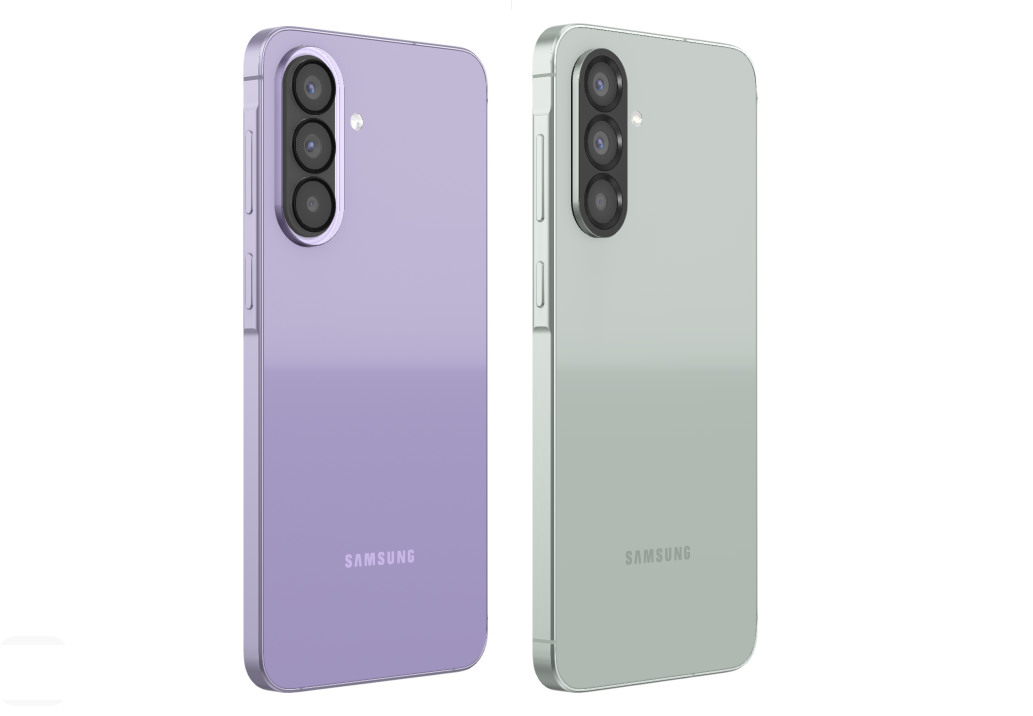
If you are in the market for a mid-range smartphone, it’s almost impossible not to stumble upon Samsung’s Galaxy A lineup. But with the recent Samsung Galaxy A57 release, one would wonder whether the Samsung Galaxy A56 isn’t actually a more sensible solution, seeing the somewhat modest hardware upgrade. After all, last year’s Galaxy A56 is still relevant and sells at a lower price.
Since the more recent Galaxy offers only minor design changes and a newer chipset, it’s probably safe to assume that the Galaxy A56 will get you a lot of the way while saving you a few bucks. But even trivial changes like the chipset can have an effect on experience beyond just performance. Let’s not jump to conclusions and take a look at the data first.
Table of Contents:
For starters, you can compare the complete spec sheets or directly continue with our editor’s assessment in the following video or in the following text.
https://www.youtube.com/watch?v=W6WIBg7dQPo
Size comparison
The Galaxy A57 follows the footsteps of its more expensive siblings this year, the S series, and is now lighter and thinner than its predecessor. Noticeably so, too.
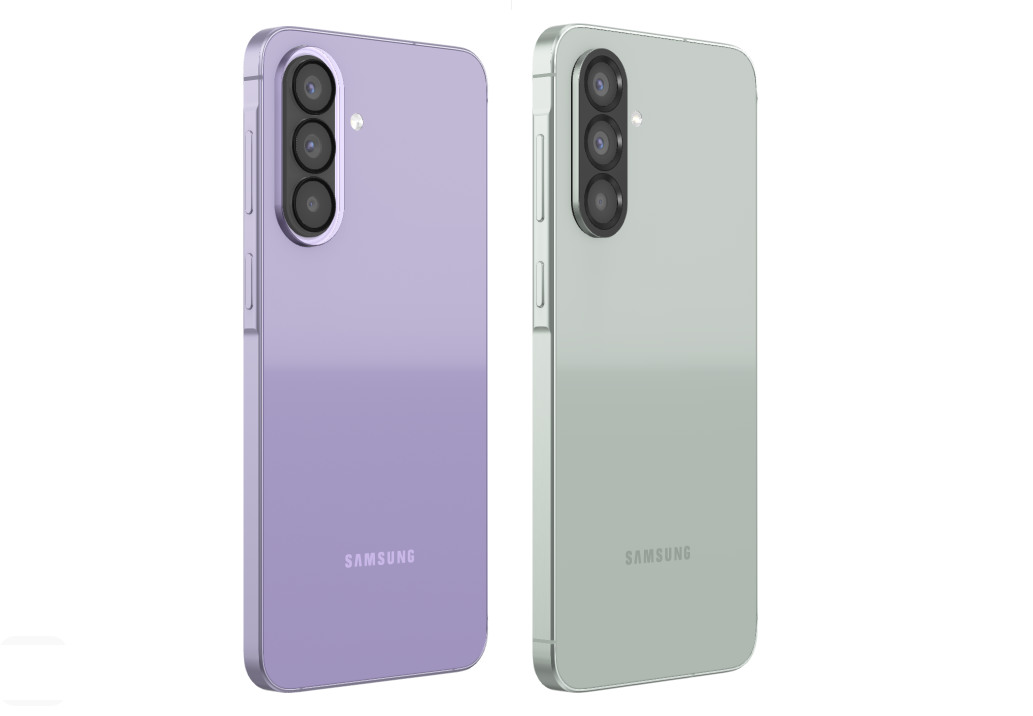
Perhaps screen bezels are also slightly thinner because the A57 is a tad narrower and shorter without changing the screen size.
There’s a small upgrade to the build as well. The Galaxy A57 is IP68-rated, up from IP67 last year, but the same Gorilla Glass Victus+ sheets protect the front and back.
Display comparison
In practice, the Galaxy A57 and A56 offer identical displays. Our brightness tests prove it, too. However, Samsung markets the A57 with a new Super AMOLED+ display, which isn’t exactly new as it uses a regular RGB subpixel matrix instead of the Diamond Pentile matrix. In theory, it should improve image clarity and sharpness, but it’s really hard to notice any difference, even if you compare the two devices in person.
So, for all intents and purposes, the Galaxy A57 and A56 feature identical displays with no practical difference.
Battery life
The newer Galaxy edges out the Galaxy A56 in our battery endurance tests, if you are strictly looking at the overall Active Use Score. It could be the newer display, it could be the newer chipset, or Samsung found a way to improve battery life through software optimizations. Either way, the A57 is the clear winner here.
Still, a quick breakdown of the score reveals that the A56 is much better for calls, achieving better runtimes during 4G calls, whereas the A57 posts better screen-on scores, especially in our video streaming scenario.
Charging speed
Unsurprisingly, the Galaxy A57 and A56 achieved near-identical charging times. Both devices support 45W fast charging over Power Delivery, and they both carry a 5,000 mAh battery. The A57 is a tad quicker to the finish line, but it could be due to statistical error as the difference is only around 4 minutes.
Speaker test
When it comes to loudness, the two sets of speakers seem to be virtually identical. The A57 and the A56 are rated as “Good”, but as far as sound quality is concerned, the A57 is definitely better. The bass seems a tad less prominent, but music tracks are generally cleaner, while vocals are crisper.
Overall, it’s safe to say that the Galaxy A57 has considerably better sound output via its speakers.
Performance
The newer Galaxy A57 arrives with an upgraded Exynos 1680 chipset that boasts better CPU and GPU performance over the Exynos 1580-powered Galaxy A56. But as you will see from the benchmark results below, the advancements in performance aren’t exactly ground-breaking.
Even though the Galaxy A57 can be found with 6GB of RAM, it’s actually a rare find. In most markets, the Galaxy A57 starts from 8GB/128GB, just like its predecessor. However, yesteryear’s model caps at 12GB/256GB, while the A57 also offers a 12GB/512GB setup.
Benchmark performance
The pure CPU benchmark test, Geekbench 6, shows a 13% gap between the newer and the older SoC, while a combined workload test like AnTuTu 10 shows less than 10% difference. To our surprise, the gap widens in the GPU-heavy 3DMark Wild Life Extreme test, where the A57 scores 30% higher than its predecessor.
Camera comparison
The two Galaxies have what’s very likely identical camera systems, though the new model doesn’t list its sensors so we can’t be entirely sure. It’s the kind of a triple-camera setup that qualifies to be called a triple-camera setup, but is in practice two real cameras and a mostly redundant dedicated macro unit.
On either phone, the main camera features a 1/1.56″ type sensor (the old model had the Sony IMX 906) with a stabilized lens that has a 23mm equivalent focal length and an f/1.8 aperture.
The ultrawide camera uses a conventional Bayer RGB sensor with a 12MP resolution (Sony IMX 258 on the A56). It’s got a fixed-focus lens which is on the ultrawide-r end of the ultrawide spectrum, at 13mm.
The selfie camera is based on another 12MP sensor (Samsung S5K 3LC last year). There’s no autofocus on this one either.
The camera samples (both photo and video) have been taken on separate occasions with the two phones.
Image quality
Daylight
The hardware may be the same, but the A57 does bring some image quality improvements. Detail is generally good on both, but the A57 may just have a bit of an edge, even if it’s not really a deciding factor. Both have good dynamic range and vivid colors – not much to choose here.








Daylight comparison, main camera (1x): Galaxy A57 • Galaxy A56
Similarly, the 2x zoom results are not very different between the two phones – not particularly great either, but pretty decent for the class.








Daylight comparison, main camera (2x): Galaxy A57 • Galaxy A56
Moving on to the ultrawides, the A57 and the A56 also return quite similar photos. After staring for long enough, we’ve convinced ourselves that the A57’s photos are that one little bit better, but it’s barely an advantage.








Daylight comparison, ultrawide camera (0.6x): Galaxy A57 • Galaxy A56
Low light
The Galaxy A57 has a minor edge in the dark when looking at main camera photos at 1x – there’s a slightly better definition of detail in the dimmer areas, though the A56 does almost as well, and both are good enough for the class.






Low-light comparison, main camera (1x): Galaxy A57 • Galaxy A56
Neither phone’s dedicated Night mode is of much help.




Low-light comparison, main camera (1x), max night mode: Galaxy A57 • Galaxy A56
The 2x comparison in the dark isn’t too far from a toss-up as well.






Low-light comparison, main camera (2x): Galaxy A57 • Galaxy A56
Both ultrawides would be happier to avoid shooting at night, but the A57’s occasionally returned slightly less blurry results and has a bit of an advantage in dynamic range.






Low-light comparison, ultrawide camera: Galaxy A57 • Galaxy A56
Selfies
Both phones capture very good selfies with excellent detail and colors – another area that offers little in the way of differences.




Selfies comparison: Galaxy A57 • Galaxy A56
Video quality
We were struggling to find meaningful differences between the two phones in photo quality and it’s a bit more of the same in video recording, where daylight main camera footage has essentially the same level of detail, wide dynamic range, and vibrant colors. The ultrawides are also on the same level, and both are a little extra contrasty.
In the dark, the new model’s main camera may have a bit more of a tangible advantage, with a bit better dynamic range and more neutral colors.
Below we have a few framegrabs from the videos taken by the two phones at each focal length so it’s easier to compare to one another.




Video screengrabs, Galaxy A57: 0.6x • 1x • 2x • 1x, low light




Video screengrabs, Galaxy A56: 0.6x • 1x • 2x • 1x, low light
Verdict
There’s no tiptoeing around it. The Galaxy A57 offers minor improvements over its predecessor. You get a slimmer and lighter design, a tad better battery life, nicer speakers, a bump in raw performance and ever so slightly improved photo quality that’s only noticeable if you compare samples side by side, and even then only just. So, then the Galaxy A56 is the pragmatic choice here? Well, it depends.
If you are situated in Europe, for example, the Galaxy A57 might be the more sensible choice, because it’s about €70 more expensive, justifying the modest upgrades. In the US, however, the price gap is around $200, outright making the Galaxy A56 the winner in this head-to-head.

- The more powerful chipset.
- The slightly better photos.
- The nicer speakers.
- The slightly improved battery life.
- The thinner and lighter design.
Get the Samsung Galaxy A57 for:

- The lower price tag.
- The largely similar user experience.
Get the Samsung Galaxy A56 for: