








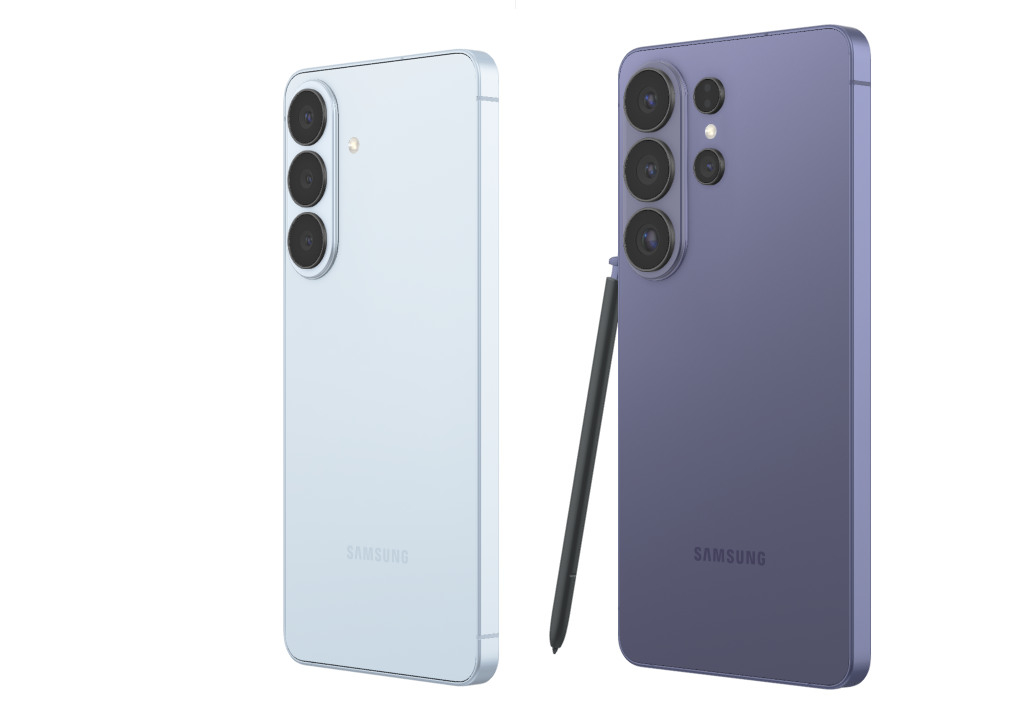
After Samsung blurred the lines between the S Plus and the S Ultra models a few generations ago, users each year are wondering which one to get. The top-tier and more expensive Samsung Galaxy S26 Ultra or the Samsung Galaxy S26 Plus variant that gives you roughly the same user experience at a more manageable price?
https://www.youtube.com/watch?v=O1d1qDR__6A
“Roughly the same” won’t cut it for some users, so naturally, the Ultra will give you a few extra exclusive features. And it’s not just the S Pen, so let’s explore the nuances.
Table of Contents:
For starters, you can compare the complete specs sheets or directly continue with our editor’s assessment in the following text.
It’s perhaps important to note that the S26+ ships with an Exynos 2600 chip in markets outside of the US, China and Japan, while the aforementioned countries get the Snapdragon 8 Elite Gen 5 for Galaxy. The Ultra, on the other hand, runs on the Snapdragon 8 Elite Gen 5 for Galaxy regardless of the market. The S26+ unit used for this comparison has the Exynos 2600 SoC.
Size comparison
It’s a bit hard to tell which of the two phones does it better in the design department, because they both carry the same design language and are no longer set apart by build quality. While last year’s S25 Ultra was built with a titanium frame, the S26 Ultra settles for an Armor aluminum 2 frame, which is the same one used for the S26+ and the standard S26. Both devices comply with the IP68 standard against water and dust, too.
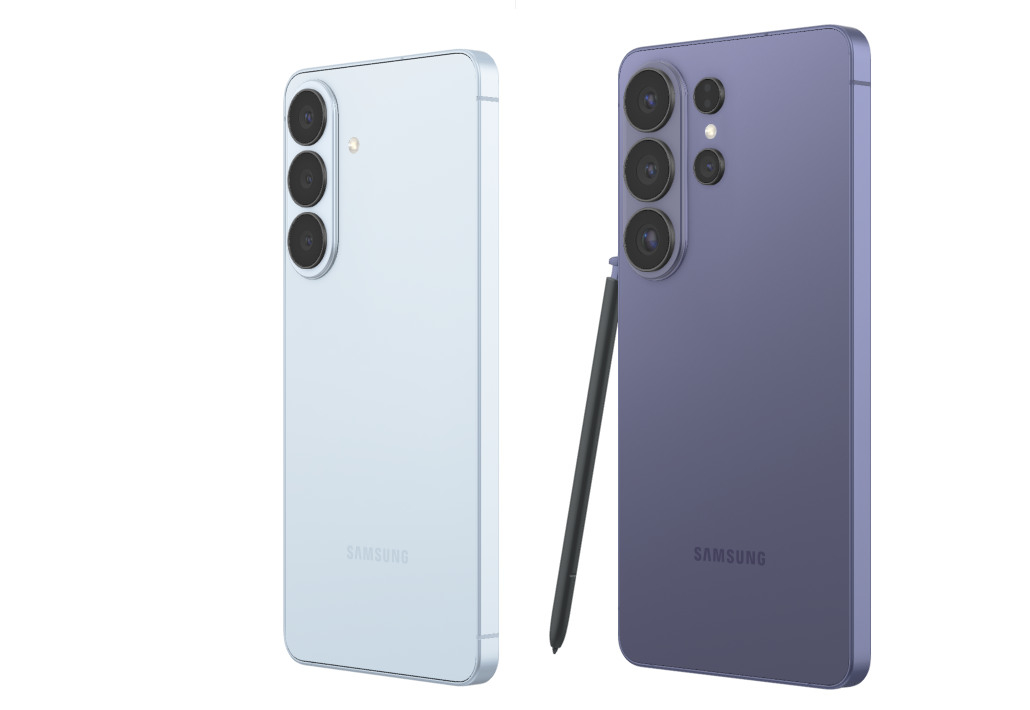
On the other hand, the S26 Ultra offers a tad better protection on the front by having a Gorilla Glass Armor 2 sheet instead of a Gorilla Glass Victus 2 panel. A rather small and insignificant distinction if you ask us.
Having said all that, the Galaxy S26+ has two notable advantages – size and weight. If you are looking for a more compact device, the S26+ will feel more manageable as it’s thinner, lighter, narrower and shorter.
Display comparison
The smaller footprint of the Galaxy S26 Plus comes with a smaller screen. The S26 Ultra has a 0.2″ larger display, but that’s hardly the only distinction that matters.
The Galaxy S26 Ultra one-ups the Plus with a screen that supports Privacy Display and features an anti-reflective coating that improves sunlight legibility when outdoors. The Privacy Display is a rather niche feature, though. The quick rundown is that the Privacy Display feature limits the viewing angles and prevents people from gazing at your screen when in public places. You can check out our in-depth dive here.
Otherwise, performance is similar. Both displays use LTPO OLED panels with granular refresh rate control, supporting up to 120Hz refresh rate. They have the same HDR10+ capabilities and peak above 1,400 nits on a 75% white fill, and reach the mid-2,000s nits range on a 10% white patch.
All in all, the two devices offer a similar viewing experience, but the Ultra edges out the Plus with a richer feature set.
Battery life
The two phones have comparable battery capacities and display sizes, but run on different chipsets in this comparison. So to our surprise, the two phones show nearly identical battery endurance. We see a marginal difference in the screen-on tests.
A closer look at the results reveals one noteworthy difference – the S26 Ultra is better for calls. Keep that in mind if you tend to talk on your phone a lot.
Charging speed
This year’s update to the Galaxy S26 Ultra’s charging capabilities is remarkable and is one of the features that makes the phone stand out from the other two S26 devices. With a 60W fast wired charging over Power Delivery, the S26 Ultra is significantly faster than the S26 Plus at the 15-minute, 30-minute marks, and to full charge.
Also, the Ultra supports 25W wireless charging over Qi2.2, which is nominally faster than the S26+ with 20W, again over Qi2.2.
Speaker test
The two handsets offer similarly loud speakers, but the tuning sets them apart. While the Galaxy S26+ has more pronounced vocals, the S26 Ultra has a more balanced tuning, producing a warmer sound with deeper and fuller bass. We would definitely pick the Ultra over the Plus in this regard.
Performance
As we already established, the Galaxy S26+ version we have is the Exynos 2600-powered one. The Galaxy S26 Ultra, of course, runs on the Snapdragon 8 Elite Gen 5 for Galaxy chipset, which has its main cores and the GPU clocked slightly higher than the regular SD8 Elite Gen 5.
In case you are reading this from the US, Japan or China, you can skip this section since in these markets, the two handsets are equipped with the same Snapdragon 8 Elite Gen 5 for Galaxy.
While both phones offer the same base memory configuration (12GB/256GB) and are also available in 12GB/512GB flavor, the Ultra gives you one extra option – 16GB/1TB. That leaves the Ultra as your only variant from the S26 series with some serious storage inside.
Benchmark performance
As is usually the case, the Snapdragon outperforms the Exynos. But not in all synthetic benchmark tests. The Exynos 2600 seems to match the Snapdragon 8 Elite Gen 5 in the CPU-bound Geekbench benchmark in the multi-core scenario, but falls behind in the combined AnTuTu 10 and the GPU-heavy 3DMark Wild Life Extreme.
However, the difference is somewhat negligible. The Exynos 2600 is just 7% slower in AnTuTu 11 and has merely 8% less powerful GPU according to 3D Mark.
On the other hand, the Galaxy S26+ shows better sustained performance and lower overall CPU throttling under heavy load. So in a sense, the Exynos 2600 S26+ will probably be a better pick for hardcore gamers.
Camera comparison
The clear distinction in Samsung’s lineup between the all-powerful Ultra model and the lesser S-series models is pretty evident in the camera system. The S26 Plus has more of a midrange configuration, with a smallish 1/1.56″ sensor main camera, a fixed-focus (!) ultrawide, and a single telephoto with a small sensor and limited reach, at just 3x.
The S26 Ultra, on the other hand, has a more reasonably sized main camera sensor (1/1.3″), an AF-capable ultrawide (albeit still with a small sensor), and a second telephoto that adds 5x optical zoom to the 3x short tele that it also has.
Both phones feature the same selfie camera, which is sort of new this year – yes, the sensor is the same as before, but now the lens is wider, at 23mm equivalent.
Image quality
Daylight
There are subtleties that separate the two phones’ main camera output, but they’re bordering on immaterial. Depending on which scene you look at and which part of it, you might think that the Ultra has an ever so slightly more natural random detail rendition next to the ever so slightly higher sharpening in the Plus’ shots. An exercise in splitting hairs. Dynamic range is the same, color rendition is very similar.








Daylight comparison, main camera (1x): Galaxy S26+ • Galaxy S26 Ultra
The Ultra has a slightly more pronounced advantage at 2x, though it’s not exactly praiseworthy in this respect compared to the best in the business. Either way, we’d say both Galaxies are decent enough at this zoom level without setting any standards, and whatever difference there may be, it’s not a real factor.








Daylight comparison, main camera (2x): Galaxy S26+ • Galaxy S26 Ultra
You probably wouldn’t be too surprised to learn that 3x output is also very similar between the two phones.








Daylight samples, telephoto camera (3x): Galaxy S26+ • Galaxy S26 Ultra
It gets a bit more interesting at 5x – how much quality would you be sacrificing if you opt for the Plus that maxes out its optical zoom capabilities at 3x? Well, some. The Ultra’s shots are indeed sharp and detailed, while the Plus’ counterparts are noticeably blurrier if you examine them closely. The Plus’ quality would still be acceptable only if you’re not doing any pixel peeping – global properties remain great.








Daylight comparison, telephoto camera (5x): Galaxy S26+ • Galaxy S26 Ultra
At 10x, you shouldn’t expect much detail from the Plus, while the Ultra remains almost good – certainly, a lot better than the Plus.








Daylight comparison, telephoto camera (10x): Galaxy S26+ • Galaxy S26 Ultra
From 10x to 0.6x, you’d be looking at broadly similar results, with both phones getting more or less the same colors and the same amount of detail in good light.
It’s in the shadows and lower midtones that the Ultra may have a small but not invisible advantage – again, not to the extent that would make it a decisive argument in the Ultra’s favor.








Daylight comparison, ultrawide camera (0.6x): Galaxy S26+ • Galaxy S26 Ultra
Low light
This year’s low-light performance from the Galaxies is pretty unreliable, perhaps a touch more so than the already shaky previous models. The auto night mode processing implementation often prevents the user from getting the nicest images the phones are otherwise capable of producing and you have to jump through hoops to get it to cooperate. That’s more or less the same across the entire 2026 lineup though, so you’ll need to live with the compromises whether you’re getting the Plus or the Ultra.
That said, in full auto on the main camera, the photos are alright and the two phones capture similar images, with a small advantage for the Ultra in shadow detail development – not a universal observation, but that’s the case more often than not.








Low-light comparison, main camera (1x): Galaxy S26+ • Galaxy S26 Ultra
Switching to Night mode, our experience with dialing up the auto night mode to maximum on the S26 Plus wasn’t particularly great, with some iffy color shifts, which we didn’t get on the Ultra. Detail is about on par in that case as well.








Low-light comparison, main camera (1x), max night mode: Galaxy S26+ • Galaxy S26 Ultra
The S26 Ultra has a minor edge at 2x, though it’s still not really a significant difference.








Low-light comparison, main camera (2x): Galaxy S26+ • Galaxy S26 Ultra
Maxing out the auto night mode processing doesn’t make the difference between the two more dramatic – we’d be hard pressed to name a decisive winner.







Low-light comparison, main camera (2x), max night mode: Galaxy S26+ • Galaxy S26 Ultra
At 3x zoom in full auto, the Ultra’s photos are a little sharper, perhaps more consistently and more noticeably so, which is moderately surprising since it’s the same camera on both. Still, it could be an Exynos vs. Snapdragon thing.








Low-light samples, telephoto camera (3x): Galaxy S26+ • Galaxy S26 Ultra
Curiously though, the max auto night mode results are essentially identical.








Low-light samples, telephoto camera (3x), night mode: Galaxy S26+ • Galaxy S26 Ultra
At 5x zoom, things are as expected – a tangible advantage for the Ultra and its second telephoto against the Plus’ upscaled results from its 3x camera.








Low-light comparison, telephoto camera (5x): Galaxy S26+ • Galaxy S26 Ultra
Heavier night mode action helps the Plus narrow the gap, but the Ultra remains superior.








Low-light comparison, telephoto camera (5x), night mode: Galaxy S26+ • Galaxy S26 Ultra
You’d think that the Ultra will have an advantage at 10x as well, and it does indeed, only it’s not as huge as you’d hope – its 10x results are simply not too great in the first place. Still, the Plus is behind in this comparison, as expected.








Low-light comparison, telephoto camera (10x): Galaxy S26+ • Galaxy S26 Ultra
Again, with auto night mode dialed up to the max, the gap is smaller to negligible – look at the brickwork on the mosque, for example.








Low-light comparison, telephoto camera (10x), night mode: Galaxy S26+ • Galaxy S26 Ultra
The Ultra’s ultrawide does a little better in the dark, with midtones and shadows getting better development and overall edge in sharpness.








Low-light comparison, ultrawide camera: Galaxy S26+ • Galaxy S26 Ultra
There’s essentially no difference between the two ultrawides with max night mode applied.








Low-light comparison, ultrawide camera, night mode: Galaxy S26+ • Galaxy S26 Ultra
Selfies
The 2026 generation of Galaxies brings a wider lens to the selfie camera and both the S26 Plus and S26 Ultra have that. We’re big fans of this camera because of that added coverage, as well as the excellent sharpness we’re getting from it. Somehow, the results are absolutely identical between the two, but we can’t exactly name a pattern of differences so you could say that you’d be getting great shots with either one – just maybe slightly better results in low light from the Ultra.








Selfies comparison: Galaxy S26+ • Galaxy S26 Ultra
Video quality
The two Galaxies have almost the same video recording capabilities, and it’s a pretty wide-ranging feature set. The one major thing that sets the Ultra apart from the Plus is its ability to record in the in-house pro-grade APV codec (Advanced Professional Video) for high-quality perceptually lossless encoding (huge file sizes so recording to external media is recommended).
Both phones offer 4K60 on all of their cameras (4K30 too, of course), and by going into Pro video mode you can also shoot at a film-like 24fps frame rate. The Ultra can do 4K120 on the main and ultrawide cameras, the Plus can’t. The Ultra can also do 8K up to 30fps on the ultrawide, wide (main), and 5x telephoto, the Plus only offers 8K on the wide camera.
Both phones support this year’s headline feature – Horizon lock stabilization. Both also allow for Log recording, with a selection of pre-loaded live preview LUTs.
Video quality is very similar between the two ultrawides – we’d struggle to name a meaningful difference. There’s somewhat of a minor advantage for the Ultra in terms of detail at 1x on the main camera, and the 2x clips just might be marginally sharper (or at least more naturally rendered), but it’s all academic differences. 3x clips are looking about the same between the two.
It’s only at 5x zoom that the Ultra actually has a significant advantage in detail – unsurprising given that it has a dedicated camera at that zoom level, versus the Plus which is having to push its unremarkable 3x camera even further.





Daylight video screengrabs, Galaxy S26+: 0.6x • 1x • 2x • 3x • 5x





Daylight video screengrabs, Galaxy S26 Ultra: 0.6x • 1x • 2x • 3x • 5x
You’d think that the Ultra will have the upper hand at 1x in the dark thanks to its bigger sensor, and while it just might have a minor edge in dynamic range, the Plus is just about as good. The Ultra’s footage is cleaner at 2x, we’ll give it that, but just because it’s better than the Plus’ doesn’t mean it’s actually good. It’s a similar story at 3x, though the Plus is particularly soft here. The Ultra does also win at 5x, predictably, but also has the upper hand on the ultrawide end of the zoom range.





Low-light video screengrabs, Galaxy S26+: 0.6x • 1x • 2x • 3x • 5x





Low-light video screengrabs, Galaxy S26 Ultra: 0.6x • 1x • 3x • 5x
Ultimately, the Ultra is better at zoomed-in video recording beyond 3x thanks to its second telephoto camera, and it also has a small advantage across the zoom range in the dark. The Plus is solid in daylight and its main camera is about on par as the Ultra’s in the dark, so the lesser model is going to be plenty good enough for most users.
Verdict
Essentially, you’d be getting largely the same user experience from either phone – whether it’s the Galaxy S26 Plus or the Galaxy S26 Ultra. The two phones are roughly the same in size, have comparable max display brightness, almost identical battery life and the same software features and experience. Additionally, the S26+ is about $200 cheaper in the US and roughly €150 less expensive in Europe. Having said that, it’s easy to conclude that the Galaxy S26+ is the more sensible solution here.
On the other hand, the price gap can be easily justified by the feature disparity, especially if you find some of the Ultra-exclusive features useful, such as the S Pen, the Privacy Display, the faster charging, or maybe the nicer speakers. The Ultra’s chipset is also a tad more powerful, but fails to impress in the sustained load test.
And then there’s the camera. The S26 Ultra undoubtedly offers more versatile camera hardware with two telephoto lenses and is nicely complemented by some exclusive pro-grade video features, like the ability to produce and edit footage using the APV codec. Quality-wise, however, the Ultra had a surprisingly small advantage over the S26+.
It looks like there are more than a few Ultra-exclusive features that you should consider. If these, however, are not important to you, snatching the more wallet-friendly Galaxy S26+ might just be the better option.
- The thinner and lighter body.
- The essentially matching photo and video quality up to 3x.
- The lower price tag.
- The largely identical user experience.
- The better sustained performance (Exynos 2600 version).
Get the Samsung Galaxy S26+ for:
- The Privacy Display feature.
- The longer battery life.
- The faster charging.
- The nicer speakers.
- The S Pen.
- The slightly more powerful SoC (compared to the Exynos S26+).
- The extra zoom reach.
- The pro-grade APV video codec.
- The 1TB storage option.
Get the Samsung Galaxy S26 Ultra for: